
Well, so you’d believe from all those sixties tune-up ads, John Tickle, Dunstall and the like…
But I’ve never been so convinced. At 17, I had a single-carb Triumph 5TA and at 19, a twin-carb 750 Bonneville. I hated the paired Mk 2 Amal Concentrics on the T140. Partly because they had an annoying tendency to inhale the little foam rings that sealed the intakes to the air filter box. The first time it happened, the foam wrapped itself around one inlet valve. Great.
But also there was the heavy throttle and that crummy plastic one-into-two cable splitter box that seemed to let in water. No, single carb every time for me; which is why I was delighted to get my single carb ’68 TR6 at 21 and still have it today.
However; there is a time and a place for everything.
If you are a reader of Classic Bike, in this month’s edition (December) you will find the story of the Martinsyde and a particularly nice picture of the old banger on the seafront at Port St Mary on the Isle of Man. Although the bike has been mentioned a few times on this blog, owing to the fact that it was ultimately due to appear in the magazine, I held back talking about it too much so as not to spoil the story. In brief, it’s a 1921 family sidecar bike that was bought in the 1930s by Londoner Chris Tait, who over the next seventy years of his life, became Mr Martinsyde. He converted the old crock into a competitive sprinter and took it to Gatwick Sprint in 1939, round Brooklands the same year for an 82mph lap and then entered Brighton speed Trials for many years after the war, his ultimate achievement being 103mph over the line in 1956.
We’ll come back to all that another time – but I had a smashing time with the bike on the Island. The great thing about the Manx is that there’s nothing to do but ride bikes all week, so if you have a bike that needs a lot of tweaks and test rides it’s a pretty good place to take it. So, I soon found that there was a clear problem; it takes off quite well and romps up to about 60mph but goes pretty flat over half throttle. It felt like a valve timing issue to me. The cam fitted is one of Chris Tait’s racing ones that I obtained from his friend Peter Adorian. Peter told me before he died that he never had much success with it and it looked like the same applied for me. But as well as being a bigger-valved 750cc when Chris was racing it, he also used twin Bowden Sports carburetters.
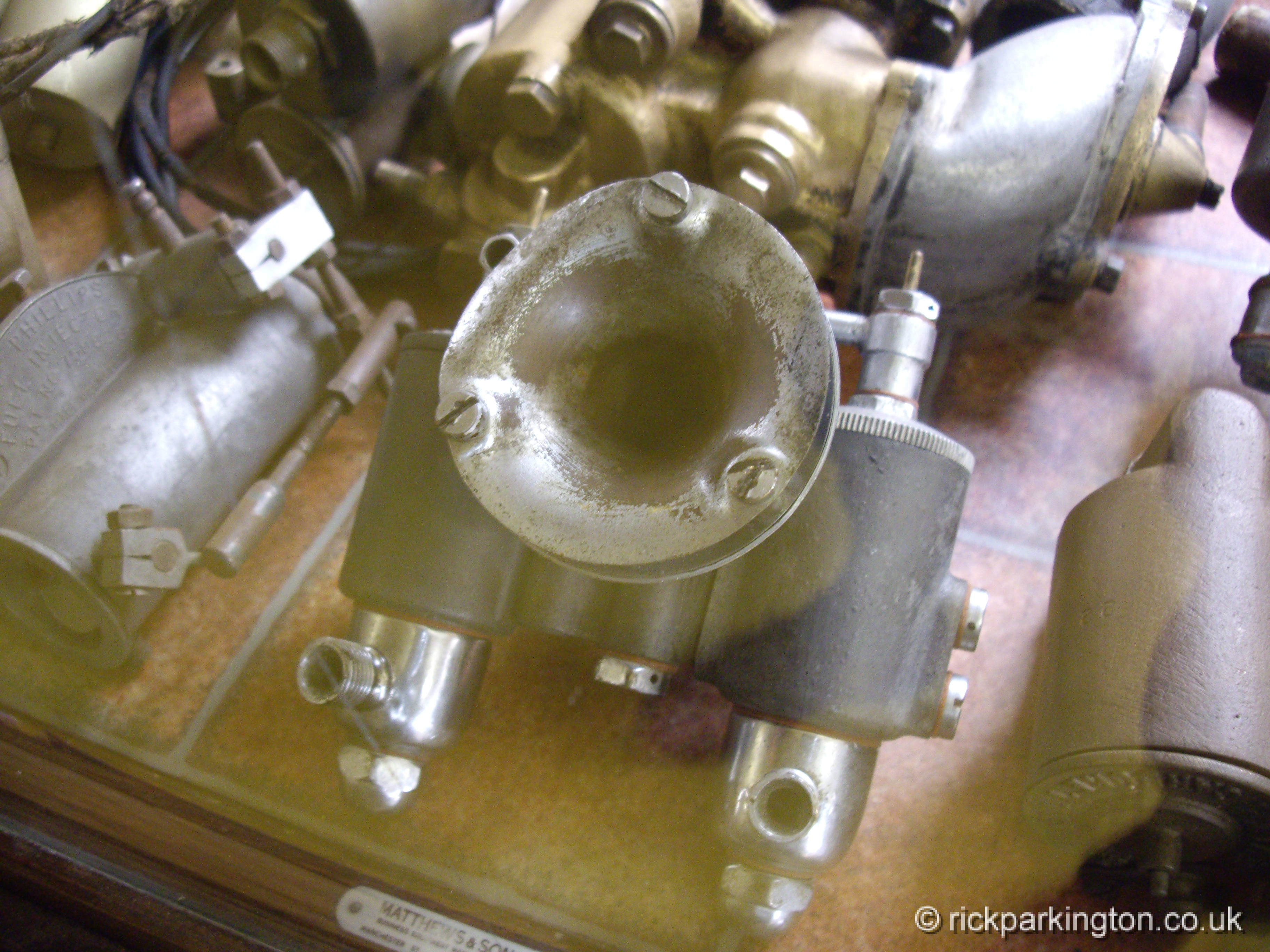
Bowden twin float racing carburetter.
Such as the one above, which is a racy twin float type. Made by the Bowden Wire Company, of control cable fame, they were a sort of performance accessory of the 1930s. A butterfly valve operates the throttle and there are several jets controlling different openings. Broadly speaking they came in two kinds: Standard with an air filter; and Sports with a chromed bellmouth. Chris Tait was a bit of an afficionado of these carbs and used them on the Martinsyde from 1938 until he sold it in the ‘sixties.
Anyway, I have been using a TT AMAC on the standard manifold, which is a lovely piece of metal sculpture…
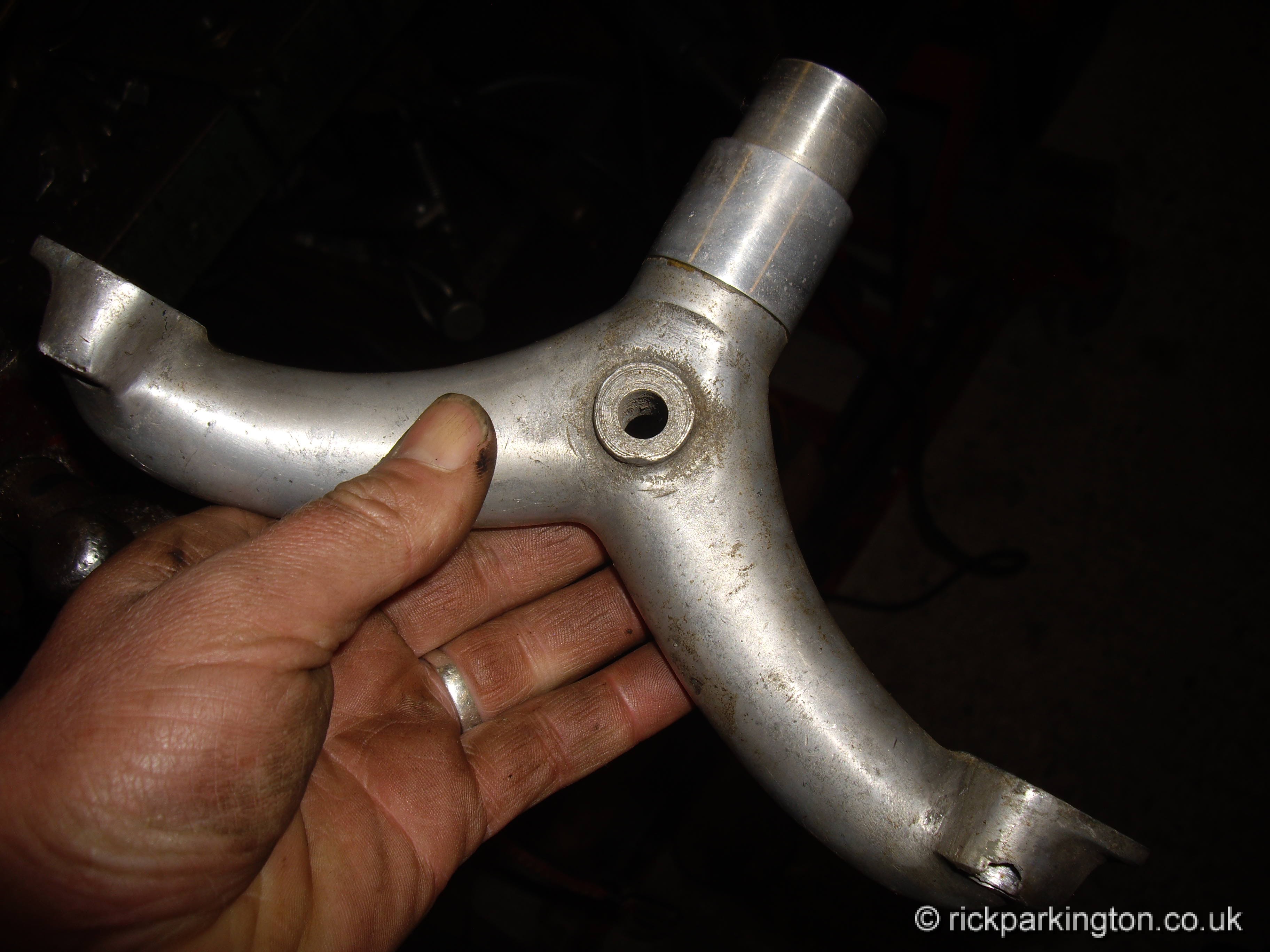 …but has an unfortunate feature. The hole in the middle of the ‘Y’ is where Martinsyde decided to fit a tunnel for the decompressor cable, not just the cable but an adjuster sleeve mechanism of quite a size. It’s neat, tidy and functional from the cable point of view but a bit of a disaster for gas flow.
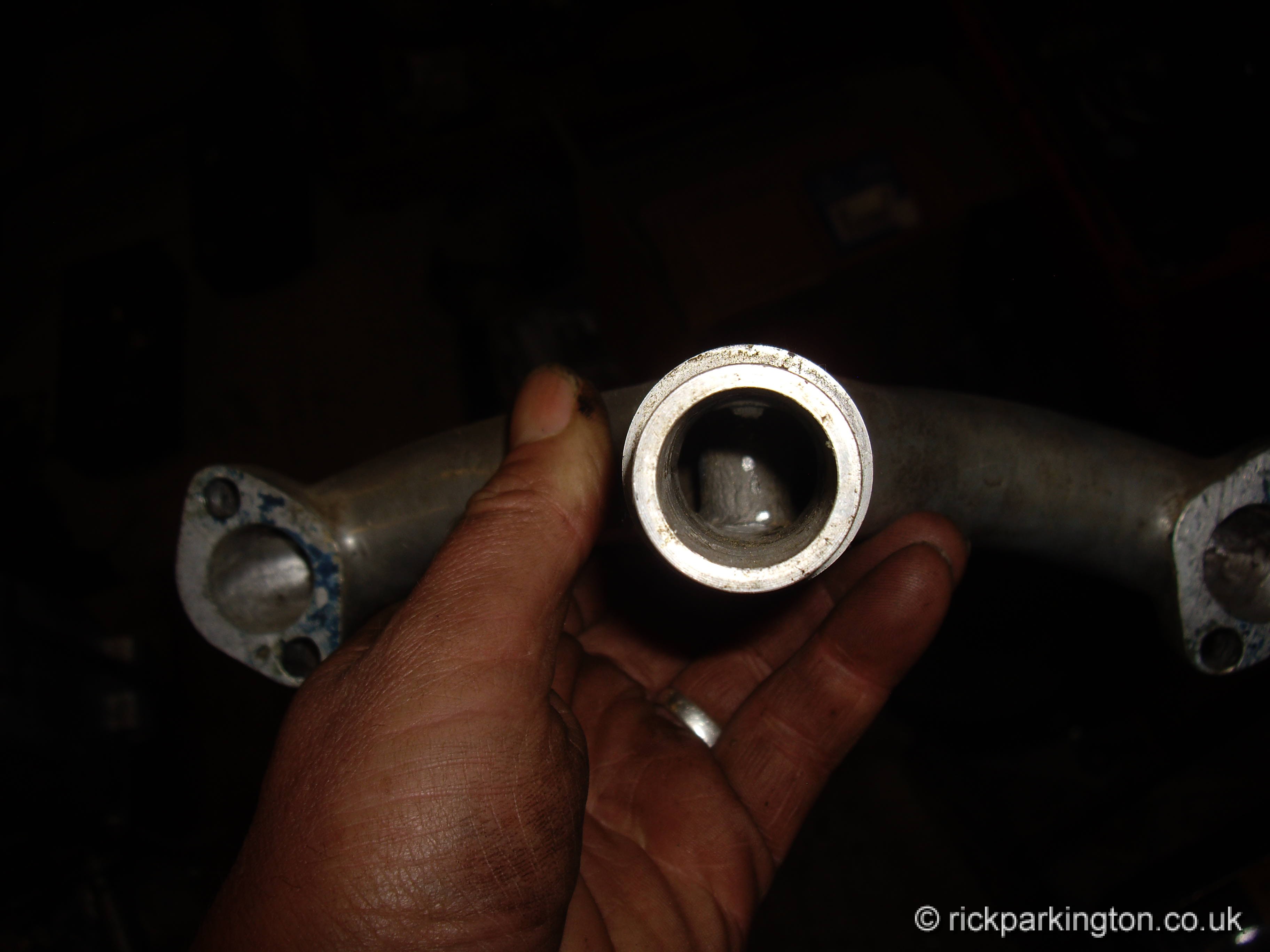
See what I mean? From a carburetter’s-eye viewpoint, there’s a big blob of aluminium right in the way. The sporty Quick Six, which my bike was originally, had a different decompressor allowing an unobstructed manifold but I wondered if this might explain why the Tait cam wasn’t really working on my more standard engine and Peter Adorian’s.
A friend who actually raced the bike in the ‘sixties recalled that it always had a misfire – and even in some of the reports from when Chris raced it this is noted. I wondered whether the pair of one inch carbs he used were too large. For what is essentially a 750cc sidevalve that’s quite a lot of carburetter. I managed to obtain a pair of 7/8″ Bowdens which seem a bit more appropriate – especially since the bike is the smaller 678cc capacity at the moment.
So I bought a big bit of aluminium bar from the metal people at Kempton Park Autojumble and made up a pair of mounting stubs.
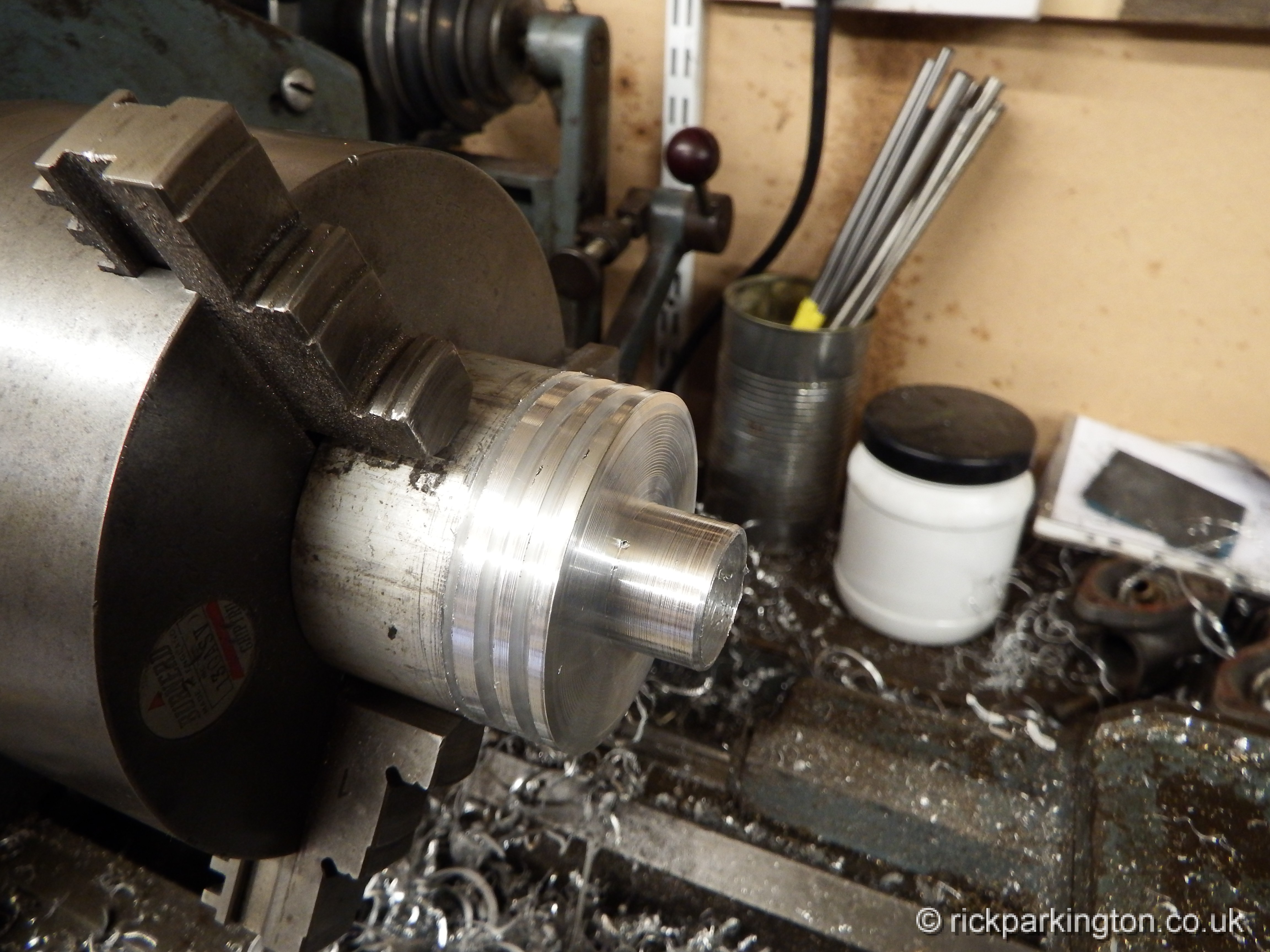
One of the choke valves was missing but it wasn’t too difficult to make one from brass bar. The trick as always is having one to copy, which having two carbs, I did.
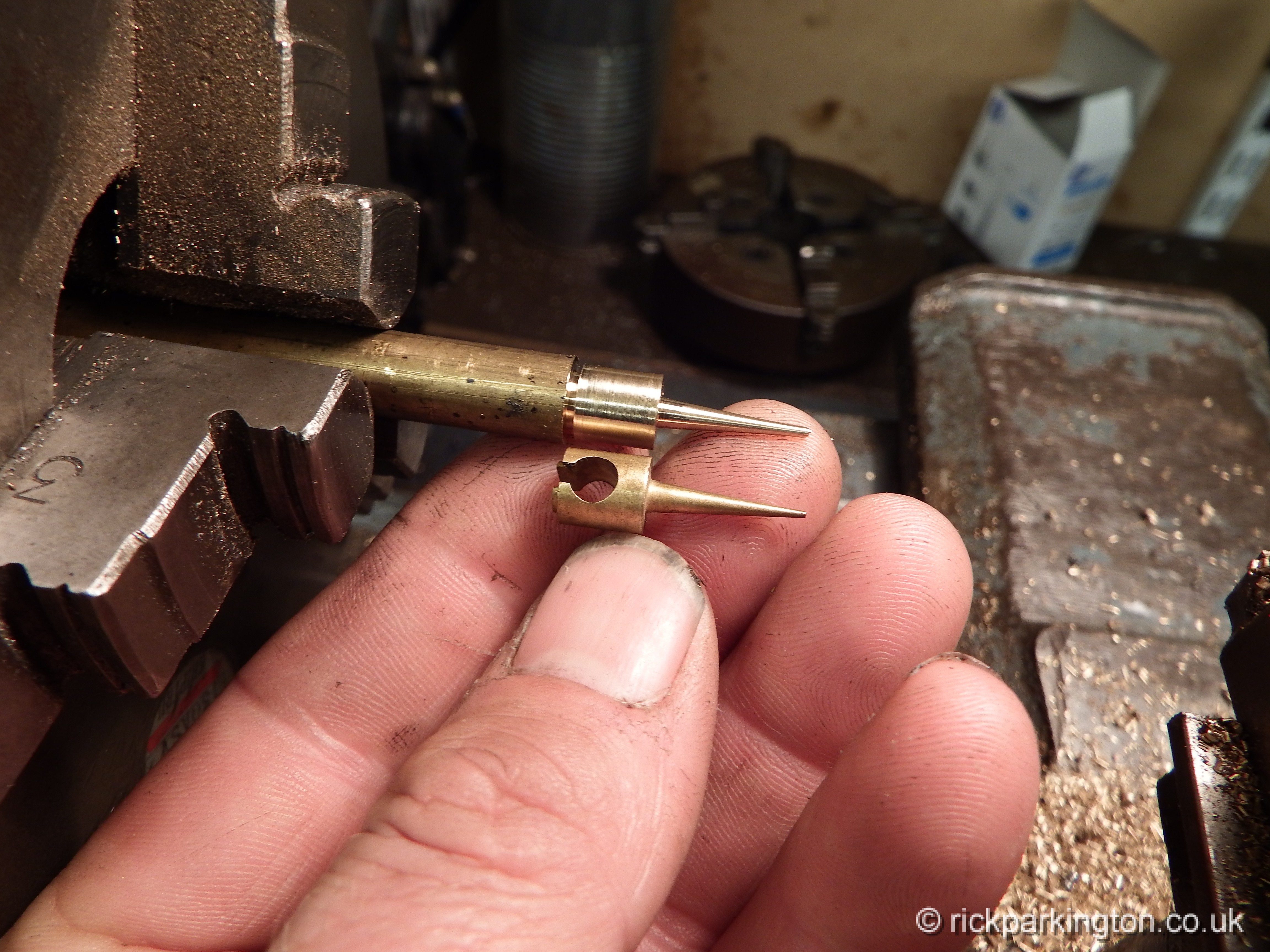
I also had to make a float needle, by turning up and drilling a little cone and soldering it onto a piece of thin brass rod of the right diameter. It took a couple of weeks fiddling about to get the throttle linkage and control sorted but now the carbs are fitted I think they look superb and the lop-sidedness of having them stuck out of one side make the bike look even more out of control than it did already. Best of all, despite the jetting being as it came (and different in each carb, now I think about it…) the bike is pulling much better. I’ll need to find some jets sorted out for it but it starts and runs happily – and even ticks over.
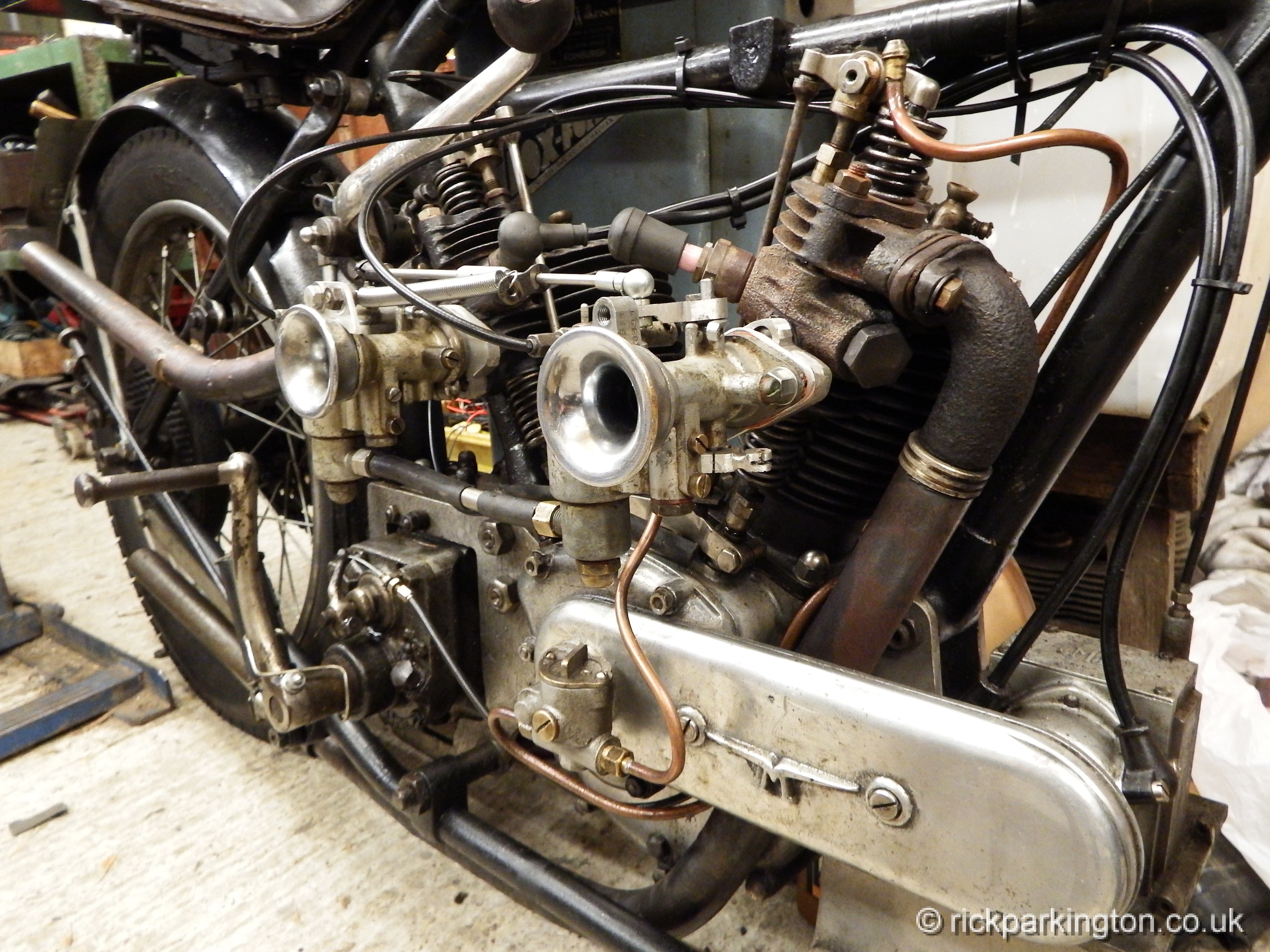
Looks better, goes better. That’s just about the perfect result I reckon!
Cheers Rick
Sounded superb at the SMCC club night at West Kingsdown!
Watch your leg doesn’t get sucked into one of the manifolds!
Lovely work – what a bike! Your blog has been the universe’s christmas present to me 🙂
Rick – hope you, Finbar and the Missus have a great chrimbo
Thanks, andall the best to you too!
Glad to see the Bowden has been put to good use. Better than sitting on my shelf..! well done!
Hi Rick, just reading you interesting blog on the Bowden carbs, I have not long got hold of a 1927 AJS H6 TT Special, basket case, and in the box is a RH 23 Bowden carb which I would like to fit , but it seems a little small In regards to the internal bore ?, do you know if anyone that has any carb to engine capacity info, or any jetting info ?, I can’t seem to find anything on the net.
Many Thanks
Simon