I was sent this cracking picture last month…
One of the perks of writing for a magazine is having people send in fantastic old photos for identification. It’s surprising how even when the picture isn’t very clear you can usually pick out a few details that reveal the identity but this one had me stuck for a while. It comes from Scottish author and poet Brian Johnstone (brianjohnstonepoet.co.uk) who is currently putting together a memoir for future publication and hoped I could identify the bike his father is here sitting on. The shot was taken in Penrith and Brian wondered if the bike might have been his father’s 21st birthday present , in 1928.
Trouble is…
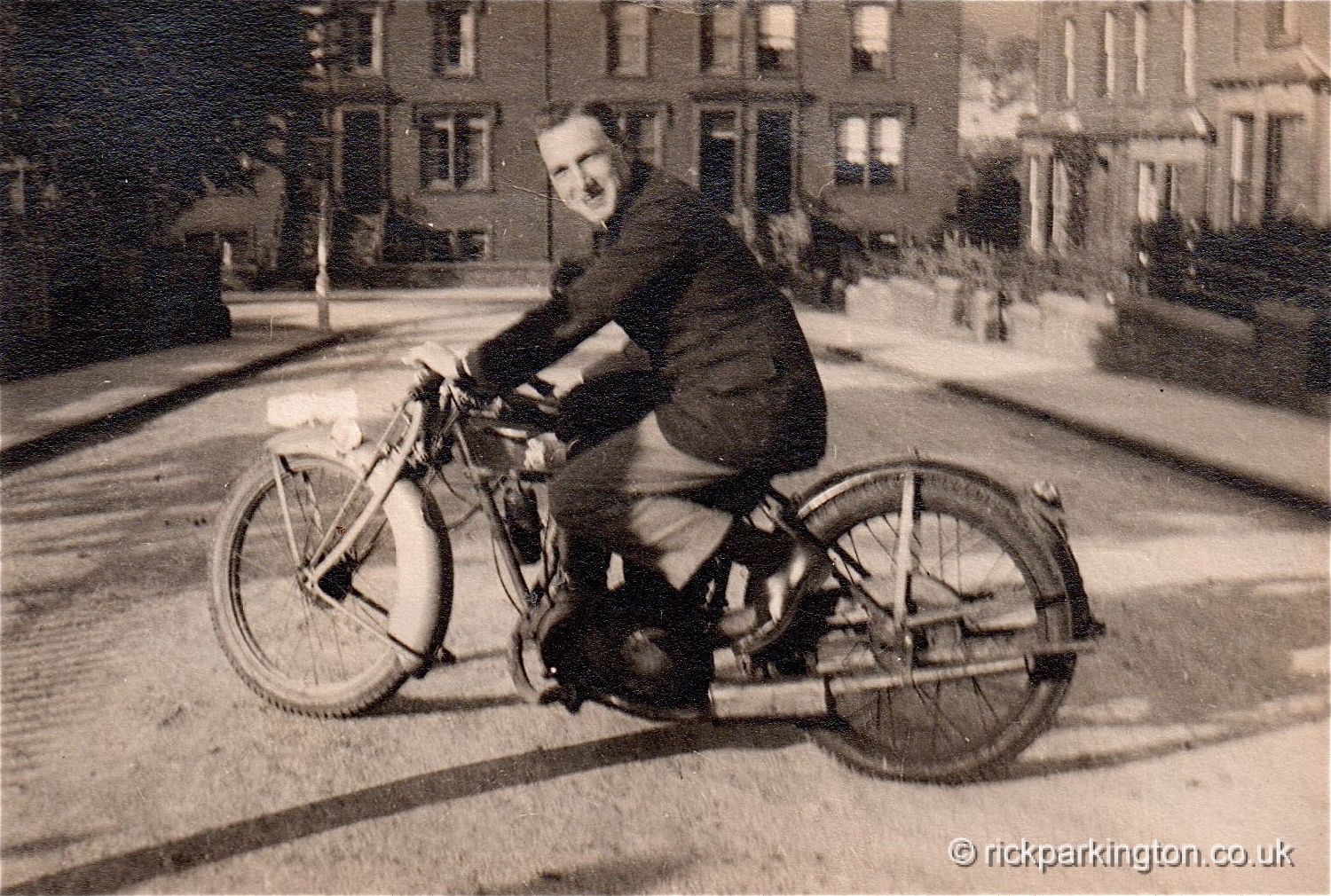
…there wasn’t really a whole lot to go on to identify the bike with the way the rider’s leg and a shadow is obscuring the engine. But the more I looked the more I started to notice about the picture and it made me realise just how much you can work out from a blurred snapshot taken so long ago.
First off, the bike can to some extent be dated by two things; first the drum brakes front and rear. Few bikes were fitted with drums before about 1924, while the box type ‘flat tanks’ almost universally disappeared in 1928. There was a complete changeover to the ‘saddle tank’ that is still fitted today and only a few manufacturers – most notably AJS and Sunbeam missed the boat at the Olympia show with their flat tankers looking decidedly old hat for another year. There are no lights on this bike but you can see an acetylene generator clamped to the downtube ahead of the engine. Acetylene lighting was still in use in 1928 but electric was rapidly gaining in popularity. The engine is a side-valve and by the size probably no more than a 350cc. The exhaust port is on the right of the engine but unusually, the downpipe sweeps round to the left of the machine. This was a Sunbeam feature but this bike is definitely not a Sunbeam. The forks are ‘proprietary’ – made by an accessory manufacturer (in this case, I think, Brampton) and were used on many mid-twenties machines so no clues there.
Moving on to Brian’s Dad, to me his clothing suggests early to mid ‘thirties, rather than ‘twenties and this is even confirmed by the way he is resting his foot on the rear chainstay, aping a racing rear-set footrest riding position. This position was much more familiar in the ‘thirties than the ‘twenties, when racing machines – especially TT bikes, remember it was the Tourist Trophy and bikes were expected to be nominally ‘standard touring models’ – were much more sedate looking. This is all borne out by the condition of the bike, it’s clearly far from new. As well as the lighting set being missing, the exhaust, rear mudguard and stays look pretty rough and ready and I would guess the bike could be ten years old. By that time, old, worn and unfashionable with its flat tank, it would have represented very cheap transport for a student or apprentice. So I was sure we could rule out 1928 and Brian’s dad’s 21st present… But unable to idenfiy the bike, I had to admit defeat and advise Brian that all I could tell him was that it wasn’t one of the big names but an unknown from any one of the many smaller manufacturers of the time.
Of course I had no sooner pressed ‘send’ when I had an inspiration…

Yes, here it is: New Imperial JAP ,probably 300cc. This one from 1925. All the details check out – forks, brakes, left-hand exhaust – even the primary chaincase. Brian was delighted and agreed that his father looked more 25 than 21 and if so, he had just completed a pharmacy apprenticeship, so money would have been tight – making a bike like the New Imp ideal for getting around.
Good to have found the answer and thanks to Brian for letting me use the picture.
R