
Says Steve Lee: “Did a club run yesterday on my BSA L23 with Amac carb and I was struggling to get the mixture right with the two slides. Running up to about 30mph was fine but as I tried to increase the speed, the bike started spitting and back -firing to the point where no amount of slide fiddling would improve matters. I found that the inner slide required very little movement from tick-over with the outer slide creating the acceleration. Can you advise on the best set up/operation for the Amac carb, please?”
The L23 was the first of BSA’s 350cc side-valve flat tankers – ‘L’ means 350cc, ’23’ refers to the year of manufacture, and the L tag continued for both ohv and side-valve 350s throughout the ‘twenties, with the accompanying number increasing every year.
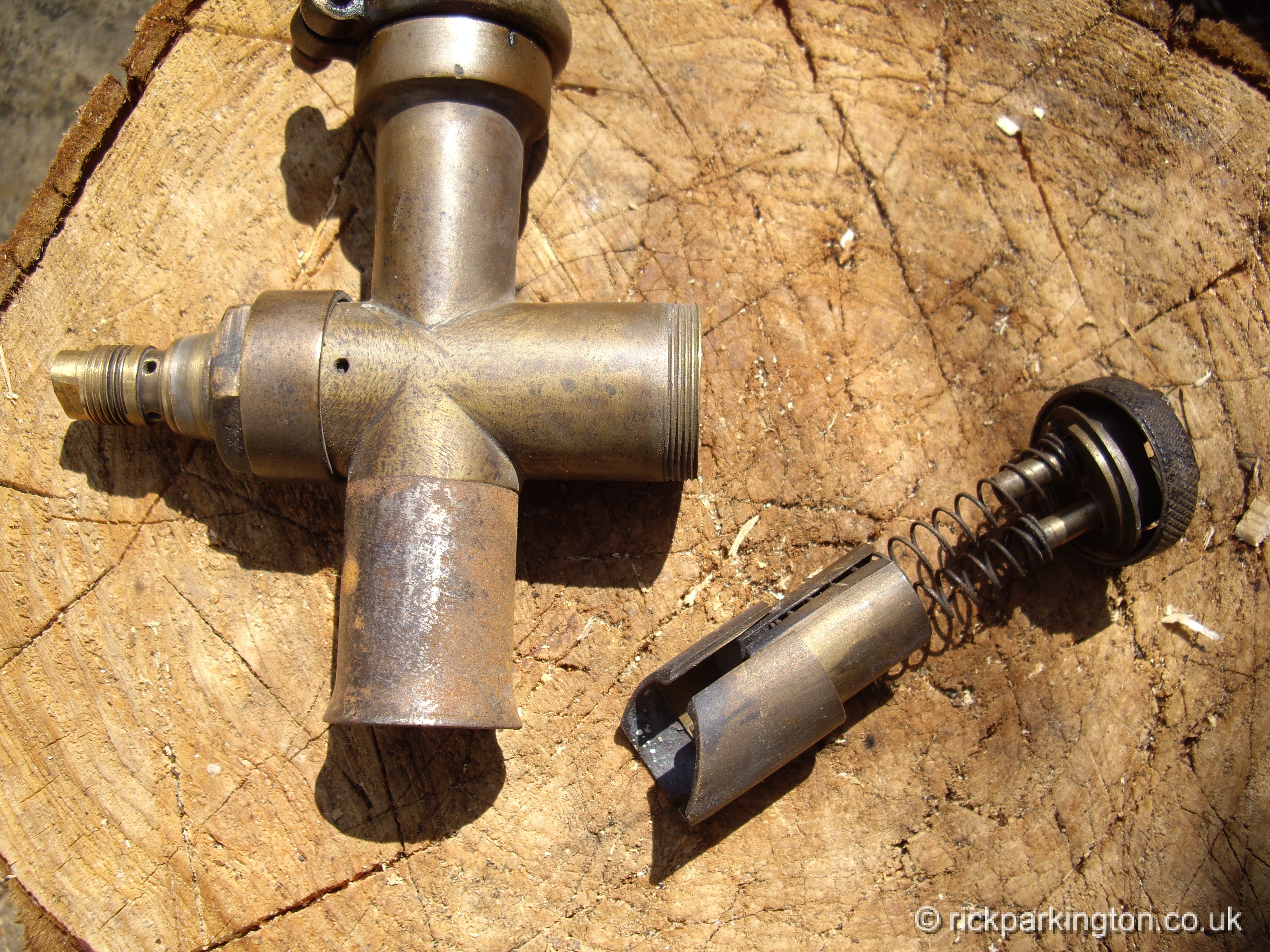
AMAC 2 lever carburettor from a 1925 BSA L25
The carb concerned is the two lever AMAC, which has a more or less conventional throttle slide with another solid slide working concentrically and independently within it. The two levers being controls for throttle (outer slide) and air (inner slide). These carbs have no slide needle and so are described as ‘semi-automatic’. Later ‘automatic’ carbs have a tapered needle attached to the throttle slide that gradually admits more fuel from the jet as the throttle opens, maintaining the correct 15 to 1 ratio. This system continues to the modern day but the needleless AMAC works differently:To adjust the fuel supply to the mixing chamber, the inner slide is used to adjust the depression (suction) over the jet and in lieu of a needle jet there is a block perforated with a row of finely-drilled holes through which the petrol is drawn in vapourised form. The supply to this arrangement is from the main jet and in Steve’s case it could be that it is simply too small. The books all say that for full-throttle riding, the air lever should be nearly wide open. Since closing the lever richens the mixture, if Steve is having to leave the lever nearly closed, the mix must be too weak. It was typical in the old days for riders to fit smaller jets in search of economy and often in these more extravagant times, fitting a larger one makes a big improvement . Trouble is, you can’t get them…
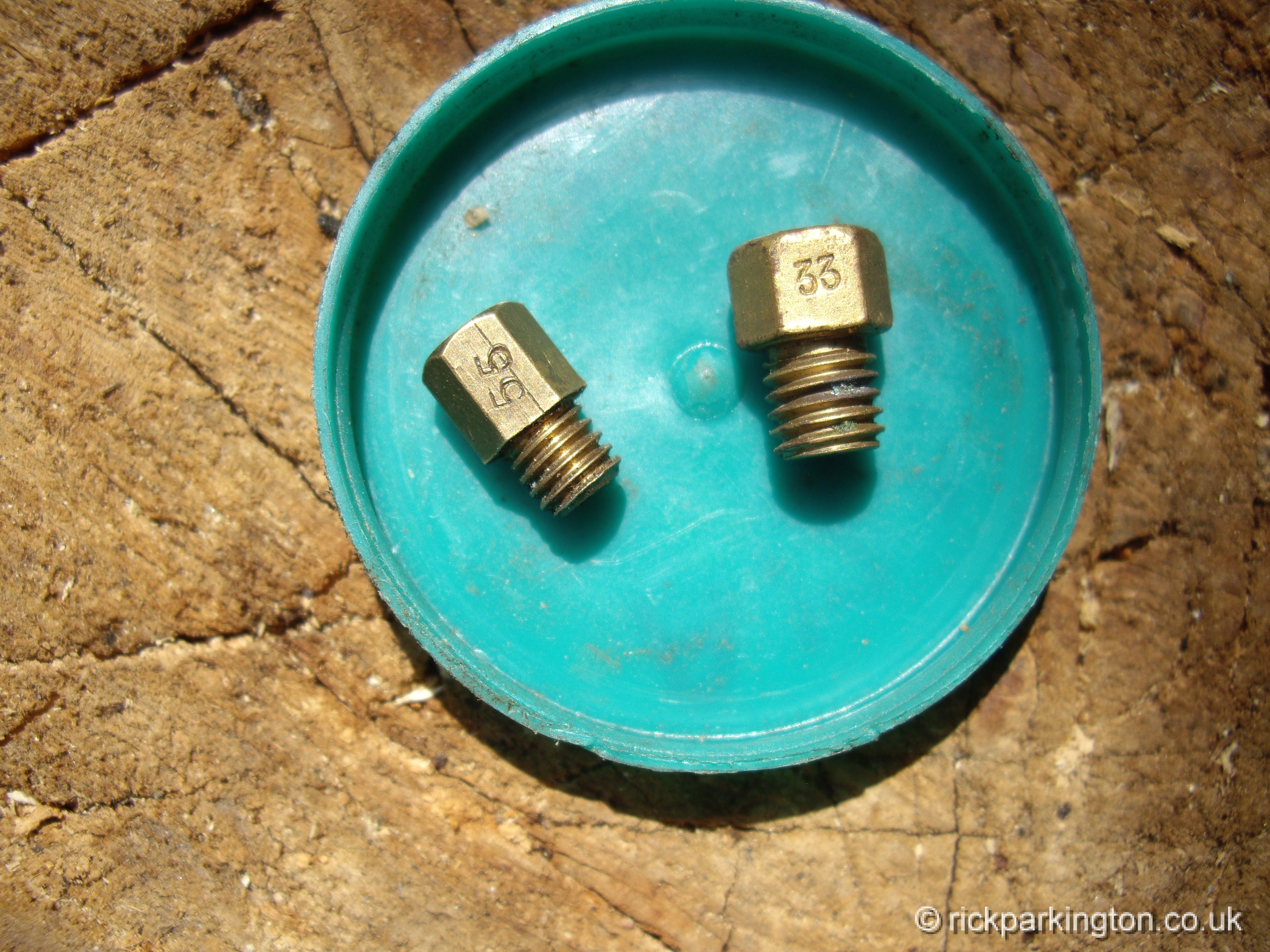 On the left we see an early AMAL jet, on the right an AMAC. AMAL jets are readily available but have a smaller 1BA thread, where AMAC are 1/4 BSF; thus they are not interchangeable. In the excellent ‘Vintage Motor Cyclists Workshop’ book, Radco advises turning off the threads on an AMAL jet and soldering on a larger threaded sleeve to suit… hmmm, guess it depends how much free time you have, eh?
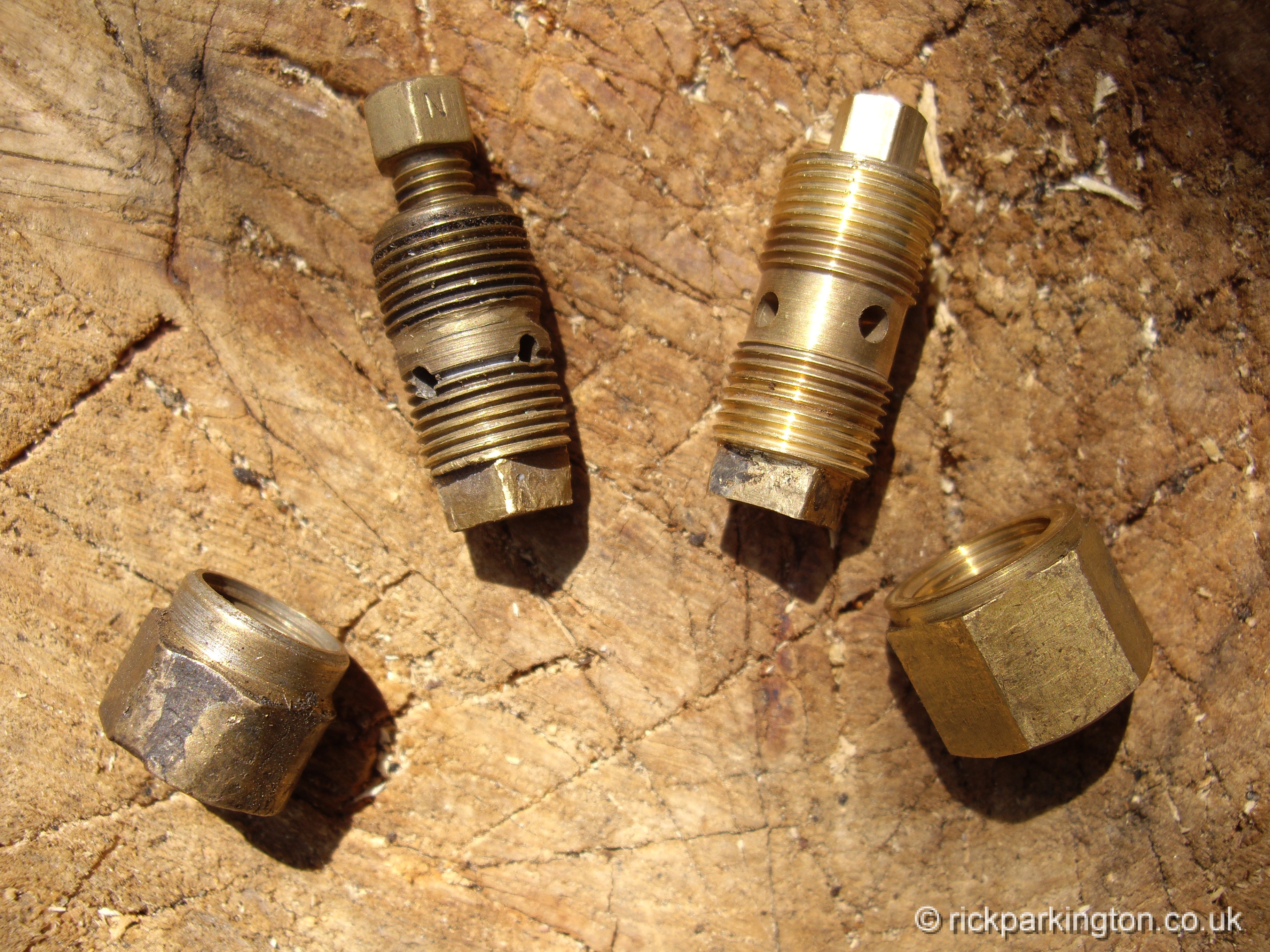
Original AMAC jet holder on left, replacement to take AMAL jets, right
I prefer the solution above. You still need access to a lathe and it’s not a five miniute job but unlike modifiying individual jets you only have to do it once – handy if you need to experiment with different sizes. You just copy the existing jet holder – they vary a bit, this one is from an earlier carb – threading it 1BA to take the AMAL jets. Bear in mind that AMAC use different sizing; the 55 AMAL here is smaller than the 33 AMAC, which equates to 110 in AMAL sizing. The main jet in my L25 carb is AMAC #30, which works out as 90 in AMAL. The chart for sizing is in the Radco book and also to be found in the handy Amalagamated Carburetters book available from Elk Promotions (www.elkpromotions.co.uk).
Out of interest, you could get an adjustable jet in later years which presumably allowed the economy option without changing jets. Looks like an ideal opportunity to (a) wreck your engine by running it too lean and (b) set fire to it with petrol leaks from the screw adjuster…
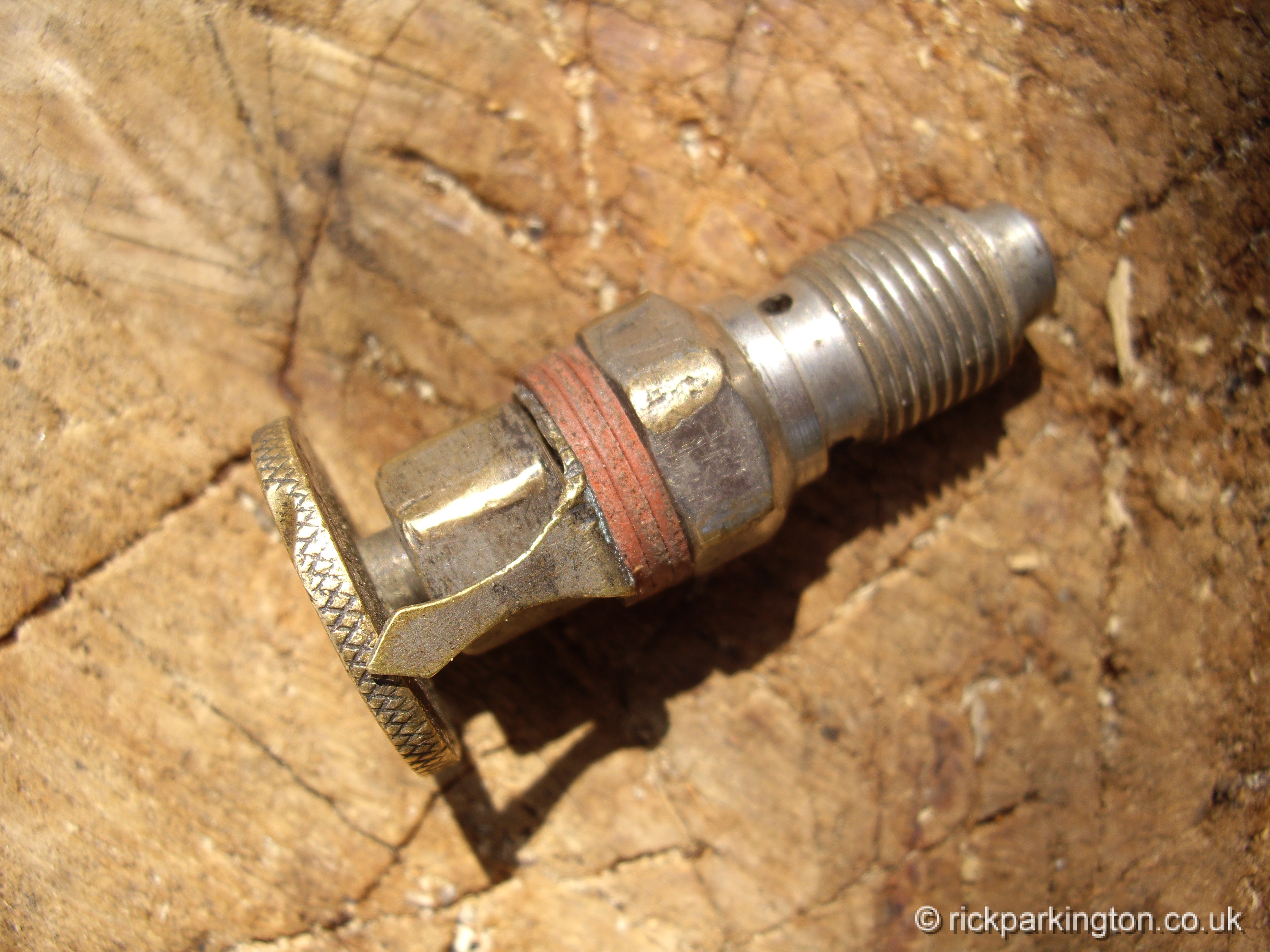
Adjustable main jet for AMAC carburetter
Moving on, it has to be said that most AMACs are a bit tired now and don’t respond as they should due to wear. On my first vintage bike it seemed you could do what you liked with the air lever without it making much difference but it was a different matter on the almost unused 1925 OHV L25 I had later, here the slightest movement had an effect. Point is, wear is a big problem when getting it to run properly. Take a look at the inner slide, often it will be worn on either side of the locating slot in the outer slide…
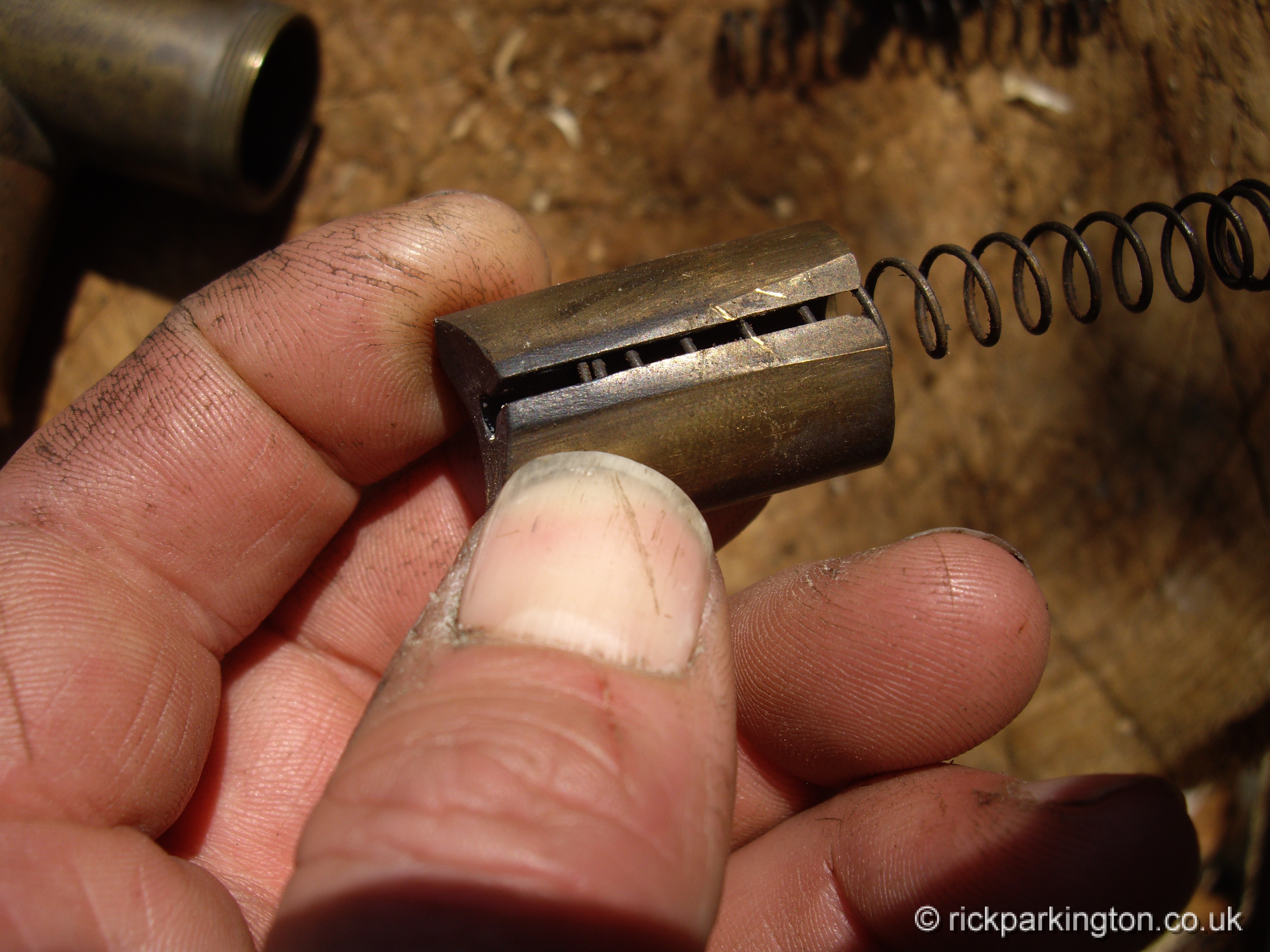 Wear on the throttle slide is usually found in the usual place for all carbs, at the bottom of the side facing the engine…
 This combined wear admits air and weakens the mixture leading to just the kind of problem from which Steve is suffering. So I’d suggest first check the main jet and if it is already something like a #30 look for wear on the slides. SImply fitting a bigger main jet to overcome that wear is unlikely to work and certainly won’t make the levers more responsive because the wear on the air slide is a separate issue, it will removes control rather than just admitting extra air.
Fortunately if the carb and slides are worn, Martyn Bratby does an excellent job of reconditioning these AMACs. (Tel: 07772 169 524) I rode a 350cc Raleigh, whose carb he had restored, last year and found it as responsive as my old OHV L25 had been.
So, hopefully in here somewhere is the answer to your problem, Steve.
Cheers Rick
Thanks Rick. That’s worrying as I had the carb reconditioned by Martin last year. I will check the size of the main jet though it may be too small.
I am at Stafford this weekend so will have a chat to martin as well.
Thanks for taking the time to answer.
A delayed response from me Steve and Rick, but I found your observations interesting. I too have an AMAC (15HYSP) on my ’22 AJS (350 s.v.) an am struggling with the lack of adjustment. Seems to me, the only adjust possible is altering the fuel level in the float chamber, so I plan to experiment with that to richen the mix a bit. You do not mention this possibility Rick – maybe I’m wasting my time?
Best wishes, Rob.
P.S. We are fortunate to have people like you, willing to help/advise – thank you!
Thanks Rob, it’s good to be able to help keep all this old junk going but I must admit this does seem a tricky problem. Have you tried a bigger main jet? On these carbs the main jet is more important through the range than on automatic types. If you don’t have any to try you could take it out altogether and see what happens, if it’s suddenly way too rich then you know you need to find a jet somewhere between the two points and I reckon the easiest solution is to make an adapter to accept Amal jets.
Cheers Rick
What Ho Rick,
You may recall me, I have your old 1925 OHV BSA. Still love it beyond everything. I enjoyed your AMAC piece, and smiled when you mention the bike… its carb still works like new. I did try to send you a short note on the restoration of the original lever petrol tap, but the address was invalid.
I hope you keep well mate, warm regards Cynric.
Hi Cynric – great to hear from you and I’m glad you still have ‘Mr Toad’! As it happens, I found one of those taps at a jumble; must have been ignored because it had an scruffy bit of copper replacing the lever – but this time I worked out how to get it apart and fix it. Better still, it turned out just to be a bit of copper pipe, soldered over the top of the original lever, which was still intact!
Hope to catch up somewhere, sometime!
Cheers Rick