
I wonder what Ixion, my favourite motorcycle journalist of all time would have made fo Stafford Classic Bike show.
Ixion (pronounced as in ‘Lion’ not ‘Leon’ by the way) started riding at the turn of the last century. What makes him great is that for a commentator on early motor cycling there is a great deal of humour in his writing despite his being a clergyman in his other life. Despite this and his origin in a time of waxed moustaches and starched collars yet he had an incredibly contemporary style, incisive, self deprecating, witty, that still entertains 100 years on.
I reckon he would have enjoyed the classic scene because even in the 1920s he was writing about the perils of his early riding days, which could be taken as the very beginning of the old bike nostalgia boom; after all the London to Brighton ‘old crocks’ run was a creation of the 1920s.
Anyway, Stafford; for me it’s the big one. I started going in my late teens when it was ‘Belle Vue’. Indeed there’s a rumour that the Stafford County Showground may be up for development, so maybe it won’t be ‘Stafford’ forever either but hopefully the show itself will survive. Why? Well because as well as being a hug show and autojumble, it’s a rallying point for enthusiasts from all over. I see friends there from all parts of England, from Scotland, Ireland (both bits) Wales and Europe.
Of course the trouble with that is I spend all weekend jawing instead of shopping.
Still, as usual there was a great selection of stuff to look at. Here’s something a bit unusual amidst the Trials Hondas…
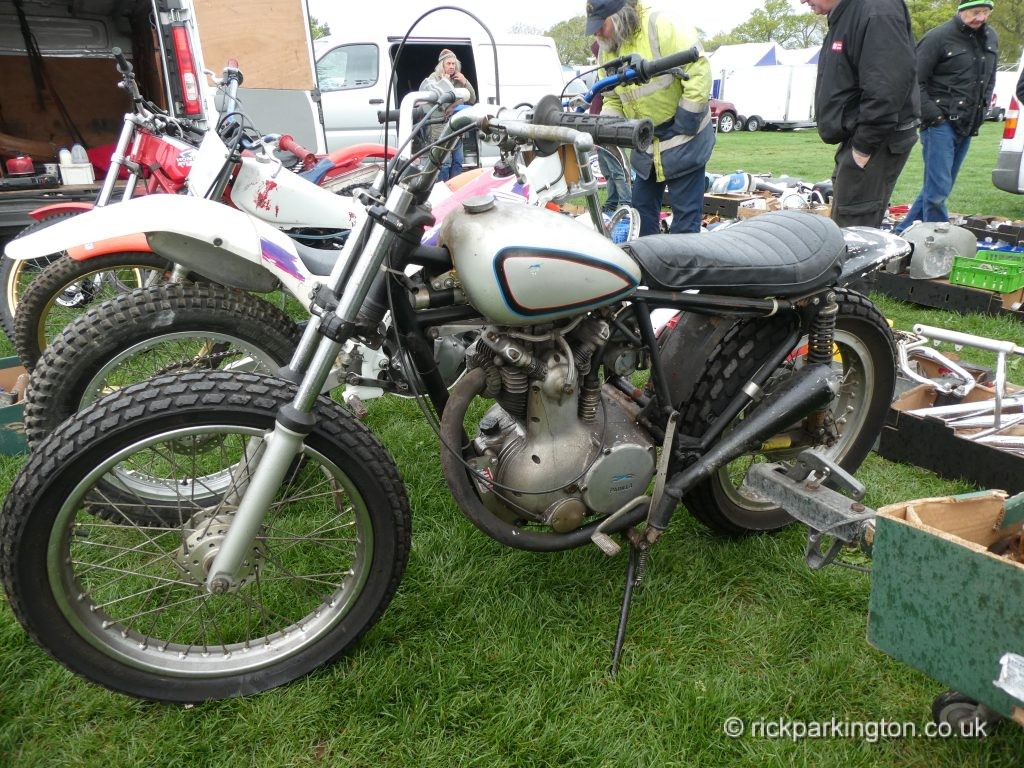 Well outside my scope, I have no idea whether this is an original bike or a ‘special’ but I really like the look of that Moto Parilla engine, it’s a very serious-looking bit of kit.
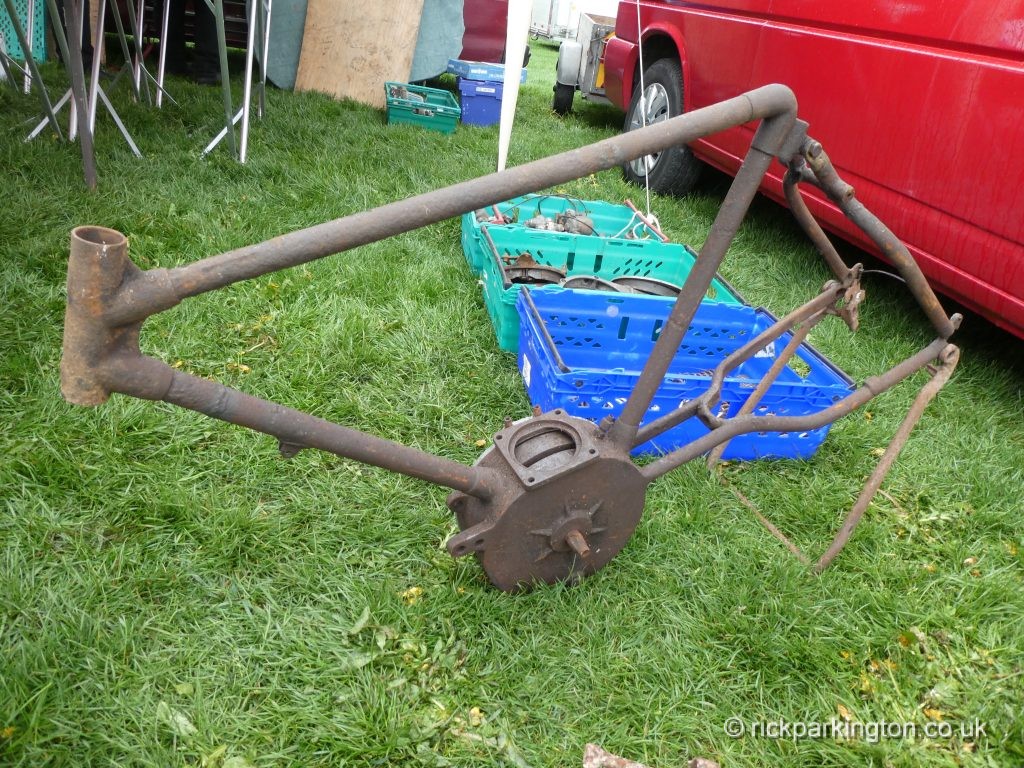
Here’s a challenge for you, can you identify these two?
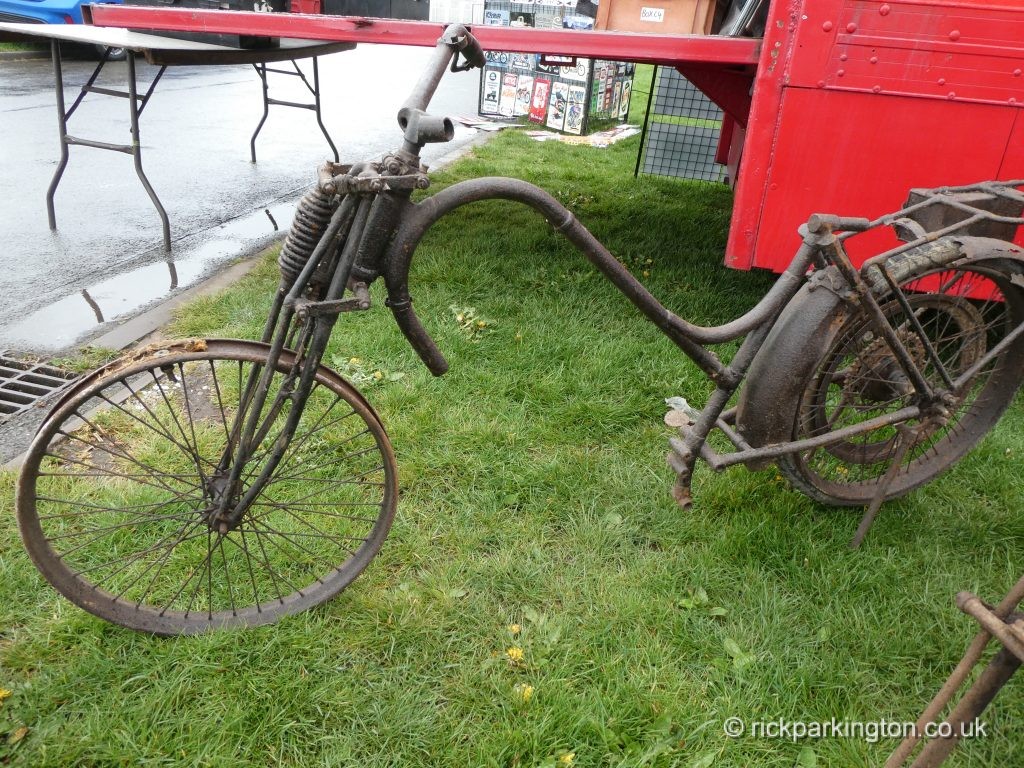
 The top one looks a bit like one of those funky metal sculpture cycle parking racks but is in fact a ladies model Royal Enfield, 201. Believe it or not, in the early to mid 20s, Enfield made two versions – his ‘n’ hers – of their 211cc two stroke. The Suffragettes achieved more than the vote. Pretty amazing to think that less than 100 years ago, motorcycle companies actually had to make a completely different bike so that lady riders could avoid the social outrage of wearing trousers. Nowadays a lady motorcyclist thinks herself lucky if she can find riding kit that fits properly.
The giveaway with the second bike is the frame – or the crankcase, come to that, since the two are inseparable. It’s a Bradbury and these famously had non-detachable engines, the crankcase being cast into the frame.
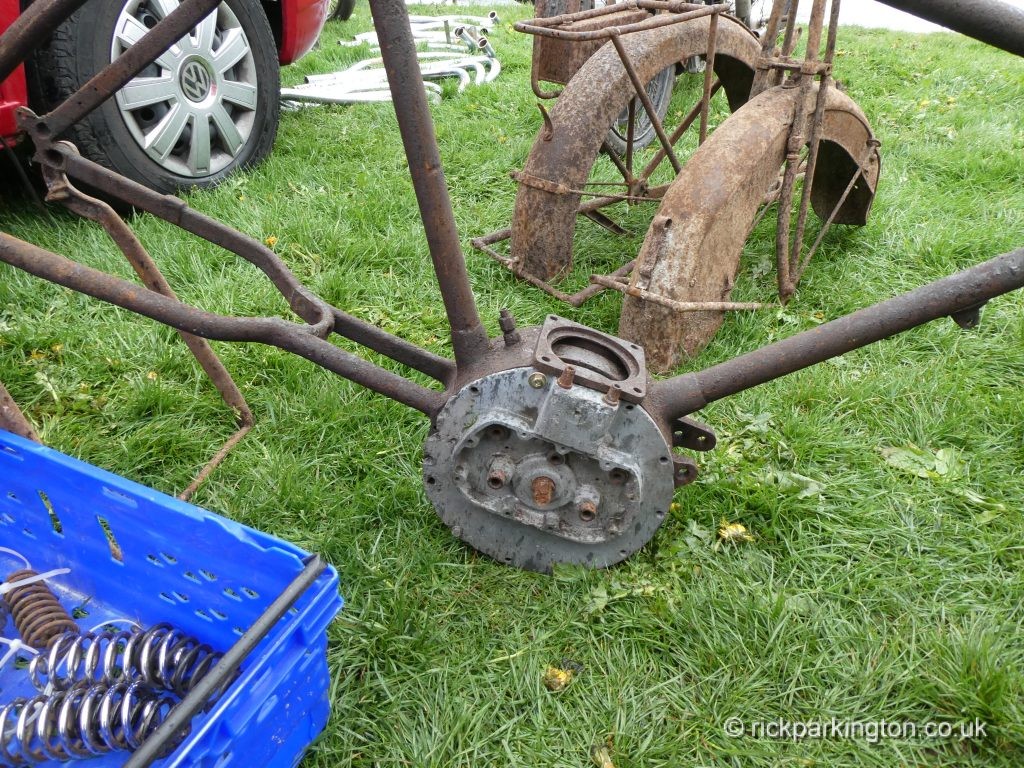 The above picture will answer the obvious question; the right side of the crankcase is detachable so the crankshaft can be pulled out sideways. I have always fancied a Bradbury – I would really like a run and jump veteran while I’m still (more or less) young enough to cope with riding one. Luckily I decided that if I bought this starter kit, by the time I had found the rest that moment would be long past, so reluctantly, I walked away.
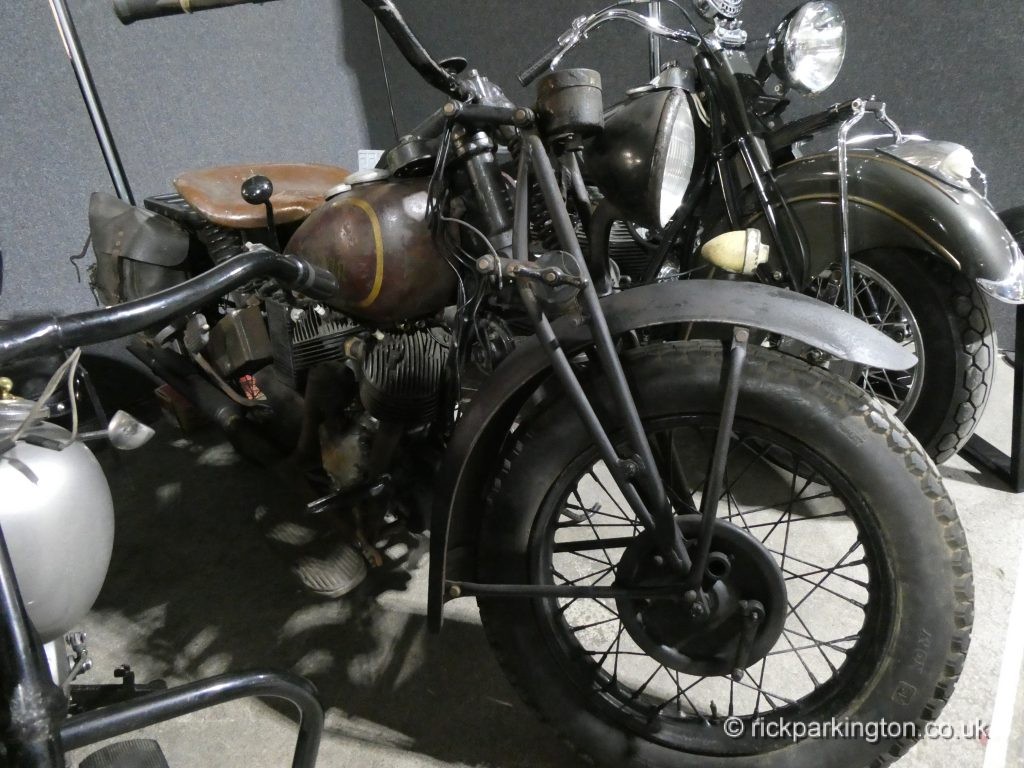
My mate, Indian specialist Calvin Jones, of Phoenix Restorations, often turns out something special; this time it was this Indian 741B, the military 500cc model. The 741B is effectively a native of these shores; a brief and probably inaccurate version of the story is that the US Government contracts stipulated a 500cc side valve model so Indian did a hasty redesign of their 750cc Sports Scout and created the 741. Harley meanwhile said ‘tough, we only make a 750’ and the Military accepted the Harley 45 (Doh!) So we ended up with the five-hundred; British squaddies having to get used to foot clutch and left throttle in a heavy and rather underpowered package. I remember reading a letter in Motor Cycle Weekly from someone who had found a mystery chassis on a beach somewhere. Old bike afficionado Bob Currie replied ” It’s an Indian 741B, supplied to the British Army and hated by everyone who had to ride one. An M20 would run rings around it, I’d leave ot on the beach.”
Made me laugh at the time but the 741 is considerably more prized than a BSA M20 today and this one is very unusual in being civilianised but unrestored. After the War, the surviving 741s were sold in quantity to dealers like Pride and Clarke in London, who reconditioned them, they were repaitied in civvy colours, usually black or maroon with maybe a dash of chrome plate – headlamp rim or horn face – and rebuilt or replaced the engines; there was a vat supply of spares had come over the Atlantic with the bikes incluing complete engines, whicih still surface occasionally. Actually, ‘surface’ is an unfortunate word because there always seemed to be one crank flywheel you couldn’t get and one half of the dual fuel tank was easy to find but not the other. The story is that the Military tended not to send pairs of things on the same boat in case it was captured and used by the enemy. Allegedly one boat got sunk so we ended up with one side tank and one flywheel, probably a load of left boots and gloves too… Well that’s the story.
Anyway most 741s have been restored back into Khaki again now so it was nice to see one still wearing its demob suit.
Calvin pointed out another nice touch…
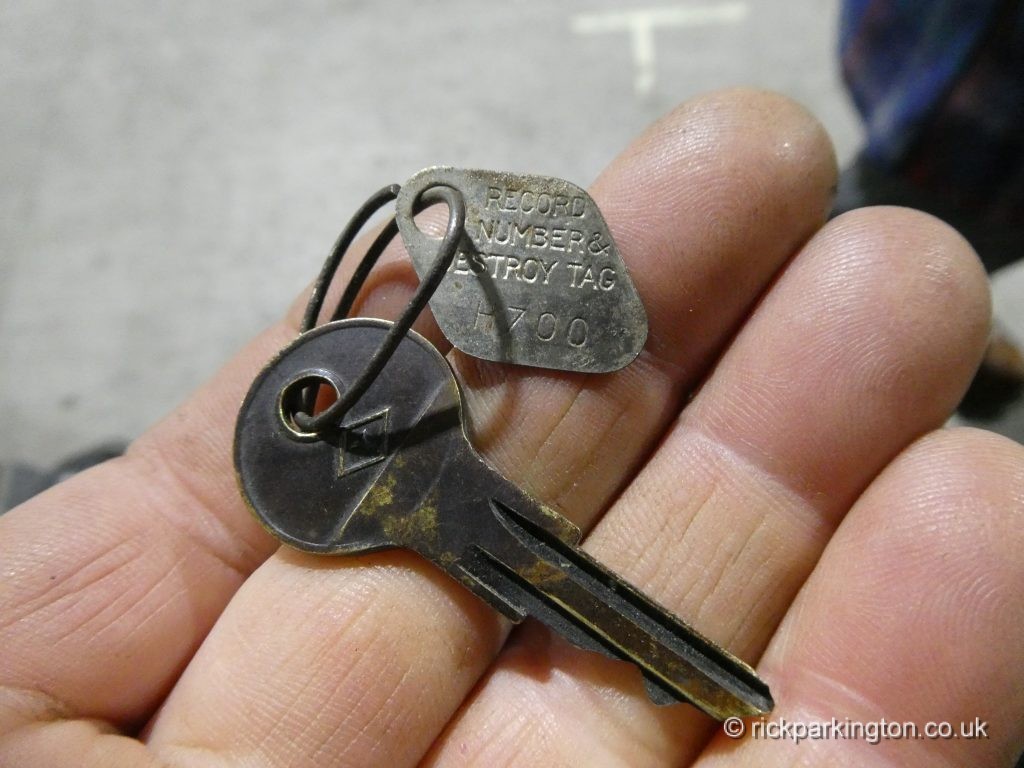
“Daft thing is,” he said, “All the Military bikes I’ve ever seen use the same H700 key!”
“Careful you fool!” I hissed, “Walls have ears!”
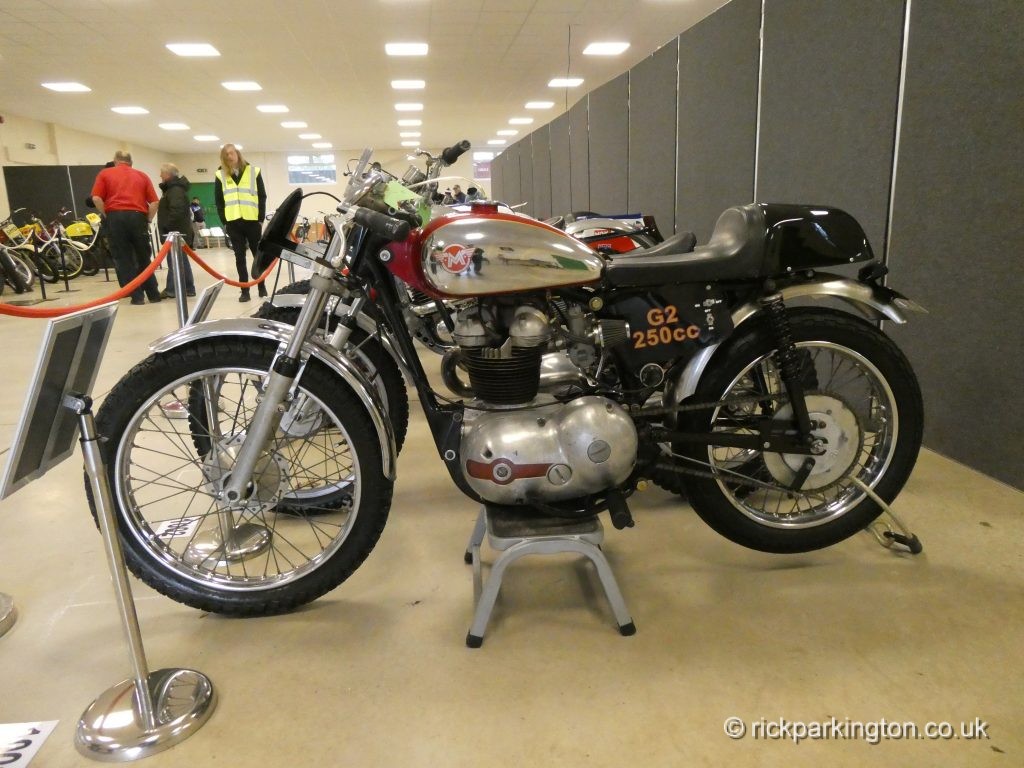 The AJS/Matchless 250/350cc ‘lightweights’ are not the most fondly remembered bikes of the period but I liked this one with it’s Ceriani type forks and big front wheel. We had a 250cc Matchless G2 for a brief period that Dad did up. Bit significant that in the box it came with were two broken cranks…but accidents will happen; and to be fair the felt oil filter in the crankcase was like a solid lump of waxy dried gunge, so you can’t really blame the bike too much. Put together it had a lovely deep thump and was quite pleasant to ride. Dad sold it to Andy Tiernan who at that time was selling 250s to Japan where I think there was some loophole in taxation or legislation for small bikes that made them very popular.
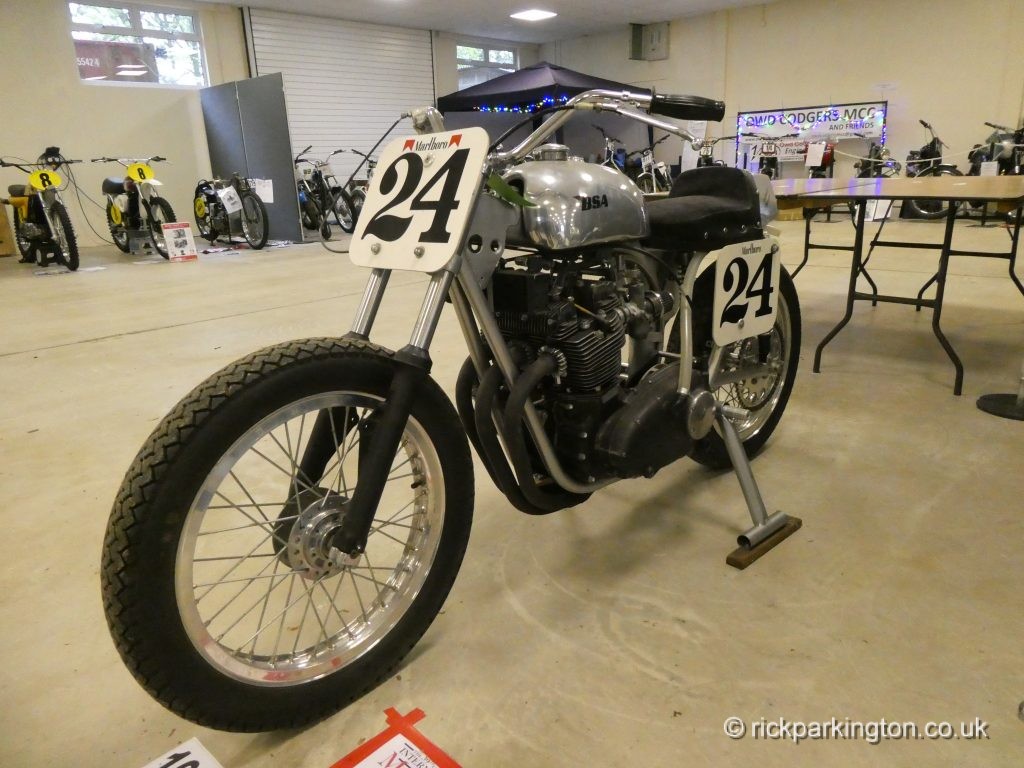 Hard not to like this BSA triple. I’ve seen it before and I am always impressed by how tight the bike looks; even the engine looks deceptively small. Flat track is a fashionable thing these days but it was seems to have been a bit overlooked this side of the pind even when our bikes were winning.
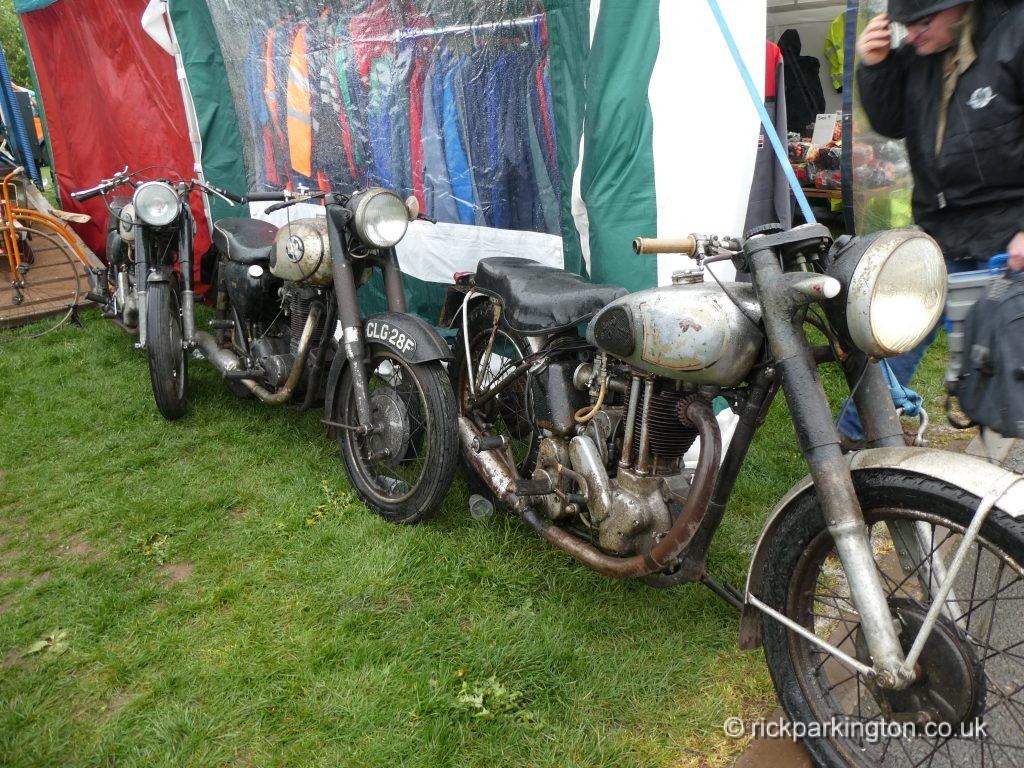 This row of dishevelled Norton singles was an unusual sight. Norton made very good singles but compared to AJS/Matchless, BSA and Ariel you don’t see that many so to find three different, all in unrestored condition had to be worth a photo.
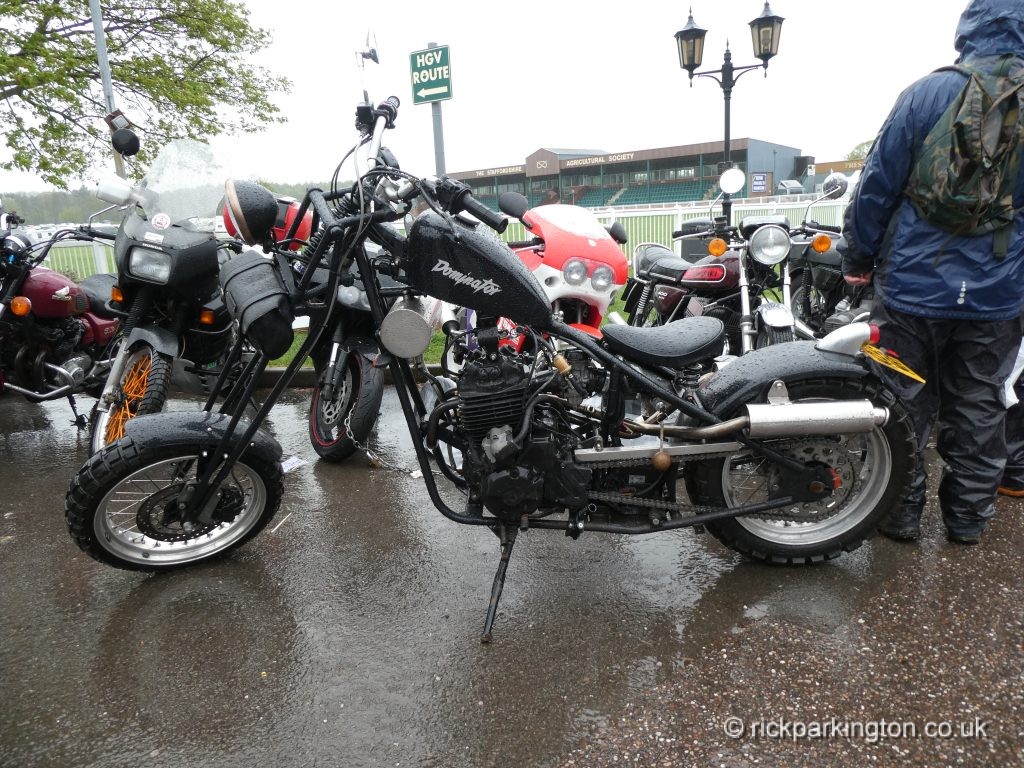 Talking of Nortons this is a Dominator – but a Honda Dominator, which I remember in the showrooms as a big red trail bike. I have to hand it to whoever built this; true to chopper philosophy – you may love it, you may hate it – but you can’t ignore it…
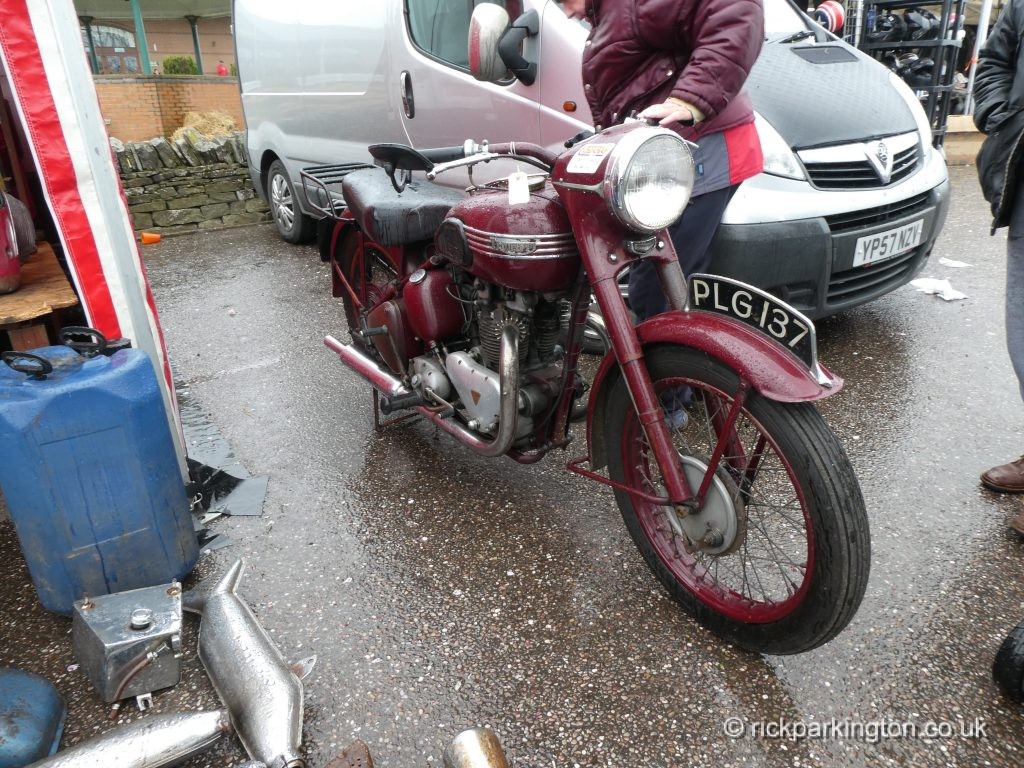 I couldn’t ignore this Speed Twin either. Nice; rigid/sprung hub Triumphs have a muted dignity about them, especially in weathered condition like this one. Still, not something I need, I’ve already got a ’57 Speed Twin I should be making the effort to sell… trouble is, well… the ’57 is the last of the pre-units with the strongest motor, you know – there’s not many of them about and this one has the added interest of being an ex Kent Police display team bike…It’s only done about 30,000 miles – still on standard bore, lovelt thing…oh fer goodness sake it’s a lot easier to talk yourself into keeping bikes than selling them!
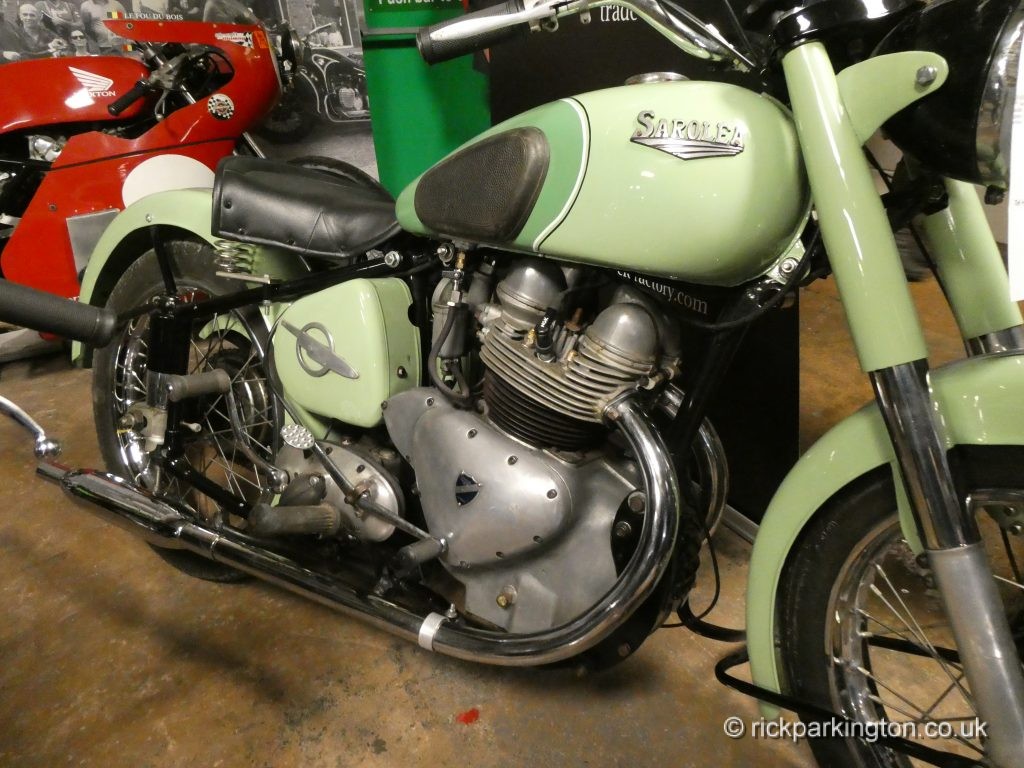 I’m used to seeing pre-war pictures of Belgian Saroleas but I didn’t realise they were making these in the mid 1950s. This is a 500cc twin known as the Atlantic; the top end has shades of an AMC twin about it, something a bit different.
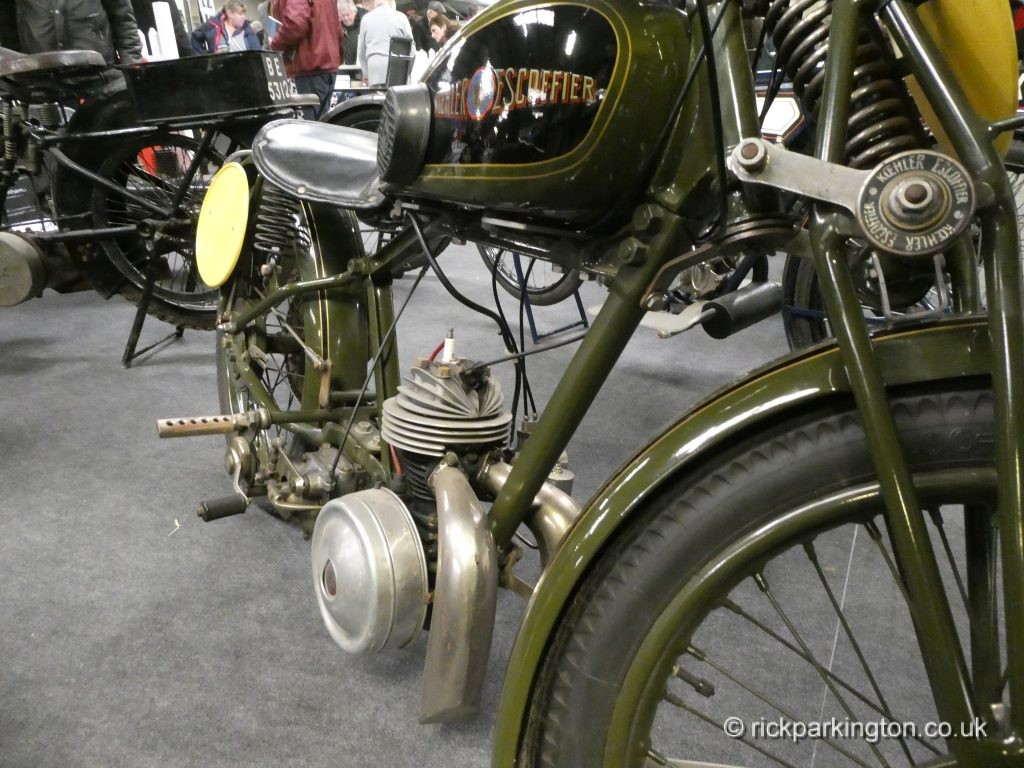
Koehler Escoffier; try painting that on your leather jacket without a spelling mistake. These little Super sports Villiers engines are delightful. I may have to post it later becasue i’m not sure i can find it but there was a lovely cartoon in one of the magazines at the time of a bloke sitting in a chair in Oxford Bags (the extrememly voluminous high fashion strides of the day) his legs compared to the exhausts on this engine.
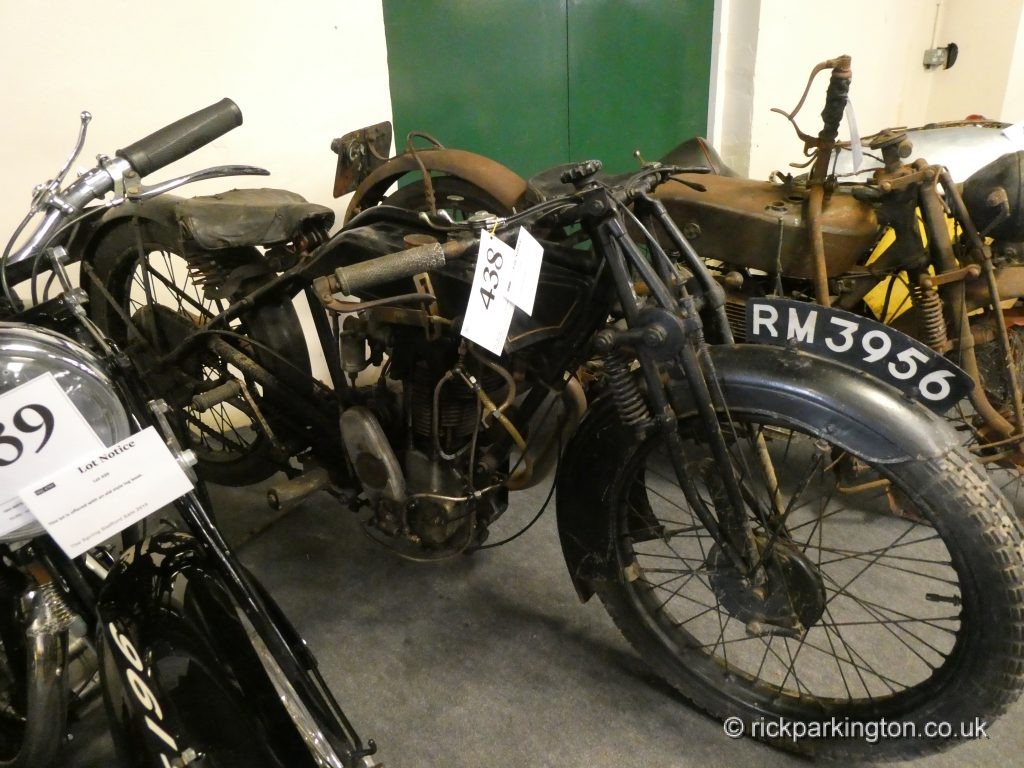 Aaaah, 1927 Model 9 Snbeam in the auction. If i hadn’t bought mine a while back this would have been on my wish list.
Warning: another digression. This is why Vintage Training Days as run by the VMCC are so important. 1920s motorcycles are ridiculously expensive…unitl you ride one and then, maybe if you see things my way, you find it is new motorcyles that are ridiculously expensive – and worse still, they lose money after you buy them! My Model 9 cost all I had at the time, and ever since come to think about it…but what a bike; fast, excellent handling, good brakes, shit gear-change but hey, you can’t have it all… It is clear that if you bought a Model 9 Sunbeam in 1928 you would have been Jack Flash. This one went for a surprisingly good price my spies tell me, hopefully it will not be headed for blasting and powder coat.
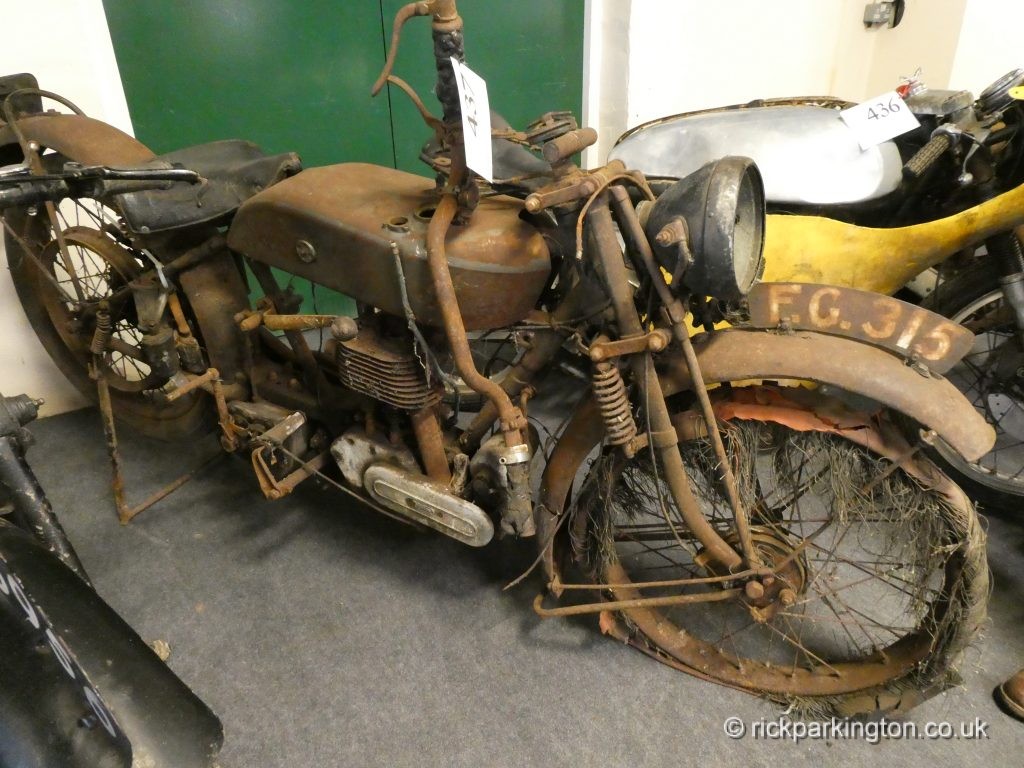 In fact I believe it sold for less than this Norton 16H. Thing is flat tank Nortons have been in their ascendancy for some time now, even side valves. I set myself on the Sunbeam side of the fence a log time ago (and then bought an Inter which kinda spoiled it a bit) but really, that Model 9 is a far better thing, I mean that Norton’s going to need a new tyre for a start…
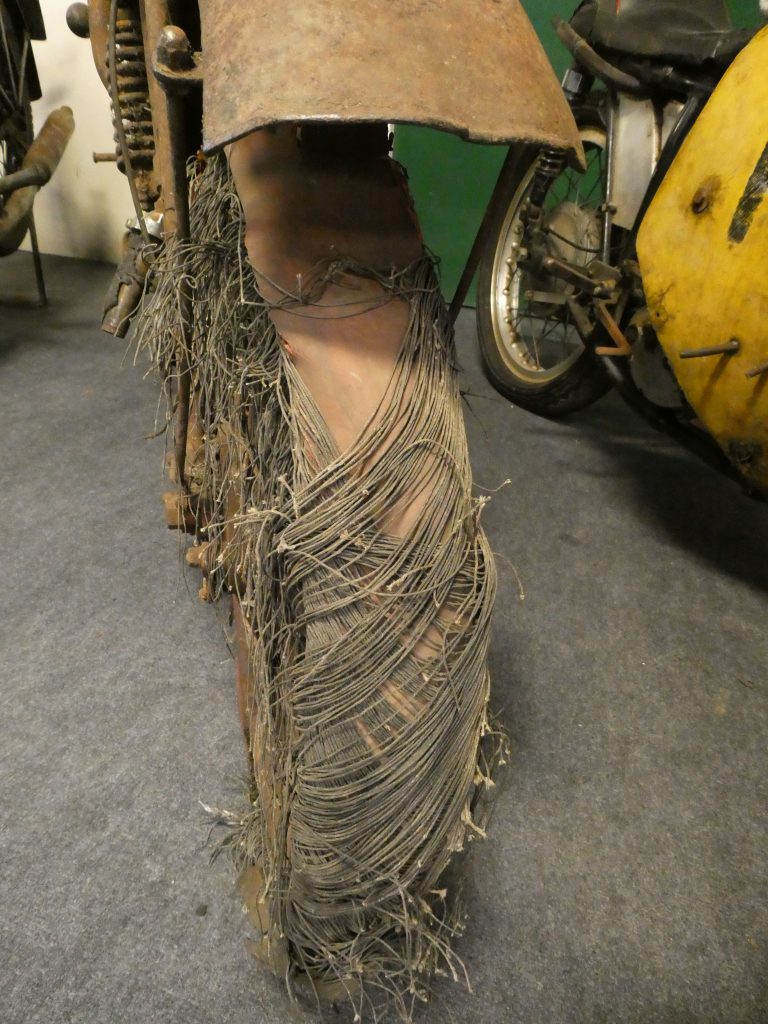 To each his own, I guess. Norton’s racing history extended into the 1960s and I think that is why Sunbeam have fallen by the wayside a bit; the current generation of affluence have a head-full of Duke and Minter; for me it’s all a very long time before I was here and I just like Sunbeams.
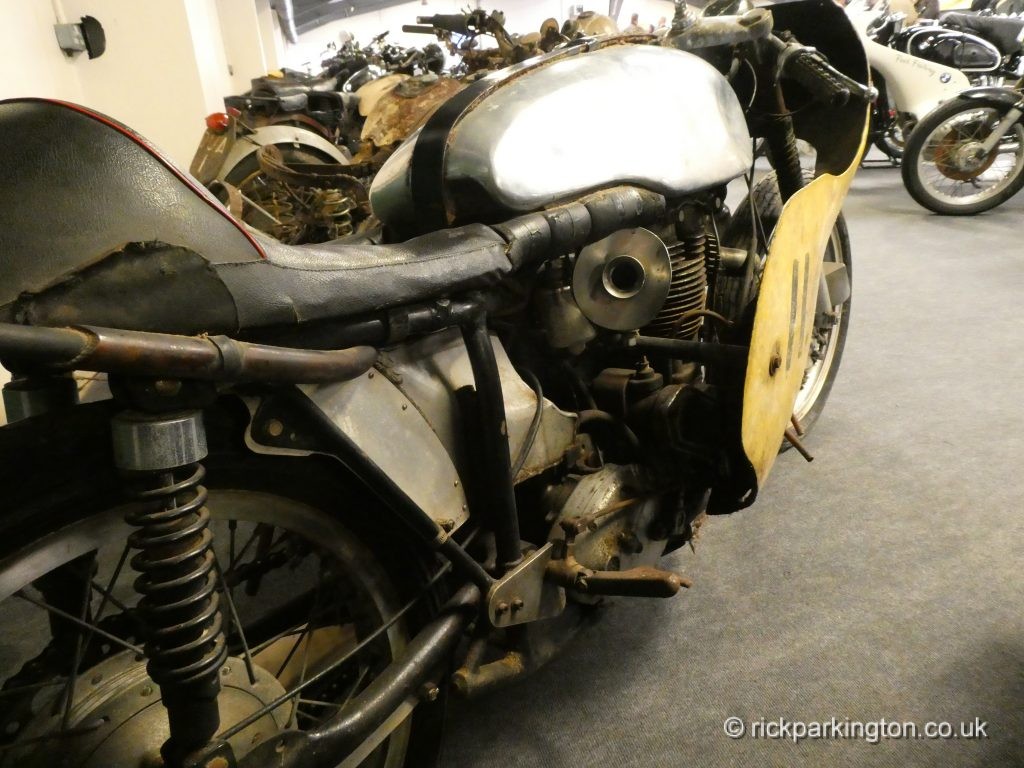 And Ariels. I have to admit I am an Ariel fancier but not an Ariel owner. I once had a basket case 500 twin KH but I sold it to my best pal Pete Barclay who made a superb job of it and made me feel a complete tosser… But there we are; this 500 single in the auction really appealed to me. No information in the catalogue at all but somebody had obviously put a lot of effort into it. Oh dear, this is where I turn into the weird bloke again… I think it’s a terrible shame that bikes turn up at auction that clearly have a BIG history but there is no record of it. What’s that about? When I bought my Rex Acme from Verralls it came with a superbly detailed history from the past owner (along with his phone number so we have become great friends) explaining that it was built by Brooklands Gold Star holder Guy Newman (if you happen to have a copy of the superb book ‘A Clubman at Brooklands’ Guy is the speccy bloke on the cover riding a KTT Velo) but so often bikes sold have completely lost all of their history and this Ariel is one of them. It appeared to be a rigid or plunger frame converted to swinging arm and fitted with a later top end and race fairing; lovely. I sincerely hope it doesn’t get broken up for its TT carb and 8000 rpm rev counter; I for one want to know the story !
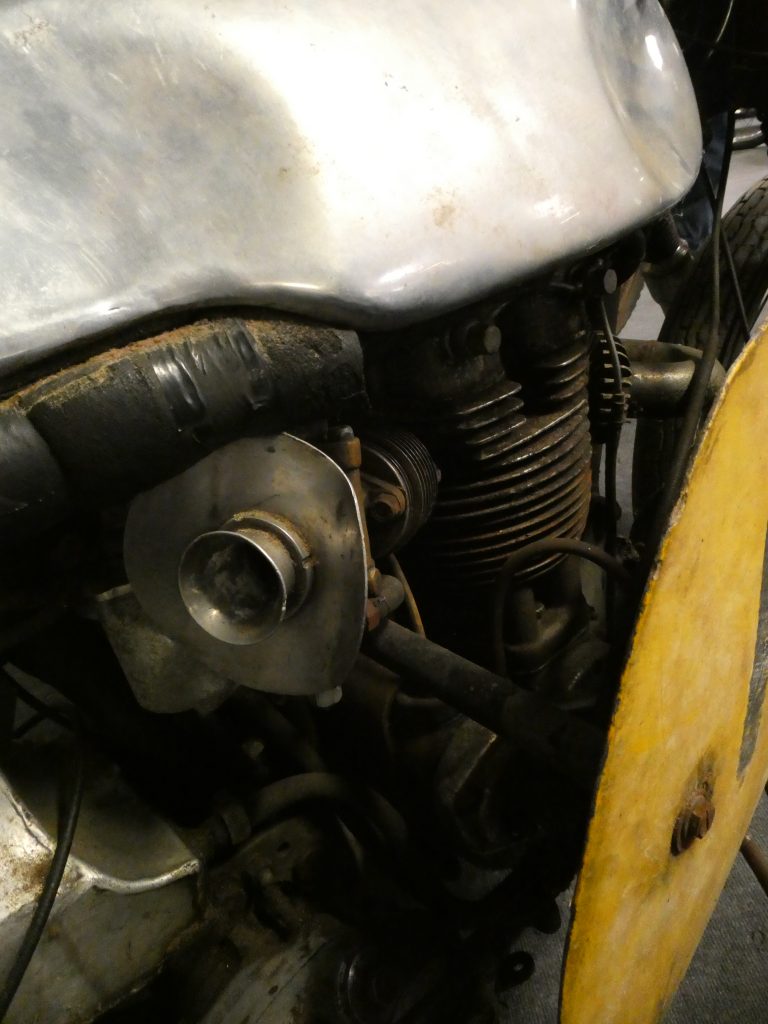 Ach, maybe it’s true there are ‘two kinds of people in the world’ maybe it’s those who look back and those who look forwards. Well, I didn’t go to see Star Wars, I was more interested in cowboy and War films and all these years later I’m more interested in knowing who raced this bike than BSB.
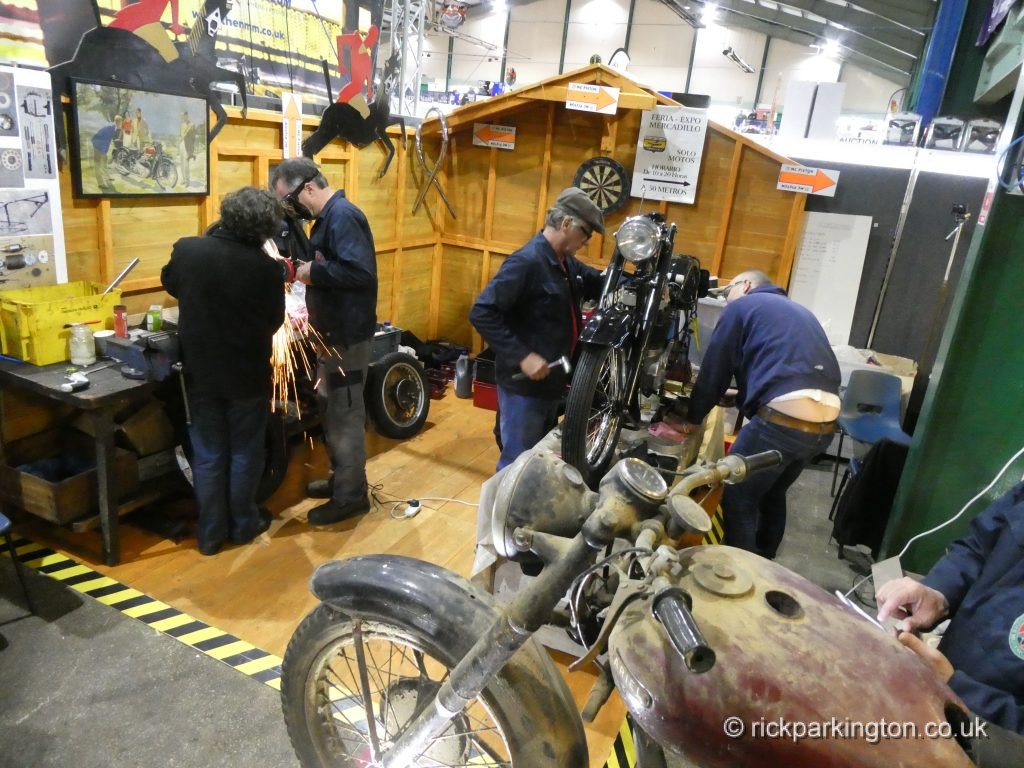 Speaking of Ariel the owner’s club did a good show of a working restoration (not builder’s cleavage, that can happen to the best of us!)
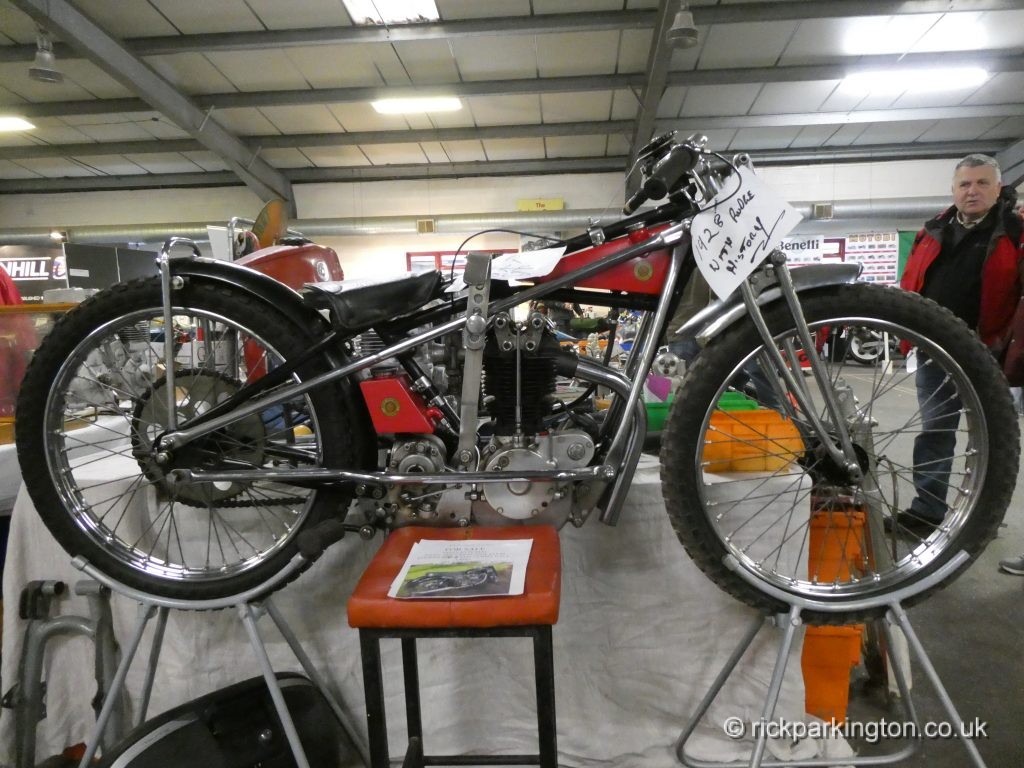 Judy wanted to take this Dirt Track Rudge home – but somebody beat her to it…
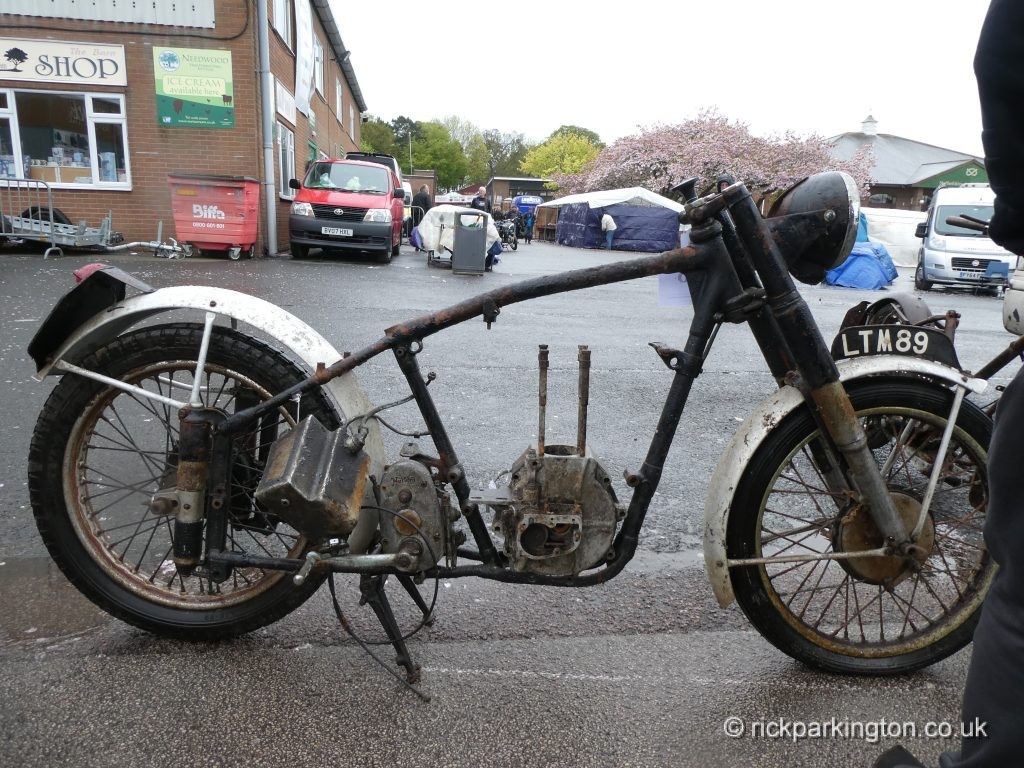 …and she decided she’d rather ‘borrow’ my Inter than buy this one which was lacking one or two minor items.
And I couldn’t resist the temptation to pair up these two weirdos…and I mean that in the nicest possible way!
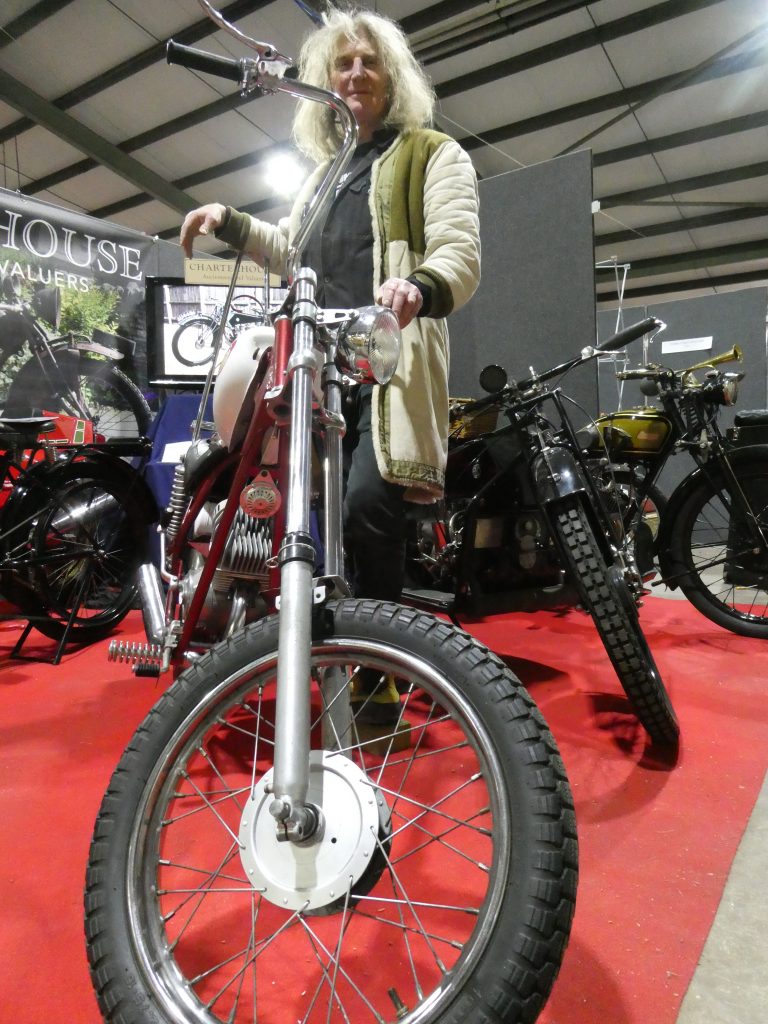
Yes, it’s our rockstar-alike pal Fiddy, Dave Fiddaman of ‘Davida’ (see what he did there?) Helmets and a Fantic Chopper on Charterhouse Auctions’ stand. Somehow it seemed a perfect match… Fid has been a great pal for a lot longer than I care to remember and represents for me a spot of integrity in a fashion-conscious world. Anybody can set up making a ‘cool’ helmet but Davida go a very long way to make sure it might save your ass as well as your street credibility.
And Fid rides very fast modern bikes wearing his open face helmets, not Fantic Choppers if I am truthful…
As ever Stafford was an exhausting but fantastic weekend; but last weekend was a little more relaxed. The Ixion Run is centred at St Barnabas Church in Bexhill-on-Sea, Sussex were ‘Ixion’, Canon Basil H Davies tended his flock from 1926 until 1940; when, it appears, God took a five year sabbatical…
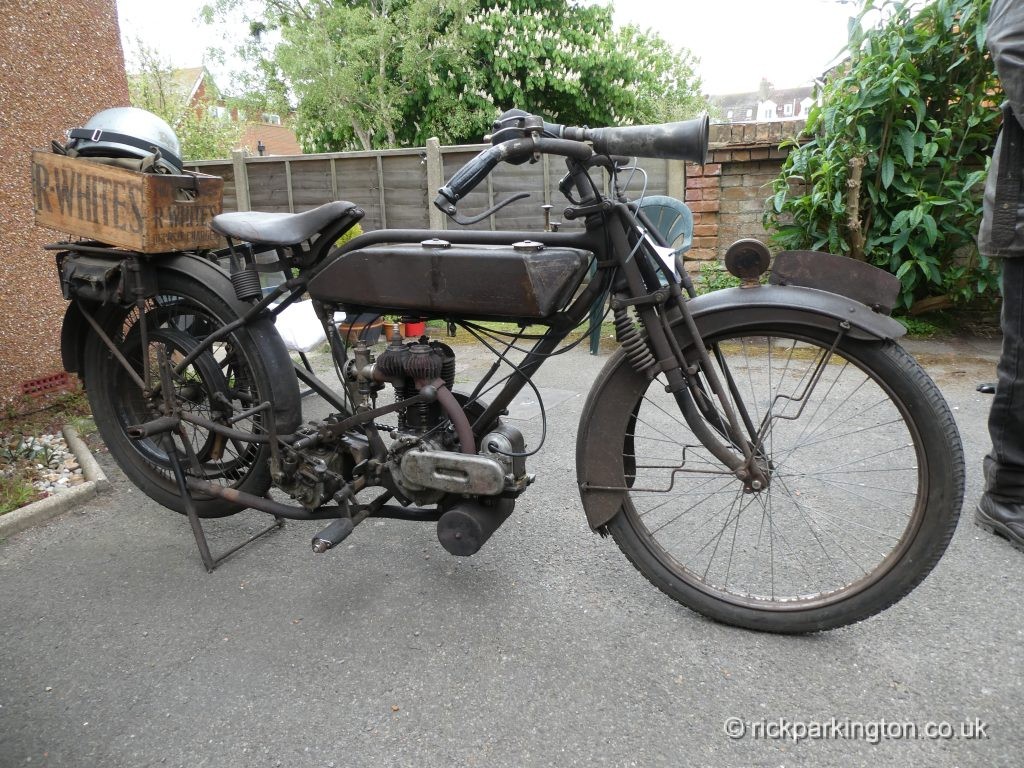
The Ixion Run is a delightfully low key event, a 40 mile run around the flatness of Romney Marsh where Ixion himself satisfied his motorcycling urges – although by 1926 when he arrived, bikes were more than capable of scaling an incline. He should have gone there when he was riding Pioneers. I like to use my 1916 Blackburne for this event, it’s my oldest bike, although not old enough for the London to Brighton Pioneer Run.
Now, I suppose this is a reflection of my getting older but to me a bike that is 100 years old should have a chassis fashioned from timber and an engine that runs on coal. I mean come on, the Blackburne has a clutch, a three speed gearbox, magneto ignition, a conventional carburetter, front and rear brakes…it reads (almost) like a brochure from any current bike shop; how can that be century old technology? I guess it just goes to show how far we have come in 100 years – um, not very! Ten years before the Blackburne was made, people were riding a candle strapped to an atom bomb; since then progress has really been rather slow. Thank goodness for the computer, if that hadn’t come along to control fuel injection, the Blackburne’s suck-squeeze-bang-blow engine would have still seemed quite avant garde…
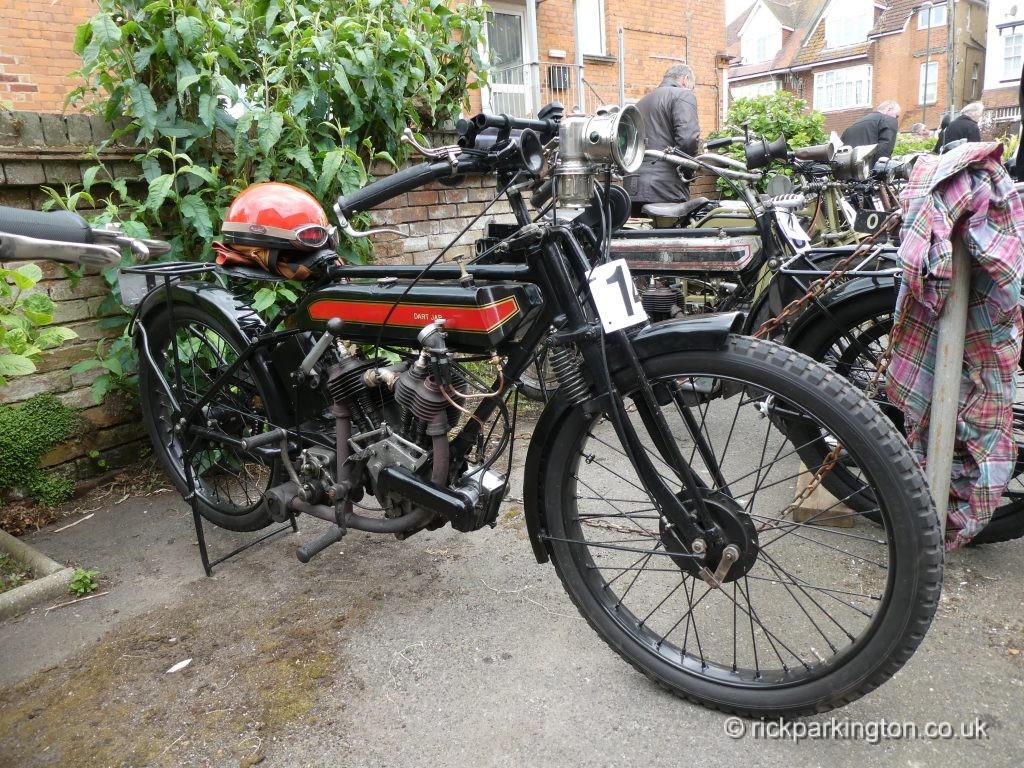
Anyway, the Riders’ Choice award went to this splendid Dart JAP…
 Although I also really liked this Humber.
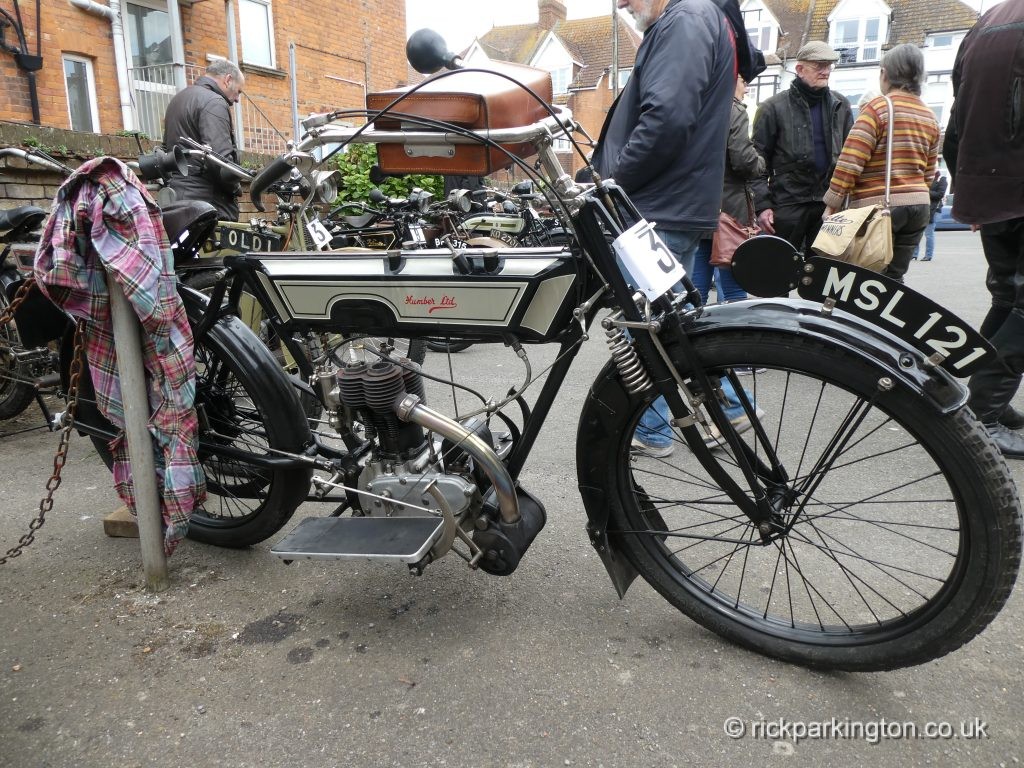 Funny, when I was a lad my project 1925 BSA represented the apex of uncontrollable motor-cycling bedlam: 55mph, no brakes… Trouble is I have since found that ‘twenties bikes are actually pretty sorted, even the 1916 Blackburne isn’t a big problem to ride on modern roads so long as you look in front of the vehicle in front; so I am constantly drawn closer to the dawn of time and this Humber looks a challenge.
But probably not so much as Ian Hawkins’ 1914 Wall Auto Wheel. At the lunch stop I dug out some tools to help Ian reattach his rear chain but later found him pedalling (uphill) like a man possessed having lost the chain permanently. He grabbed my carrier to assist in cresting the gradient but asserted himself happy to pedal to the finish…at least 8 miles hence…
Bugger that, I thought; Ian is clearly a better man than I but since I always carry a tow rope in my bag, I pulled over and tied it to the Blackburne’s rear carrier, aiming to tempt him when I next caught up. As it happened, next time I saw him he was emerging from the rough, having enjoyed a spell of off-road riding after hitting the handlebar with his knee and he accepted my offer. When we got back to the outskirts of Bexhill, ever the trouper, Ian cast off to pedal the last couple of miles back.
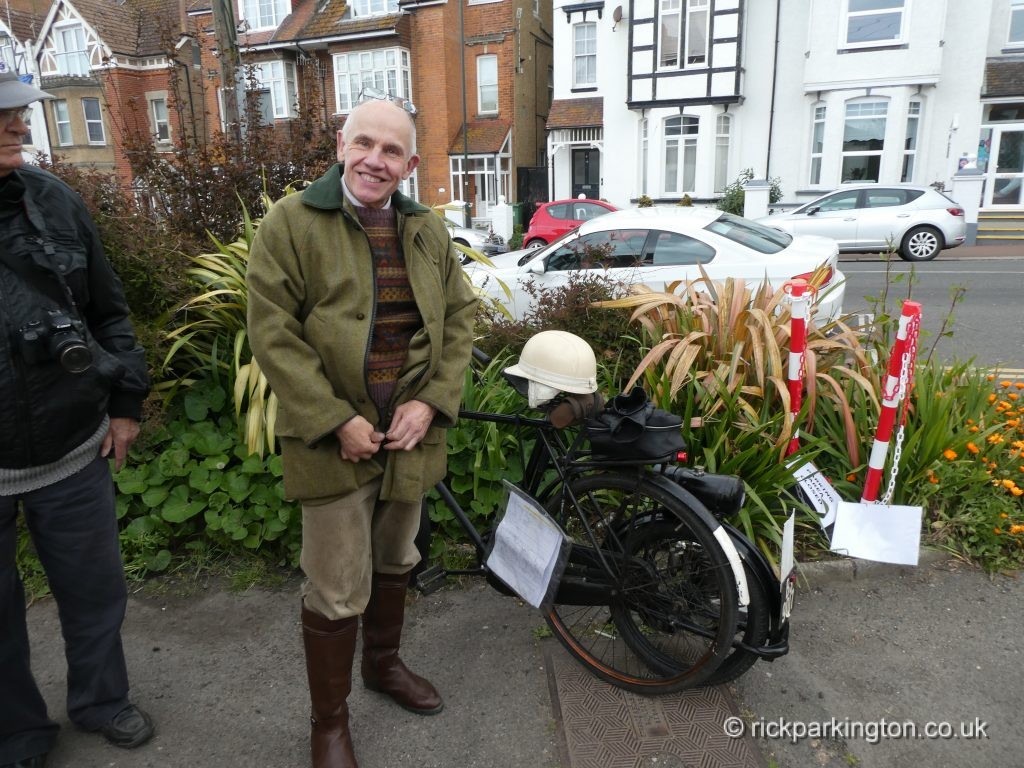 What a star! That experience made my day really; I realised that a bike run is made complete by a minor disaster of some sort, a breakdown or whatever, with the challenge of trying to help sort it. I was very proud of my bike, made during the Great War; how fantastic that it was not only carrying my fat backside all these years later but also pulling a fellow rider and machine to boot, a smashing day out!
 . Cheers Rick
Spoke to the guy who bought the Model 9. Went to Northern Ireland. Looks to be in good hands. And it was a bargain!
R
Regarding M20s; I eventually got about 85 out of mine. Now (as well described elsewhere) resident in Finland with one of Tombeau’s mates.
All things are possible…!
R
Thanks for posting the picture of my 1918 Dart-JAP, I’m glad you thought it ‘splendid’ it’s only been road registered for about a year having been a Brooklands racer in the dim and distant past so is a bit of a handful for me to ride.
Well done, Martin! Yes,I should imagine it is a very large handful…but that’s what keeps it all exciting; just so long as it doesn’t get TOO exciting, other drivers – even motor cyclists are usually very unaware of how much effort it takes to pilot a real oldie!
Cheers Rick
I also noticed the Speed Twin (having got a ’53 model with sprung hub) but was quite shocked at the price tag on it! Either he didn’t want to sell it or was being very optimistic.
Also my Aunt, who sadly died last year lived just down the road from St Barnabas church and not only used to worship there but we also held the funeral of another Aunt in the same church. Funny but the rest of the family didn’t seem too interested when I said who used to be the vicar there!
Yes, Stafford is a place of great optimism…both for buyers and sellers I guess!It is a problem I’ve commented on before that patinated bikes look great and have at last come into their own in desirability terms…but they may be equally patinated on the inside and cost you a fortune on top. On the other hand, the same applies to restored bikes.
I’d say you are always better off (if you have the experience) buying a bike in bits so you can see what you are getting or if you are not confident/or don’t have time for that try to find a bike you know, or join a club and ask around about bikes for sale. Nobody likes selling a pile of junk to someone they are likely to see regularly.
I wonder what Ixion would have made of it?
Cheers Rick