
 In the last thrilling episode… Judy’s Scott popped a cork at the Scott Rally…but the season isn’t over yet! With her other bike in bits, things looked bad. Now read on…
After a five-hour drive home from Abbotsholme, the bikes were unloaded and tucked up in bed by 9pm Sunday. We were due to leave for the Isle of Man in a couple of days so it looked like the Scott would be staying behind; there was no time to fix it…was there?
I decided I should at least find out what was wrong, so onto the bench it went. By 1am the bike was stripped and I was ready for bed.
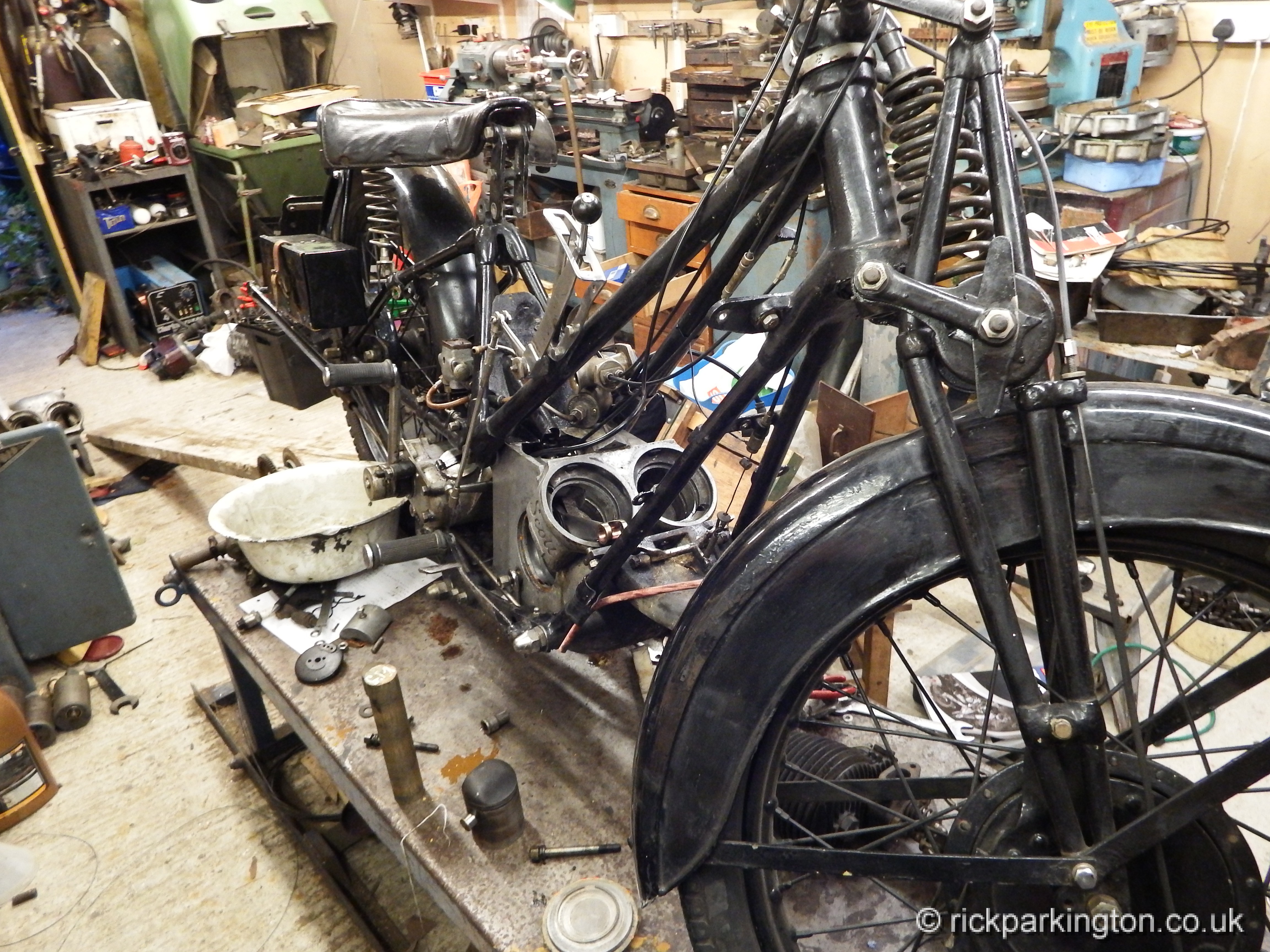
1928 Scott Flying Squirrel laid bare in the wee small hours…
On the left side the small end had seized, on the right the piston was jumping about on the gudgeon pin. Good job Judy stopped when she did. I began with the loose side. Gudgeon pin bore wear is not particularly unusual with Scotts but replacement pistons are hard to get, so the answer is to bore out the gudgeon pin bosses and sleeve them with bushes of aluminium or bronze. As original, these Scotts use bronze buffer pads in the gudgeon pin ends as opposed to circlips. This was a vintage idea, the pin is free to move side to side and the soft bronze pad prevents any damage to the cylinder. It’s not as old fashioned as it sounds, circlips have always been viewed with some suspicion; when they escape serious damage results so some modern racing engines have gone back to pin pads, only these days they are made of Teflon.
Obviously over time the bronze (never use brass, by the way, it’s hard and will score the bore) pads wear away and need to be replaced but in the days when engines were stripped relatively regularly for decoking, it wasn’t a big problem to monitor wear. In the case of the Scott, a porthole in the inboard-side of the cylinder wall makes it undesirable that the pad should touch the bore this side, the pin could easily slide into the port and lock the engine, so the opposite pad has a large mushroom head that fits into a rebate in the piston. Thus the pin can only slide out on the side without the port and rivets securing the pads to the pin keep everything secure. As it happens, it was the mushroom end of the piston that had let go, the other side was remarkably good. So up at 7am the next morning, I made a mandrel to mount the piston by putting a piece of aluminium bar in the lathe and turning it down to a snug fit in the undamaged pin bore. A bolt and washer to clamp it in place and the piston was ready for boring.
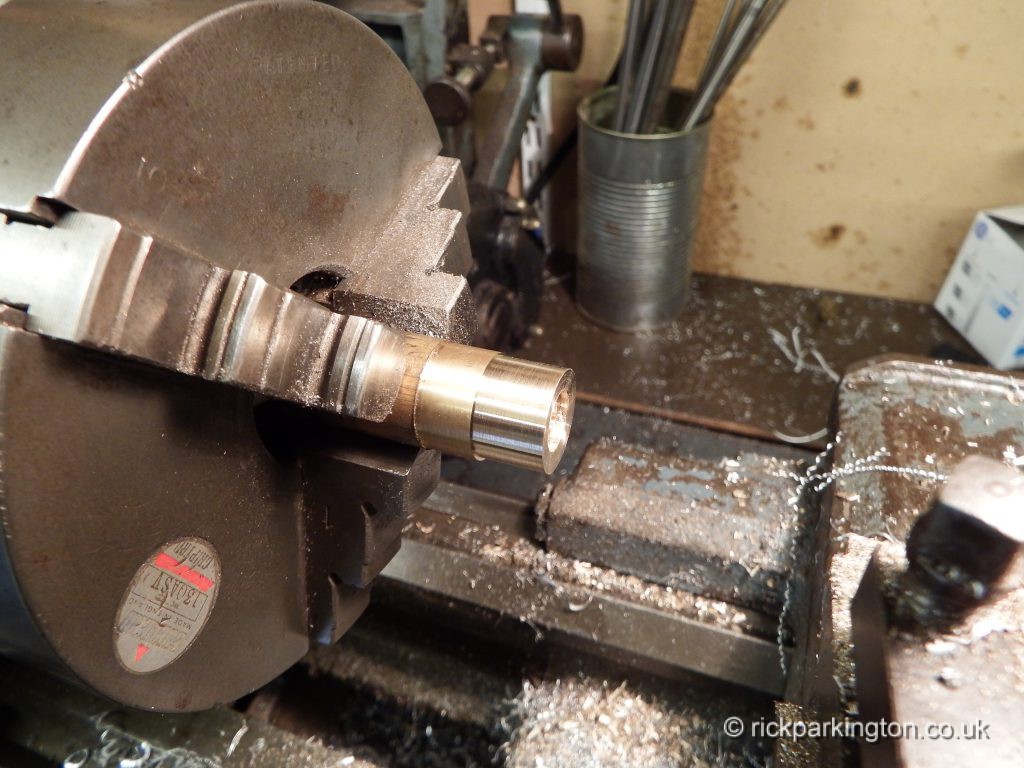
 With the ovality all trued up, I turned a bush from leaded bronze to fit the oversized hole. I made it a couple of thou oversize to give an interference fit.
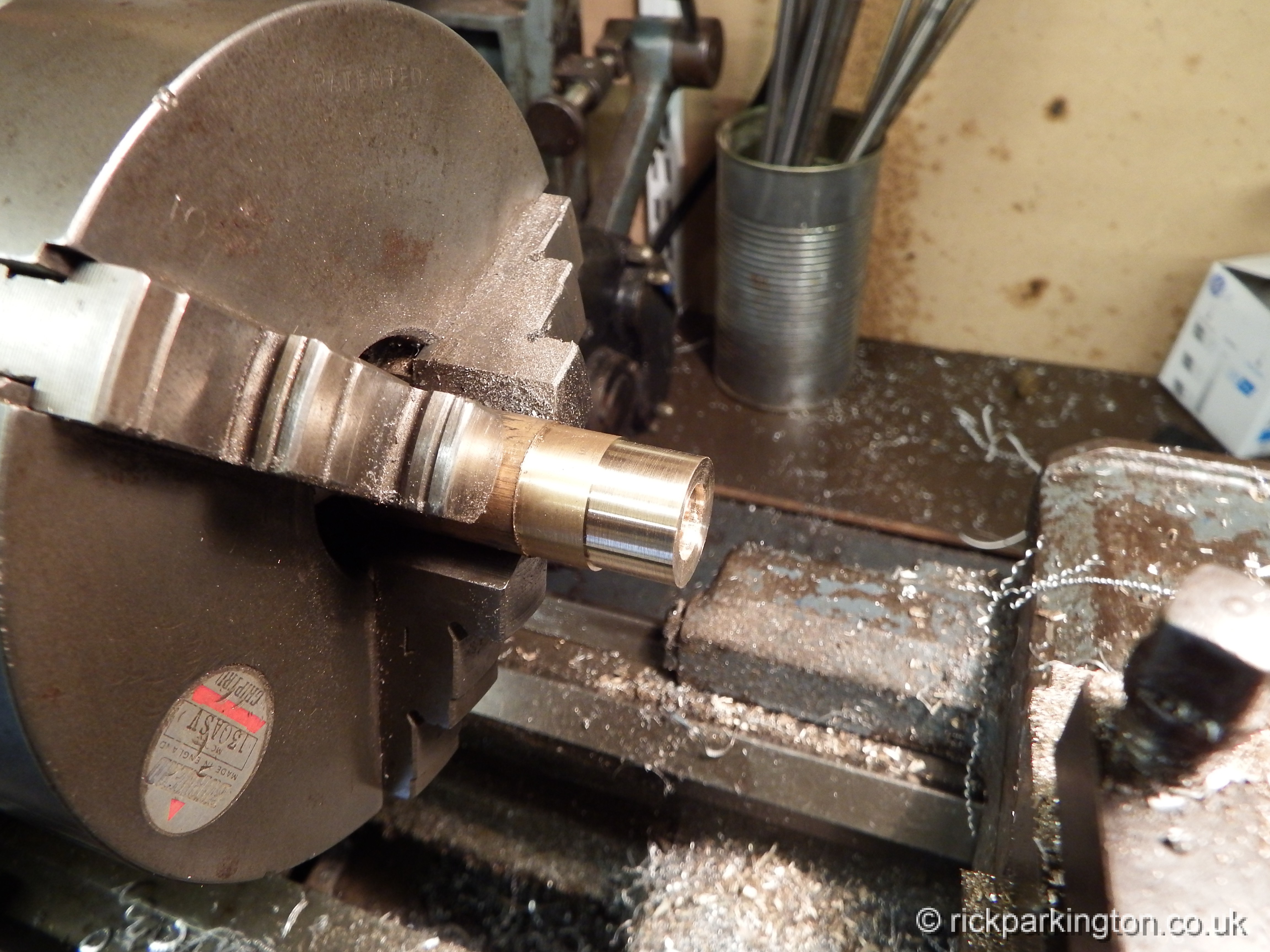
Turning the piston bush from lead bronze
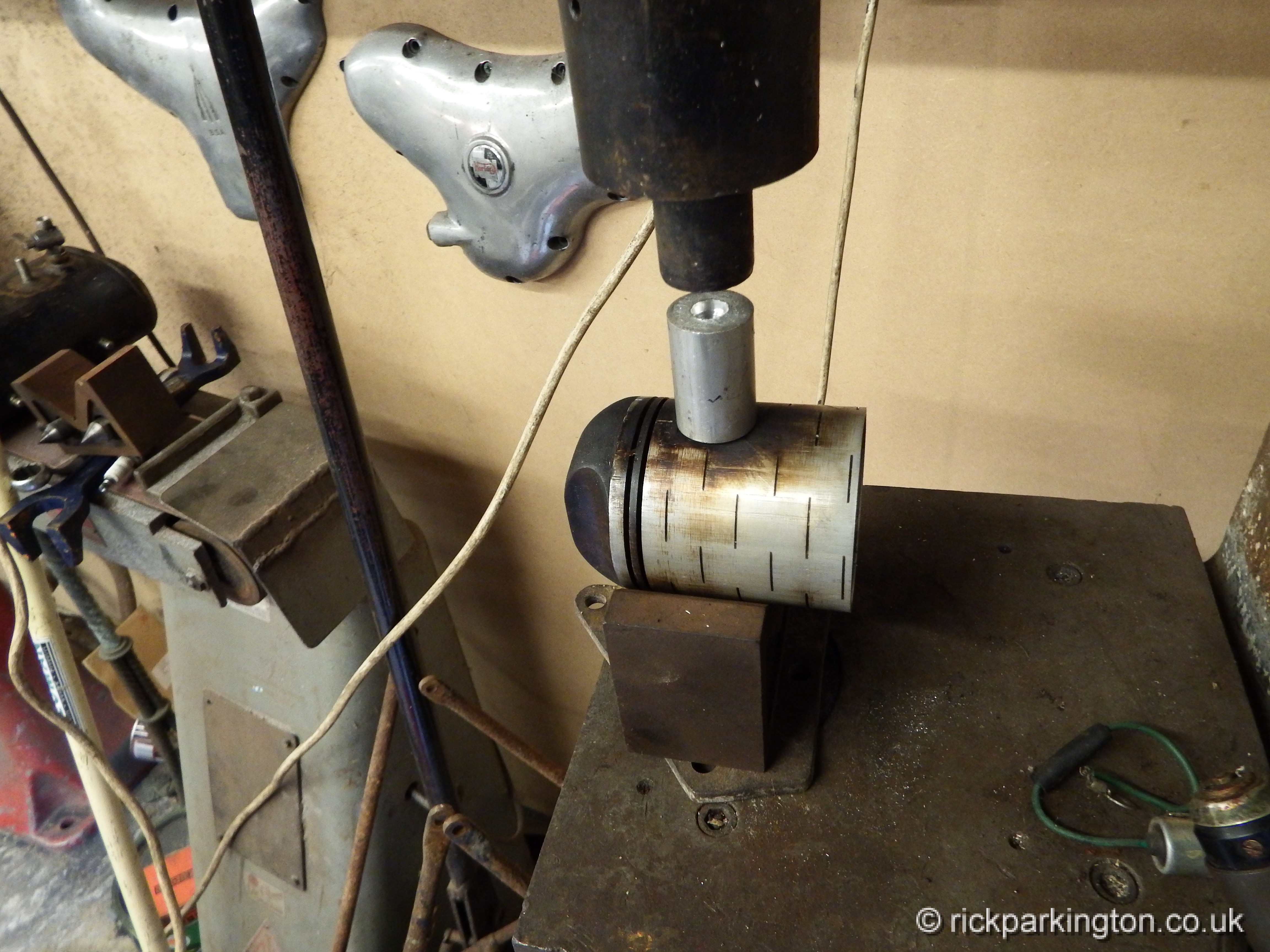
After heating the piston in the oven, the bush can be pressed home
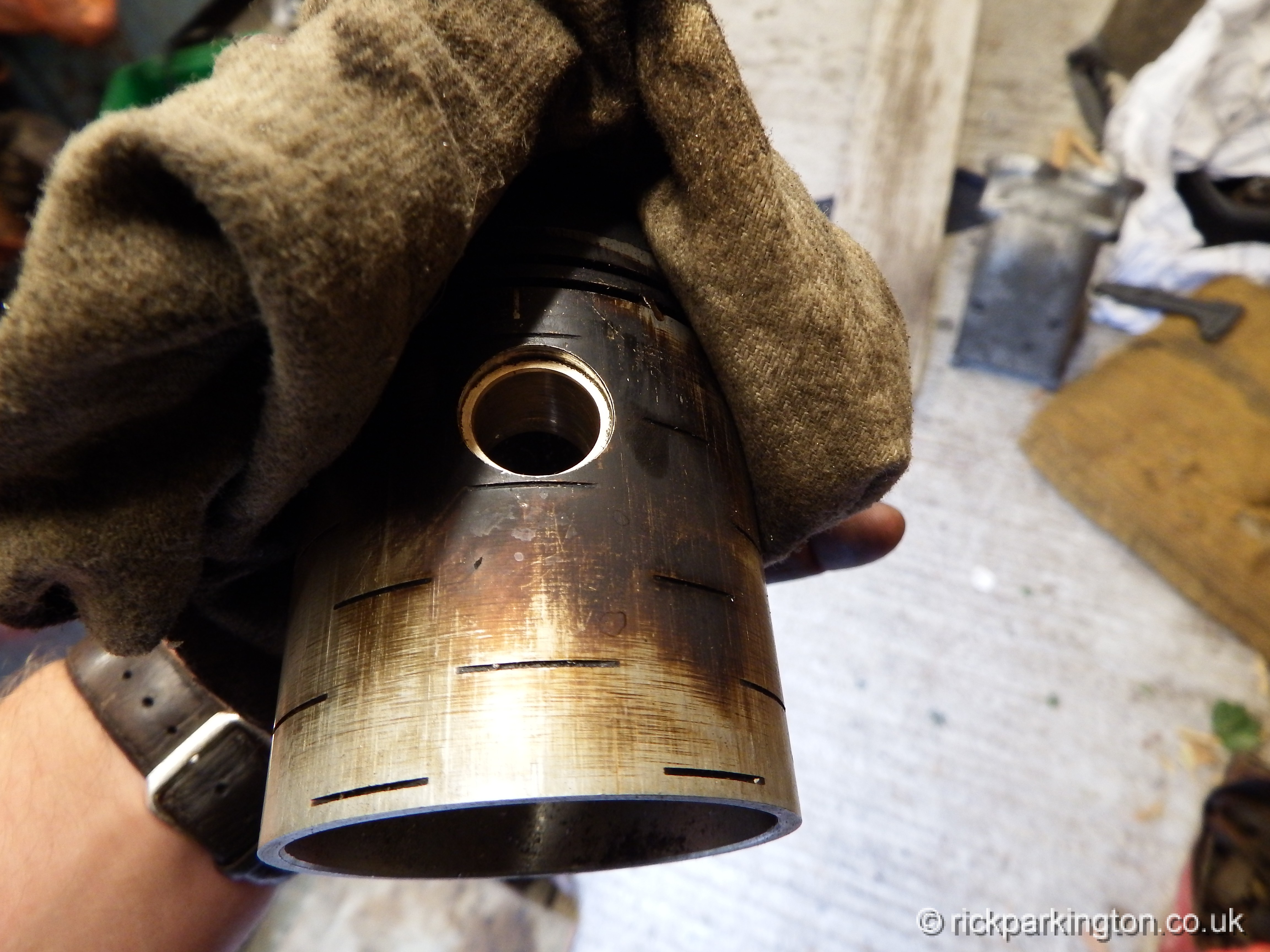
Job done, the bush is recessed to accomodate the mushroom head of the gudgeon pin buffer pad
Apparently it is common to do away with the gudgeon pin pads when doing this modification and install circlip grooves instead but I decided to stick with the pads because I reasoned that the circlip only retains the pin in the bush, if the bush were to come loose in the piston the whole lot could slide out into the port, circlip and all. My bush is the same outside diameter as the mushroom buffer pad but the pad will still hold it in place one way and the small end bush blocks it coming out the other; well, unless it works its way out gradually, wearing away on the small end but I don’t think it’s likely. Besides that would be a slow process that would reveal itself before doing too much damage.
Now for the other side. Rather than try to hammer the tight pin out of the piston I used the Scott facility for easy big end replacement (see ignition timing post) and whipped off the piston and rod complete to extract the pin on the press.
Oh, what’s happened here…
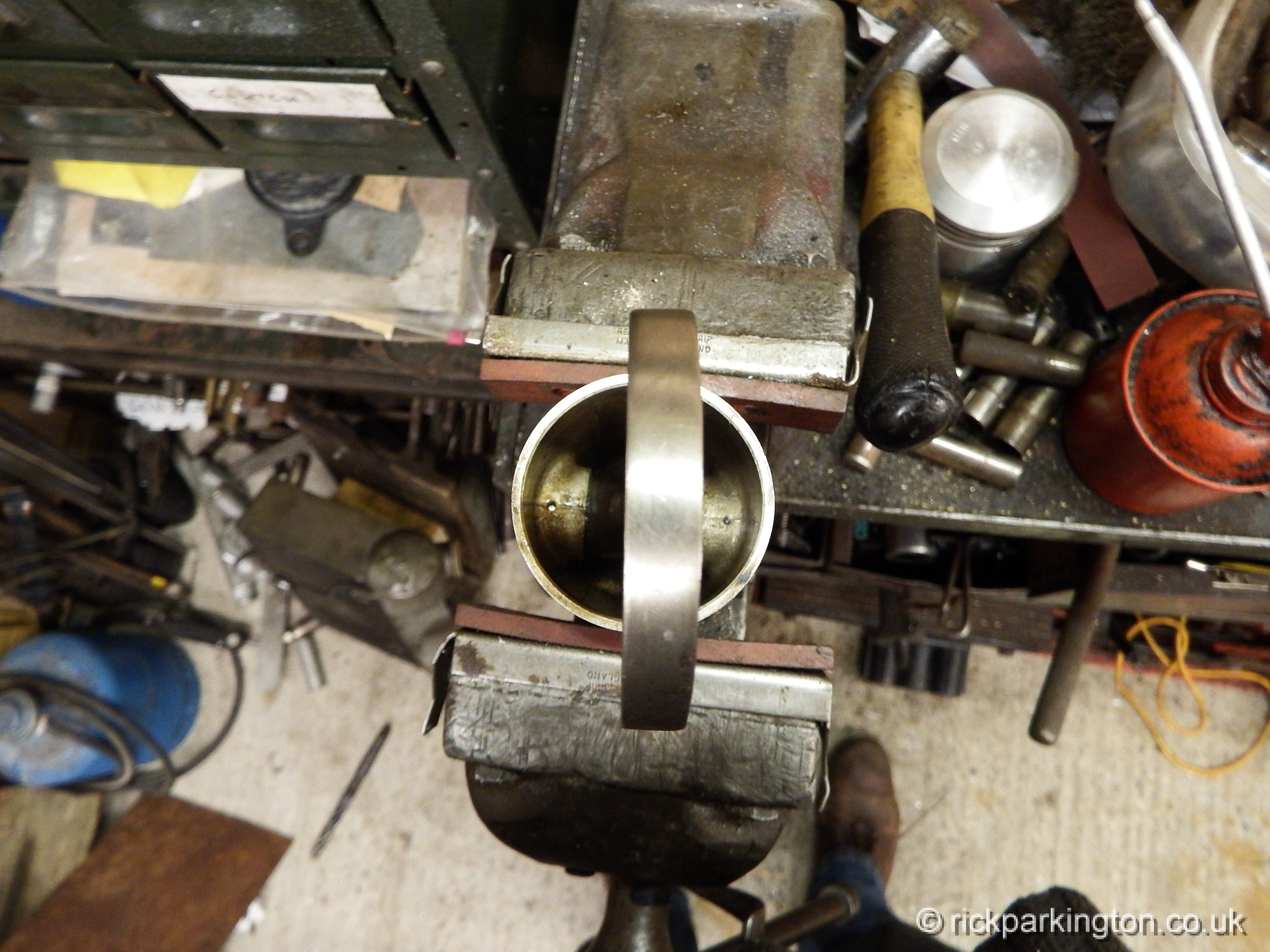 The piston was severely skewed on the con rod, suggesting the rod was twisted or maybe the small end bush had completely disintegrated. I pressed out the pin. Both it and the bush looked a bit glum but not bad enough to create so much distortion. The pin came out with an aluminium bush seized to one end so obviously somebody else had already performed a piston bushing operation on this one – mind you I noticed they hadn’t drilled the oil holes…
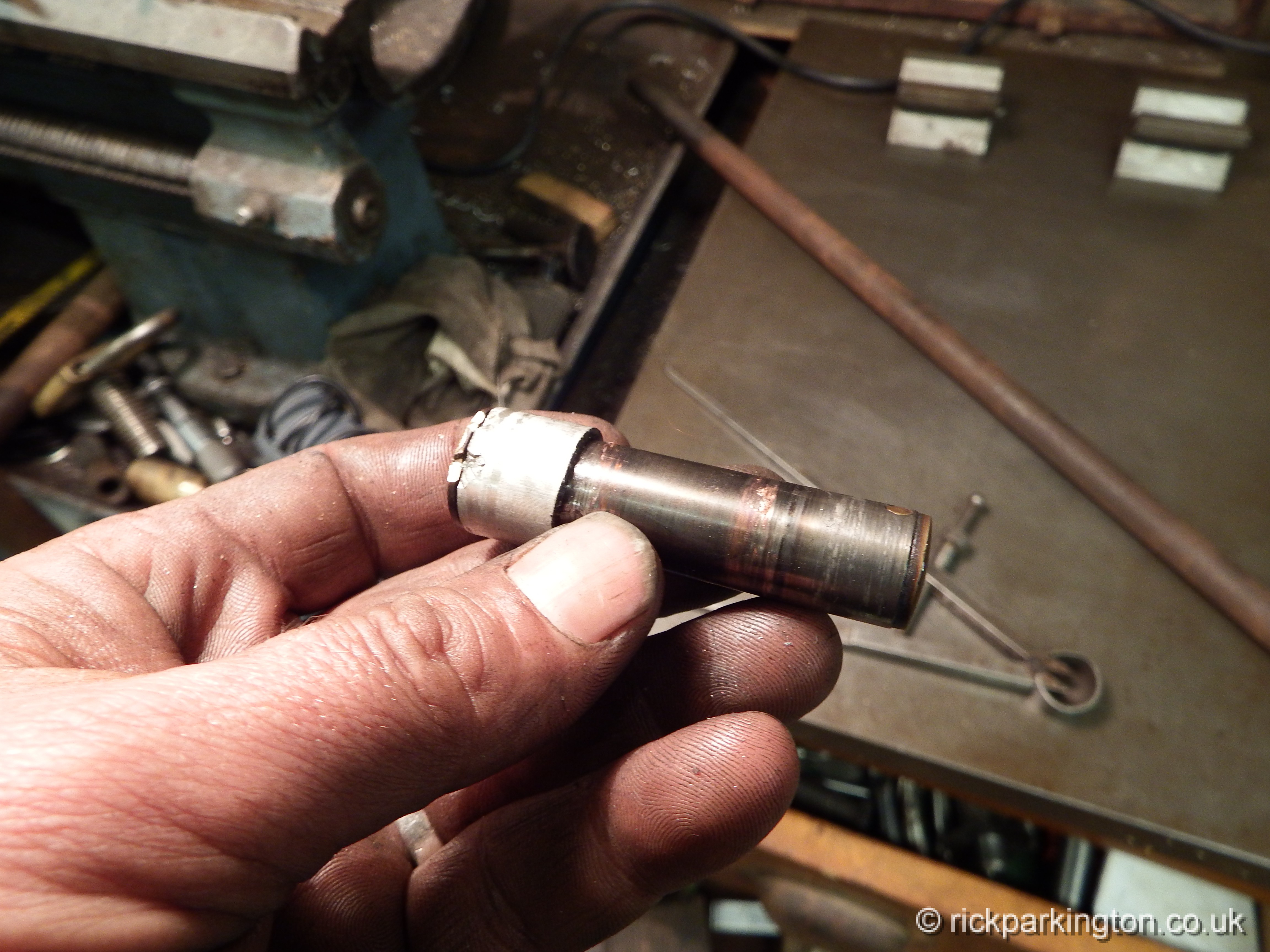 Here you can maybe just see the mushroom headed pad, it’s more or less the same size as the aluminium bush whereas the pad on the other side is the same diameter as the pin.
Since the pin and bush cleaned up not too bad I was forced to conclude the rod must be twisted but setting it up on a surface plate suggested it wasn’t.
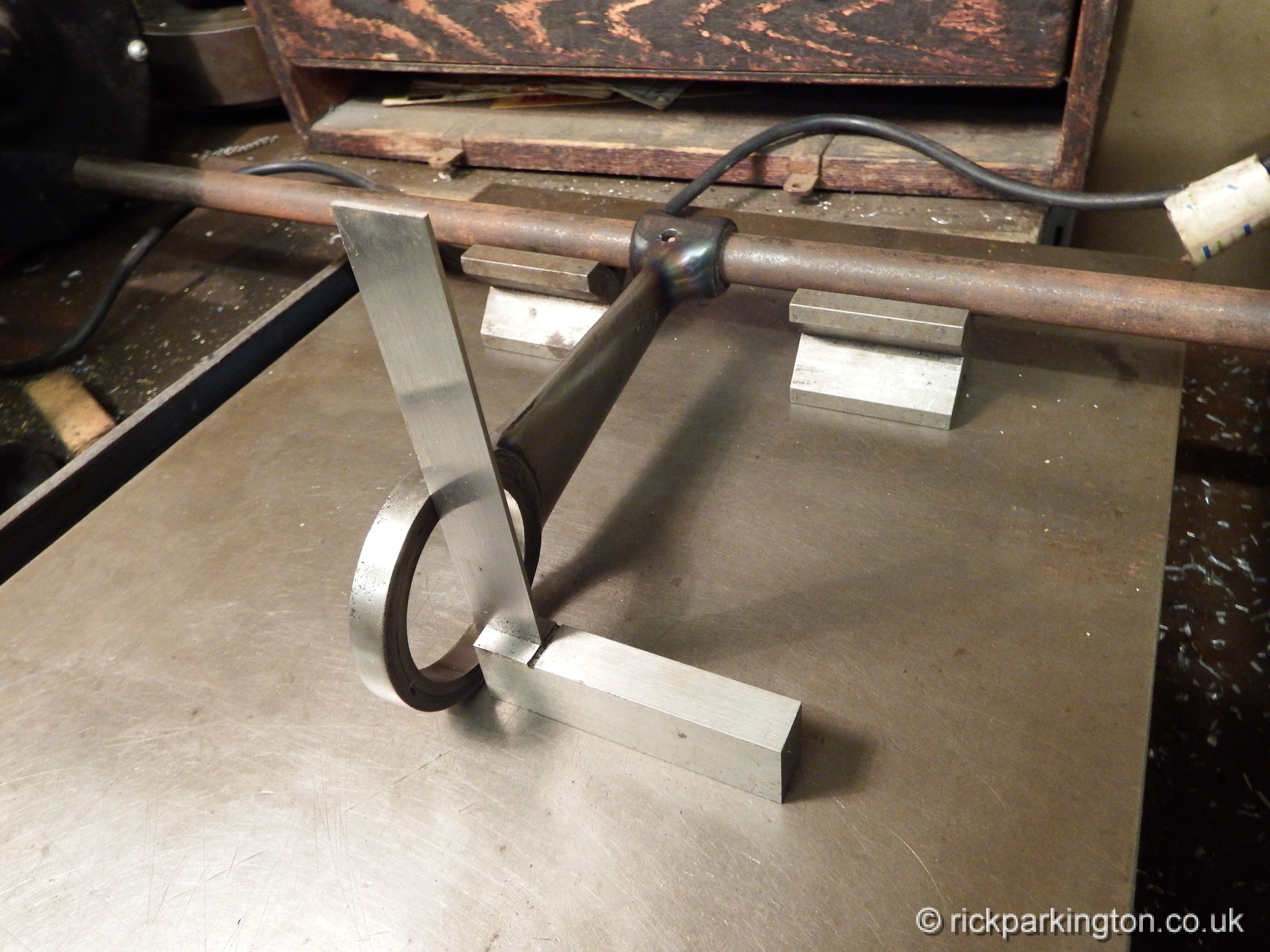
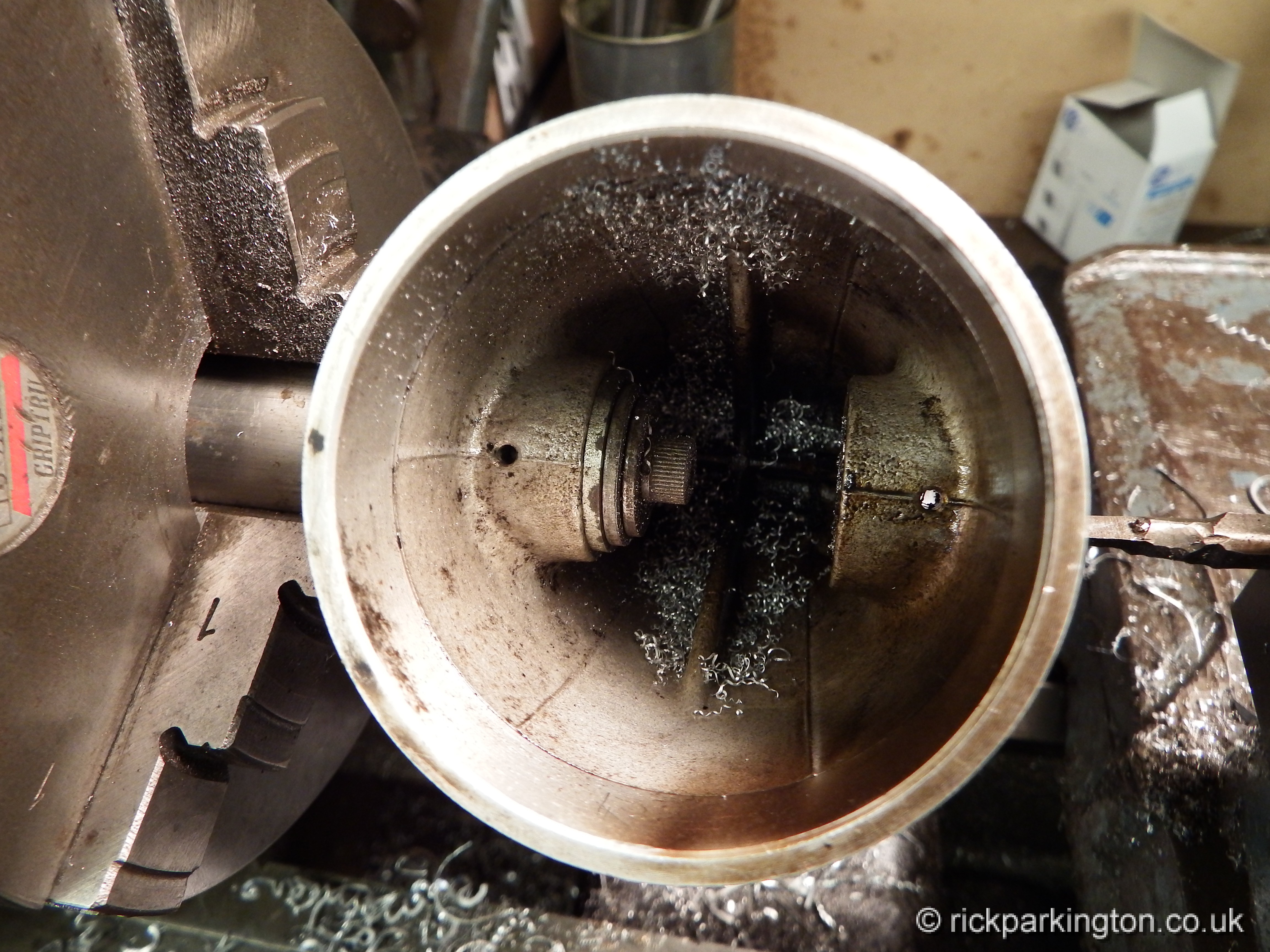
It was only when I put the pin back in the piston that the problem was obvious. Not only had the previous repairer not drilled the oil holes, he had managed to machine the gudgeon pin bores way off the centre line.
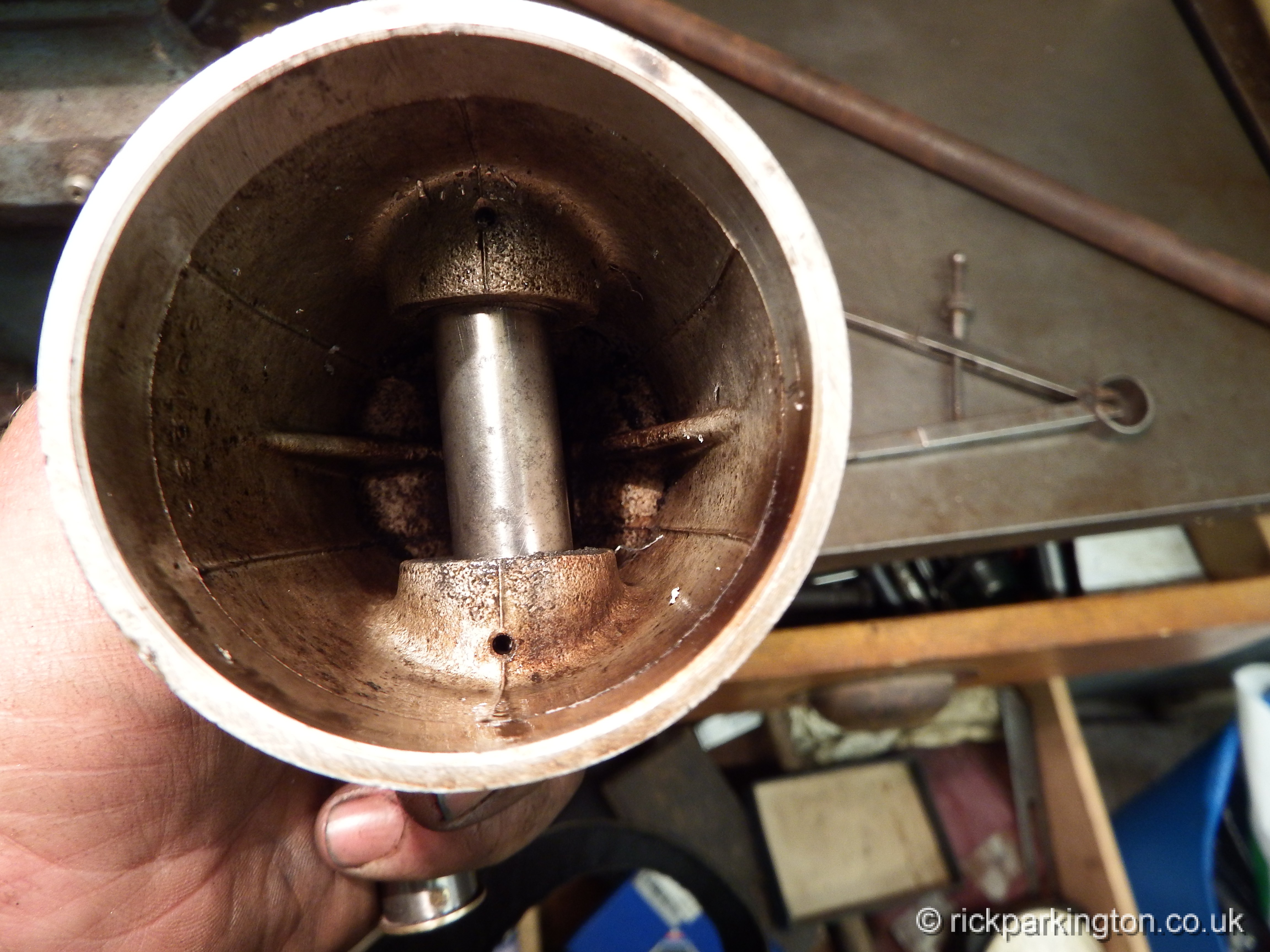 Compare the pin line to the reinforcing bosses inside which should be at right angles to it. Groan…now what, I would have to remove too much material to bore it back true so it was game over unless I could find another piston.
But then I thought again. It’s obviously run like this all the time Judy’s owned it, so does it really matter? I decided not and after making a new bush to replace the seized one, I fired it all back together. By midnight I was ready for bed again. Tuesday morning I took it for a test ride and it ran as quietly and well as ever so I loaded it into the back of the van and we set off for the Island the following morning.
The thing is although this repair may sound like a temporary bodge, I am confident it will last, if not indefinitely, then at least until we can find some replacement parts. I now know exactly what parts we need to look out for and the bike is back on the road in the meantime. At the Isle of Man it performed perfectly proving that the effort had been well worthwhile.
The problems we had this year had nothing to do with Scotts; but that’s a story for next time…
Cheers R
Rick…..You de man !
No, Calvin, I de idiot who ran it out of oil!