
Well okay, maybe a bit melodramatic but a prang on my Norvin before Christmas (and the resultant repairs) got me thinking about Norvins and Vincents generally.
if you ask me, Ogri has a lot to answer for…

Have you ever noticed that nearly all the Norvins you see are Cafe Racers? Well, mine isn’t but while it was stripped for frame checking, I almost thought about rebuilding it that way. I mean, a Norvin does make a very pretty cafe racer – but does that make it a GOOD cafe racer?
I’m not so sure. The first time I saw what became my Norvin, at a 59 Club event in the early 1990s, it was a cafe racer and I thought it was absolutely magnificent…
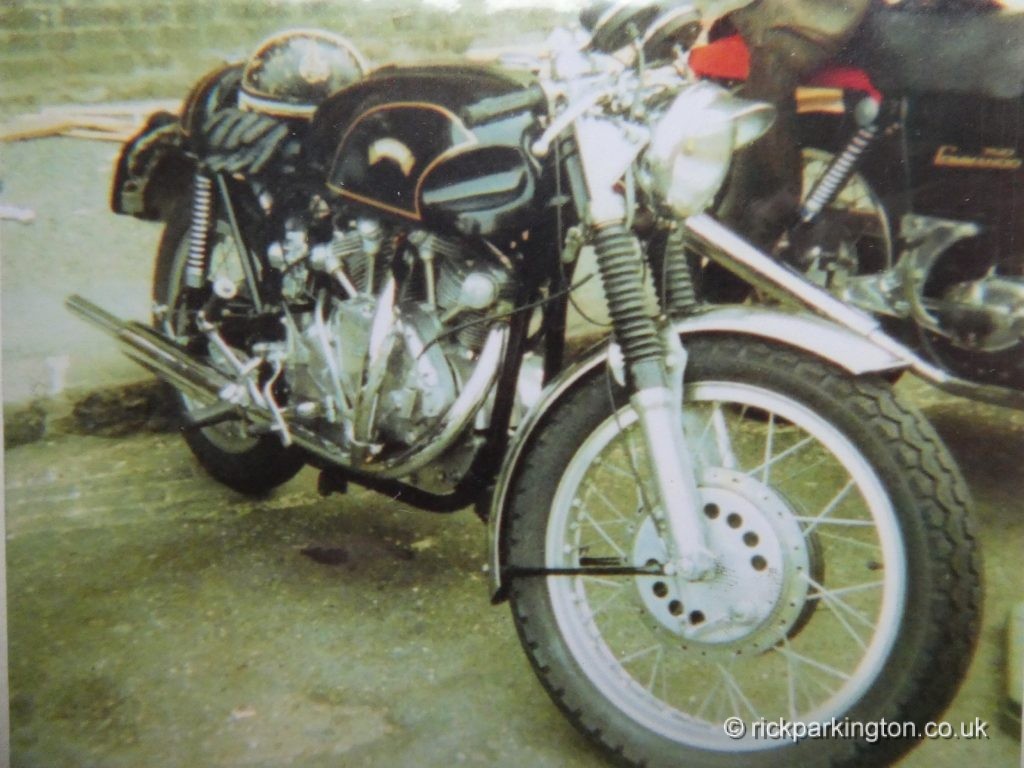
The twin-sided Seeley racing brake was a nice touch and I was always a sucker for a headlight peak… But back then I didn’t even dream of ever owning one. I was riding my ’68 TR6 and 1957 Dominator Cafe racer and had just sunk all my remaining funds into what would ultimately become my Gold Star, there was no chance I’d ever own a Norvin.
Well, actually, that’s not quite true; I had already owned one, sort of…
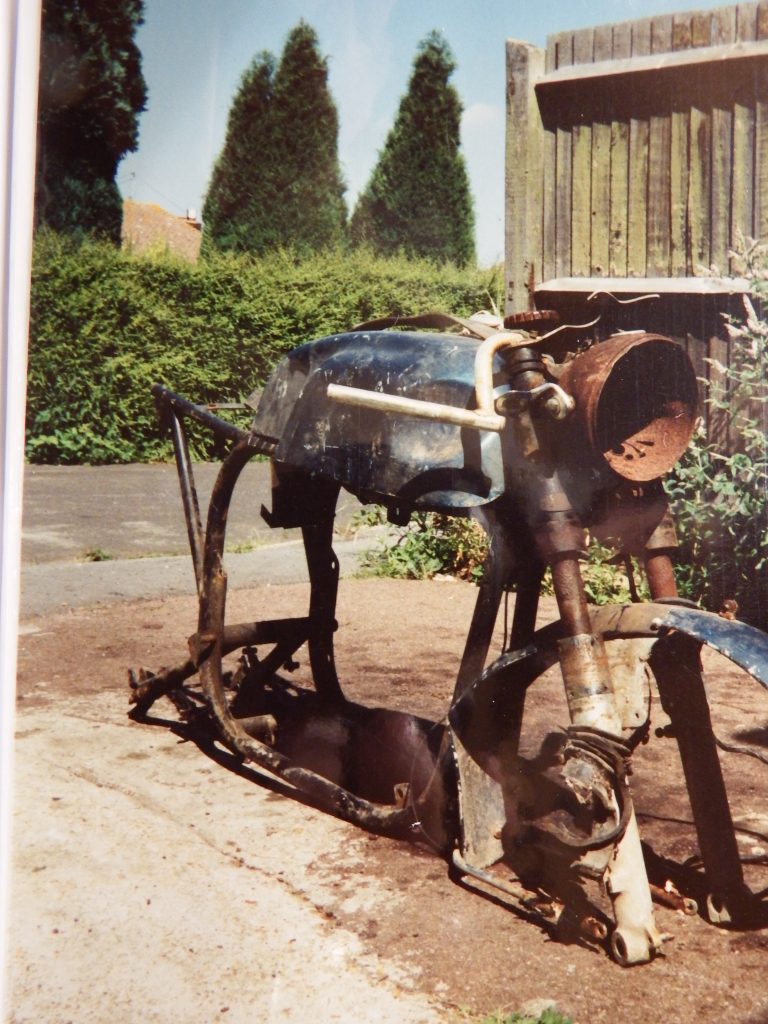
Back in about 1991 I bought the above Norton chassis cheaply from a customer who came into my work and looking at the weird brackets welded to the top tubes and the frame rails flattened to clear a right-side drive chain, I realised it must have previously had a Vinnie engine fitted; I enquired of course but the guy said he’d never had an engine for it.
But never mind, good things come to those who wait. My mate Andy in Edinburgh bought the 59 Club bike a couple of years later and used it for a while – suffering one momentous disaster when a gearbox selector fork broke and worked its way through the threshing gears below, locking the rear wheel on the motorway. Andy had the broken gear teeth softened and drilled to make a talisman he wore round his neck…
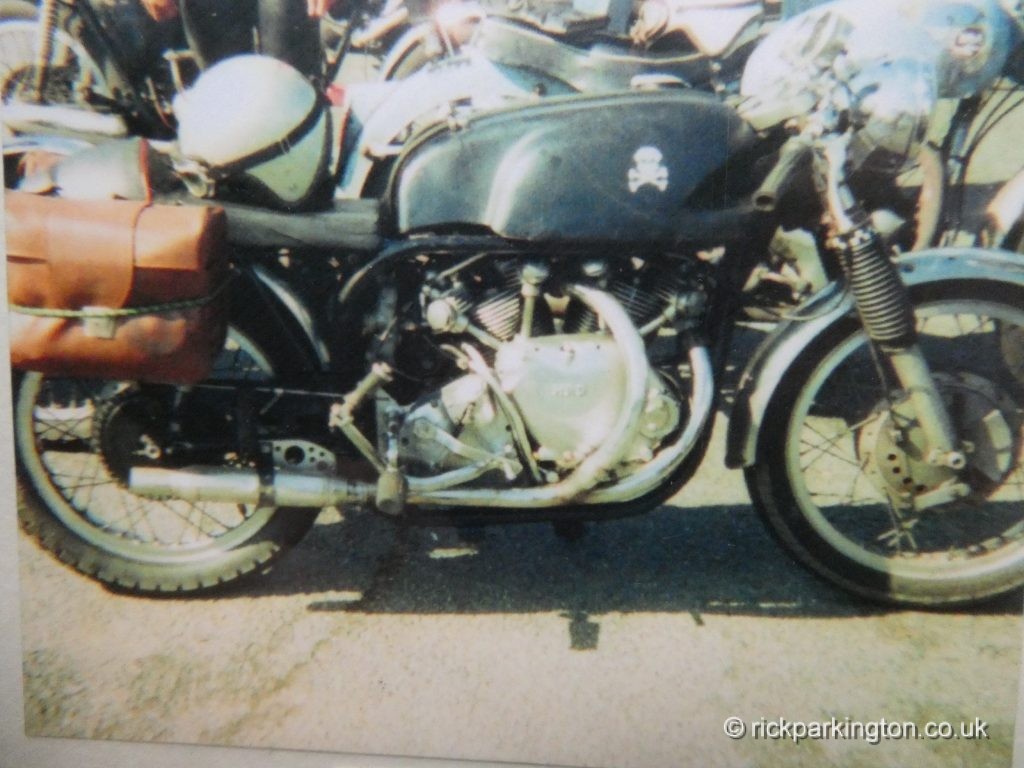
But after a time, the arrival of a family led to the bike being unused for several years and eventually word filtered through that he was thinking about selling it. Surprisingly, prices hadn’t gone up all that much in the meantime and seeing as the bike now needed recommissioning Andy’s asking price wasn’t much more than he had paid twelve years before.
However, as my mate Vincent Keith brutally pointed out, “The Norvin’s a mongrel breed.”
Owners of ‘proper’ Vincents still tended to look down upon Norvins and although actual Vincents were climbing ever-higher in value, at that point Norvins were still a bit of an unknown quantity and although Andy’s price was very reasonable, it was still a shitload of money. In fact, I had just sold my two flat tank BSAs, which added up to the same figure.
But at the Bonhams auction at Stafford I saw a complete Rapide engine in need of rebuild sell for £12,500, that was £2500 more than Andy was asking for the whole bike so as soon as I got home, I decided to make that call. After all, I needed something to spend, I mean invest, the BSA money on…
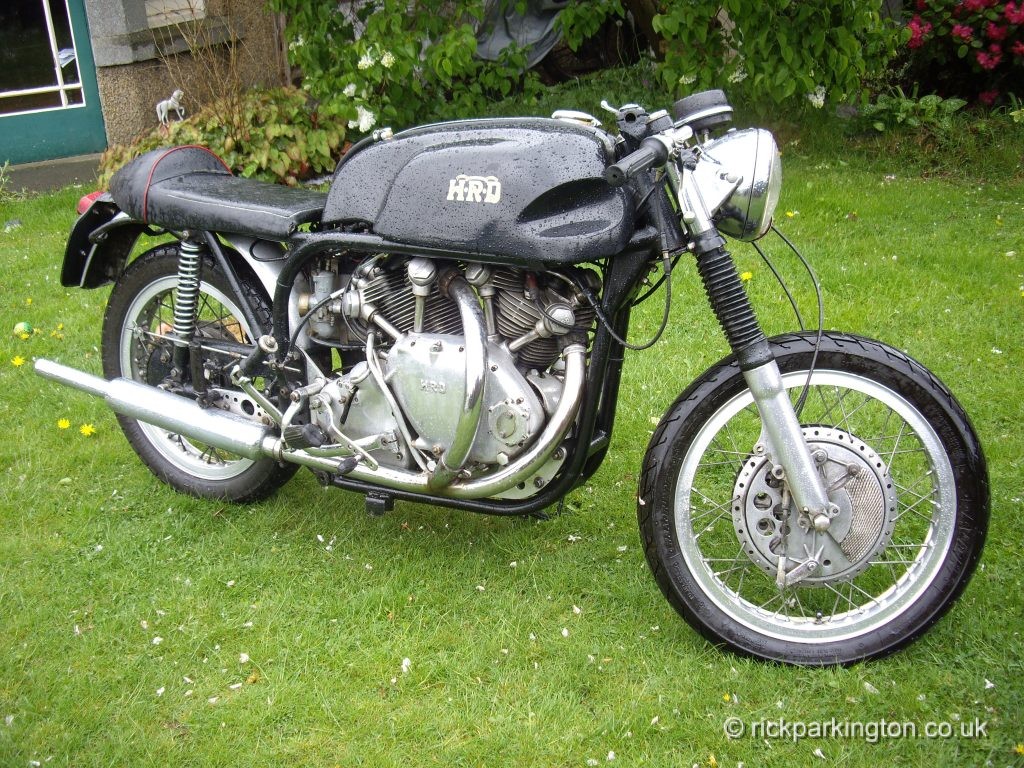 Andy was great and allowed me to take it away for a really good look. I decided that if I didn’t want it I could at least get it up and going so Andy would be more able to sell it. Once on the bench I rang Vincent Keith and said, “Right, what goes wrong with these bloody things?” Keith told me to take off the timing cover and he would come over.
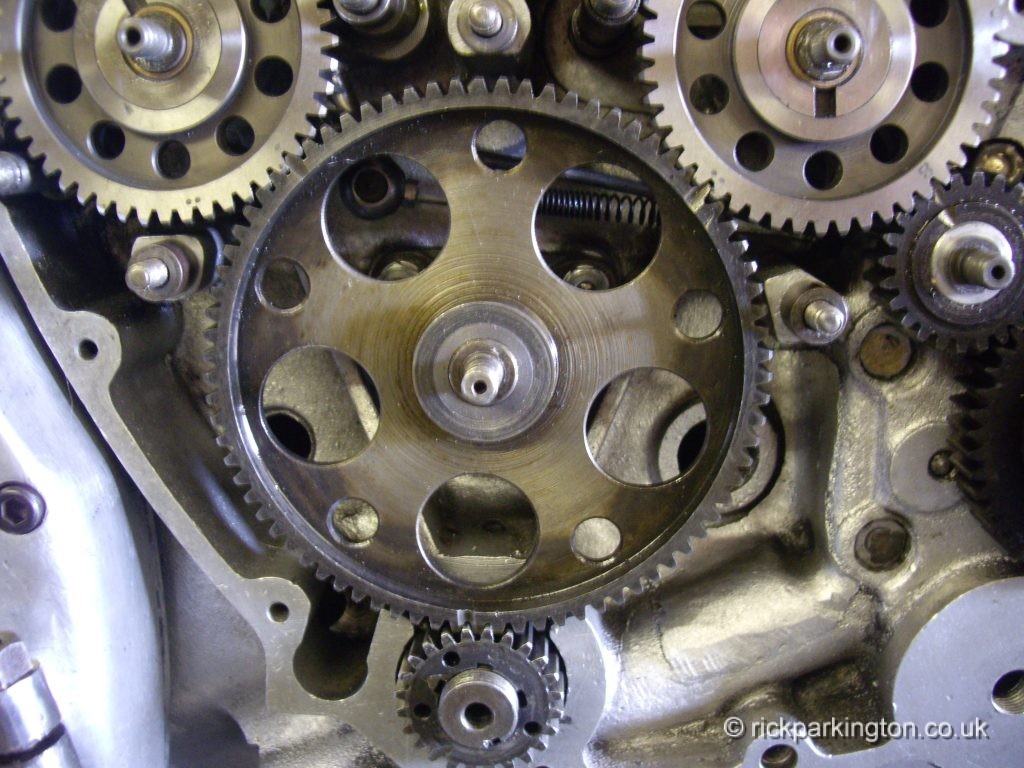 There’s a lot to go wrong here. You see all those threaded ends? They’re spindles for the cams, followers, breather and idler and all bar the idler one are just pressed into the crankcase. They are supported on the outside by an outrigger plate (not shown) that is held on by the nuts that fit these threads. BSA singes used a similar system but where the BSA item is a substantial steel plate, the Vincent one is thin aluminium, well, Dural. Because the Vincent engine is so big and all made from aluminium there’s a lot of expansion when it gets hot which moves all the spindles apart; the alloy plate is essential as it should expand at a similar rate where a steel plate would restrain the spindle ends pulling them minutely out of line. But even so the spindles are very prone to working loose and it was this we were looking for. Keith pointed out a few minor faults but overall it seemed pretty good; so I visited Andy with a very fat envelope and came away with a thin one containing a log book. I was a poor man again – but with the right to wear a Vincent tee shirt.
I once read a witty feature about long term Vincent ownership – in Classic Bike in fact; the guy described Vincents as a selection of solutions to problems that don’t actually exist and commented on the fact that so many letters of how to sort out common problems had been sent into the Vincent Club magazine that they were now available bound into book form. There’s much truth in this. Philip C Vincent was so appalled by the inadequacies of his first bike – ironically one of the flat tank BSA 350 side valves such as I sold to pay for my Norvin – that he devoted himself to the task of making the world’s best motorcycle – and there was no ‘probably’ about it. But in doing so he obsessed on some things that were perhaps not as big a problem as the side effects caused by his ‘improvements’. For example, PCV recoiled at the way valves in other engines wear their guides, owing to side thrust imparted by the radial movement of the rocker pad on the valve tip. So he devised a system where a forked rocker bears on a collar halfway up the valve stem.
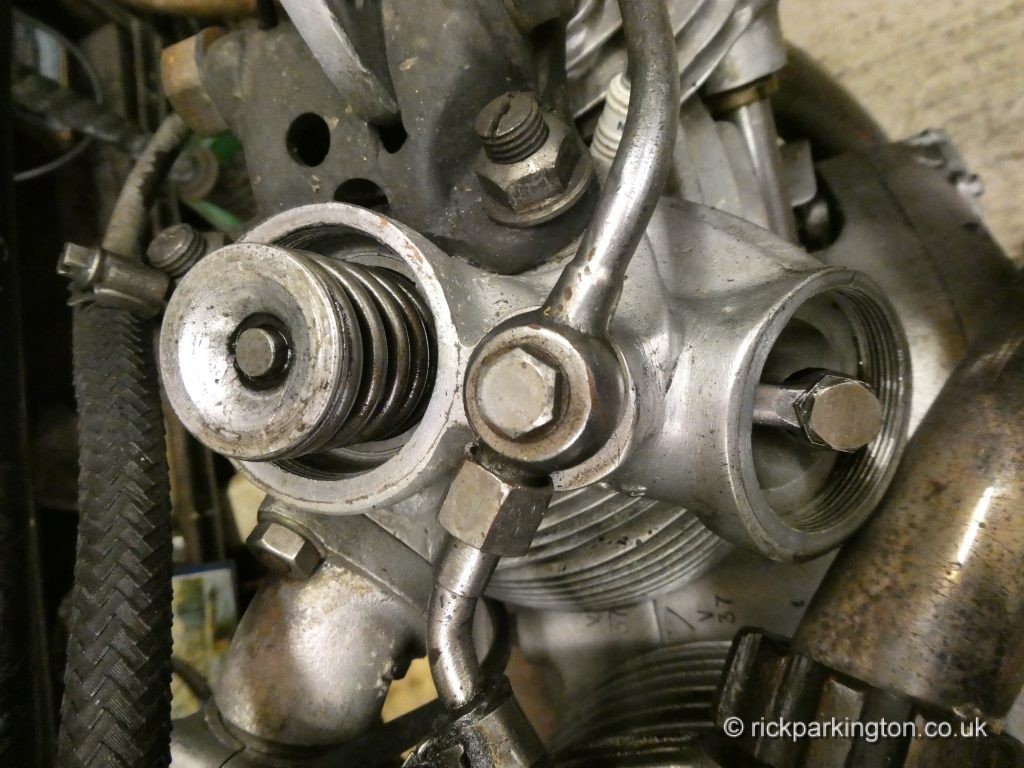
Wot? A valve with no rocker and a rocker miles away from the valve…Don’t worry; it’s a Vincent thing.
As well as being a bit weird, the trouble is this that you are left with a stumpy little guide, pressed into the head beneath and an equally short upper guide in the form of a sort of Dural top hat (right, below) whose brim snaps into a recess in the head, which doesn’t augur well for perfect alignment of the two.
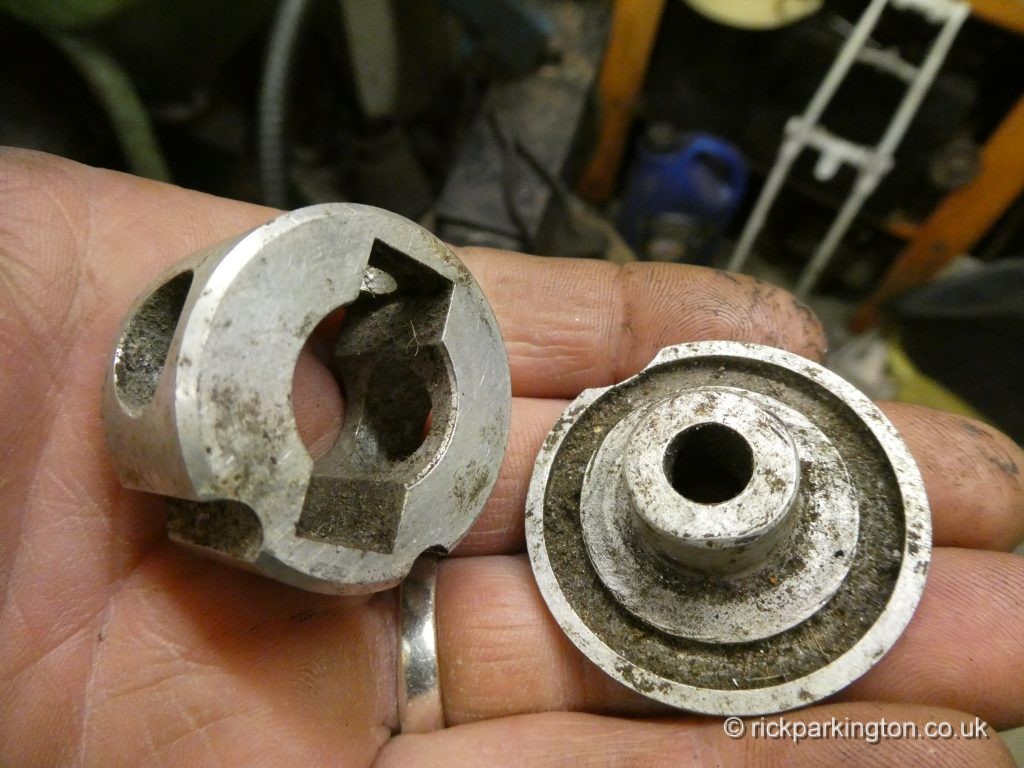
It also means that the rocker has to fit within, rather than atop, the head. The rockers pivot in slices of alloy round bar pressed into the cylinder head (left, above). Over time these wear loose and chatter in their bores, requiring very specialist repair, involving precise machining and oversize parts.
Still what a relief not to have to put the head in the oven and change the guides every few years, eh?!
Then there’s this business…
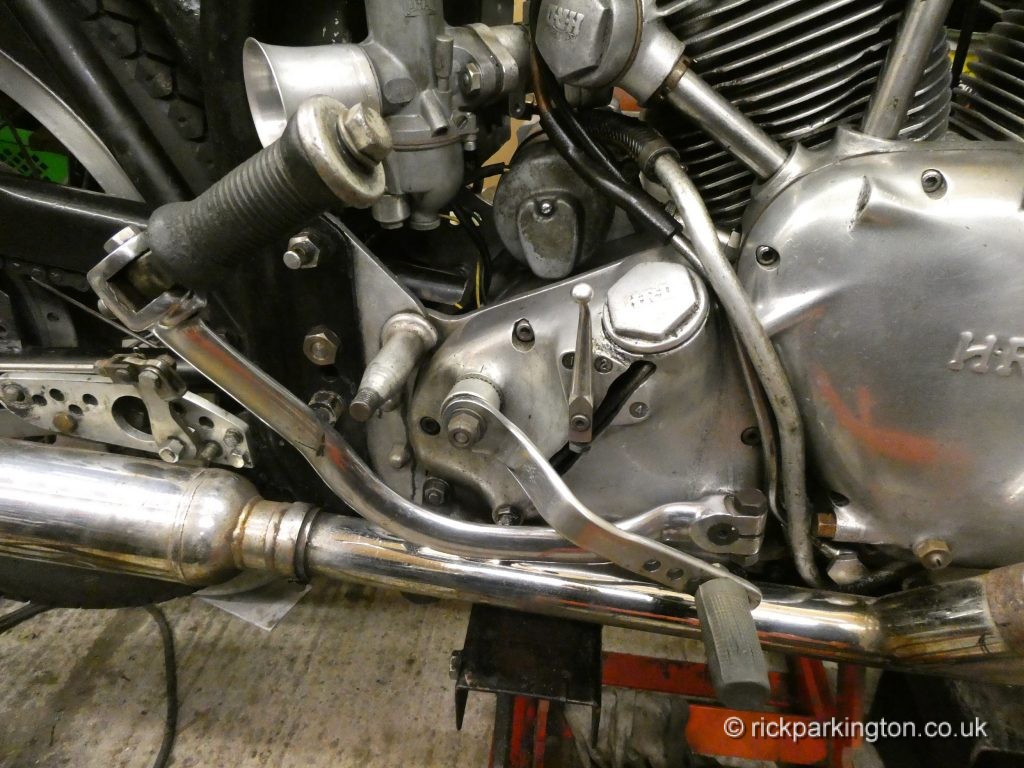
For a start, making the gear lever adjustable in length for any rider from a toddler to Mr Plod with these Ikea-esque holes is a great example of PCV offering a clumsy option that nobody even knew they wanted. Then there’s that kick starter, legendary for its length (and the cost of finding a replacement) but doesn’t it look a bit like the gear lever and kick start need to swap places? On most British bikes the mainshaft is above the layshaft but on Vincents they are side by side; why, I have no idea; perhaps to make sure both shafts were equally bathed in oil – even though vertical boxes seem to manage fine. As well as putting the pedals in this odd position it also places the selector camplate and forks above the gears. Remember Andy’s motorway seizure? I’ve seen selectors break on other bikes but the debris has fallen harmlessly to the bottom of the box. Not on a Vincent. The camplate is notorious for coming loose too, and the bolt that secures it is tucked beneath the dynamo so you can’t even check it easily; instead you rely on wiring it up – which will stop a bolt coming out but won’t necessarily keep it dead tight – of course Locitite has made this less of a problem today.
 Still on this side, you may have noticed that the gear indicator is a bit lavish on Vincents. That’s because you can use it as a hand-change lever. The handbook helpfully points this out; just in case there’s a problem with selecting the gears…not that there ever would be; obviously…
You may also wonder about the slot in my gearbox casing. Rex, who first built the bike, told me the engine came with the clutch missing and unable to get a Vincent one, he fitted a Norton Commando diaphragm clutch.
Well, in my experience It was bloody awful; the Vincent lift wasn’t enough to free it properly – the slot in the cover was due to the clutch arm having been altered in length and angle to give increased lift but it still didn’t work. The clutch would get hot and drag so fiercely that there was no hope of finding neutral, making it hotter still. I remember one horribly trying rush hour with Judy on the back where I was having to pull away in third, the only gear I could (literally) kick it into! It seemed likely that the brutality this clutch caused had been responsible for Andy’s broken selector fork so I was delighted when Vincent Keith came up with a Suzuki clutch and the machine-it-yourself adapter. I would like to say that was the end of my problems, it was, sort of, but the Suzuki clutch was prone to slipping until I fitted heavy-duty springs and still groans a bit. Now, obviously I’m not trying to say a Vincent is more powerful than a GS1000 – but when fitting these modern clutches it’s worth bearing in mind that Japanese primary drive ratios are often lower than on British bikes so the clutch from a big Jap four is not necessarily stronger. The Vincent clutch lift was only designed to operate a light plate-clutch for pulling away, after that the servo clutch took over. But fortunately, even having put the arm length back to standard, there’s enough to lift the Suzuki clutch. The slot in the cover is a nuisance but no more than that…
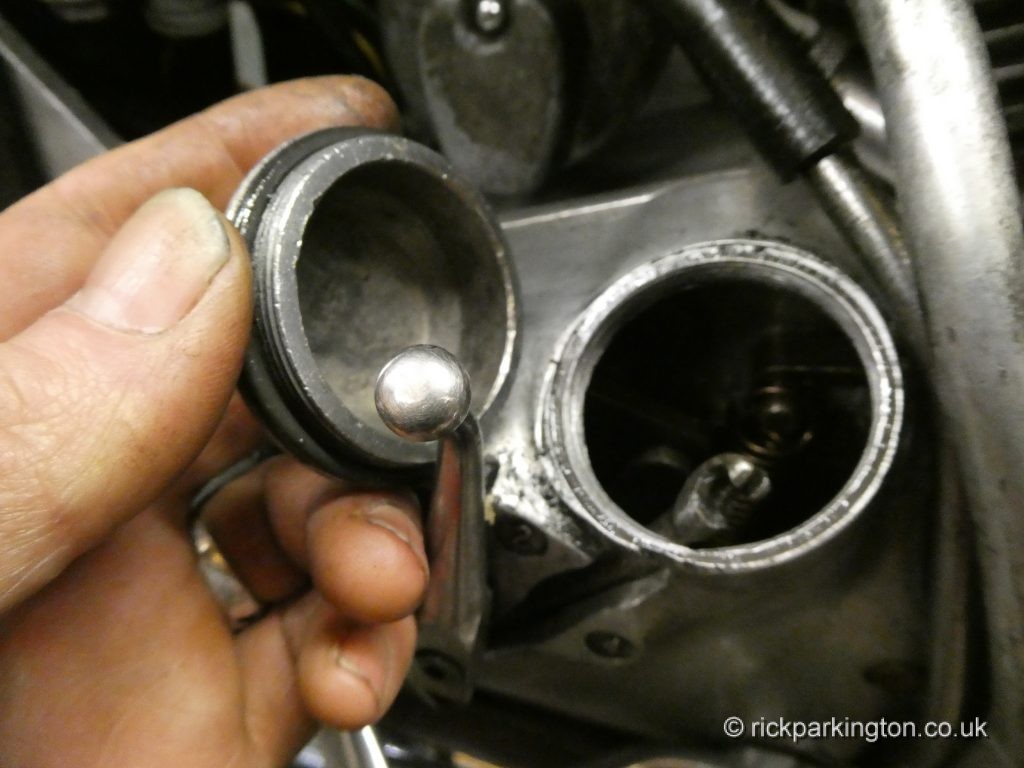 Oh, I should explain, it’s not a problem because the cover is just an outer cover and isn’t oil bearing…that big cap isn’t the gearbox filler either; it’s where you gain access to connect the clutch cable.
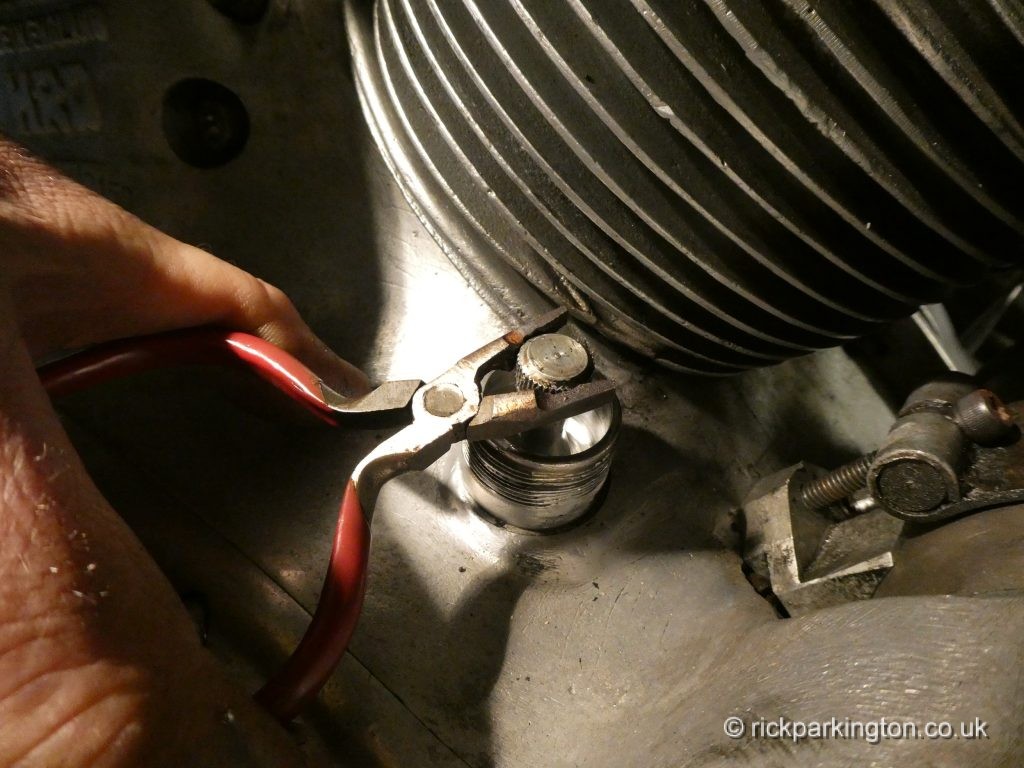 The gearbox filler is an annoyingly piddly little hole on the other side. There’s a taper fit dipstick and a cap that screws on top. Trouble is, tightening the cap so it doesn’t fall off pushes the dipstick into its taper hard enough that you need pliers to pull it out.
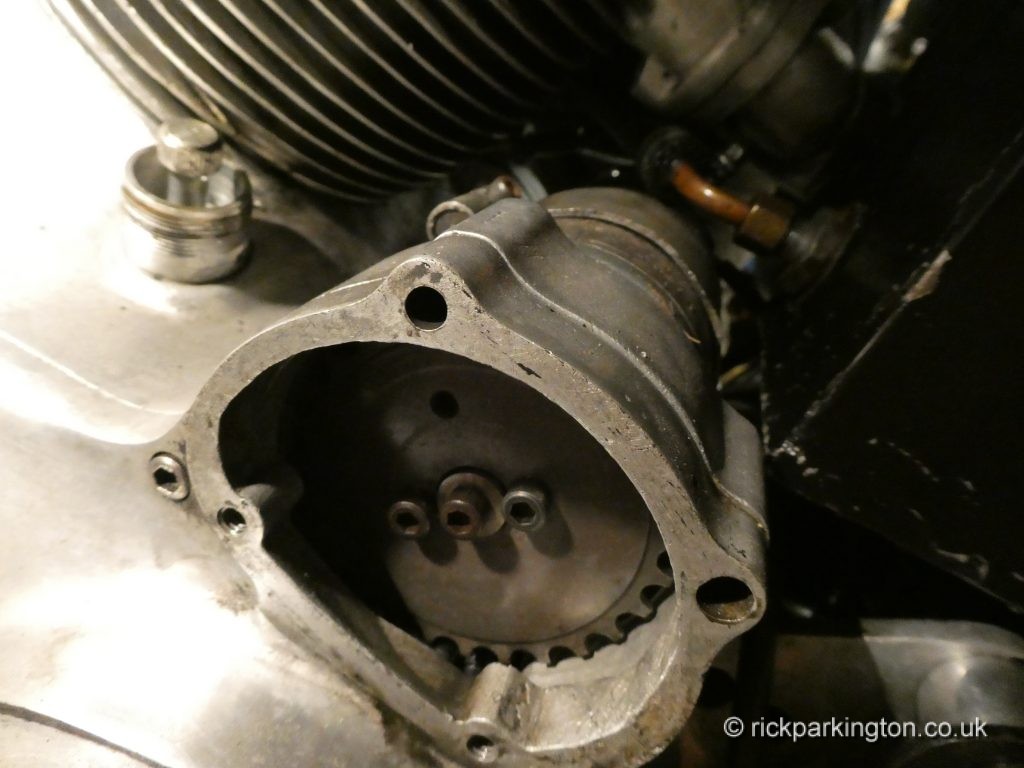
This is a bit of a worry too. The dynamo drive sprocket runs off the back of the primary chain, one row of teeth is machined off the clutch chainwheel to accommodate it – Indian used a similar system and in both cases, if anything comes adrift in here it’s bad news. Primary chain flip-outs on Vincents tend to lead to smashed primary cases – and the inner case is part of the drive side crankcase. I suspect this is the real reason you see ‘chopped’ engines, where the Vincent gearbox has been sawn off and replaced (usually) by a Norton one, as on this project spotted at Kempton Park recently.
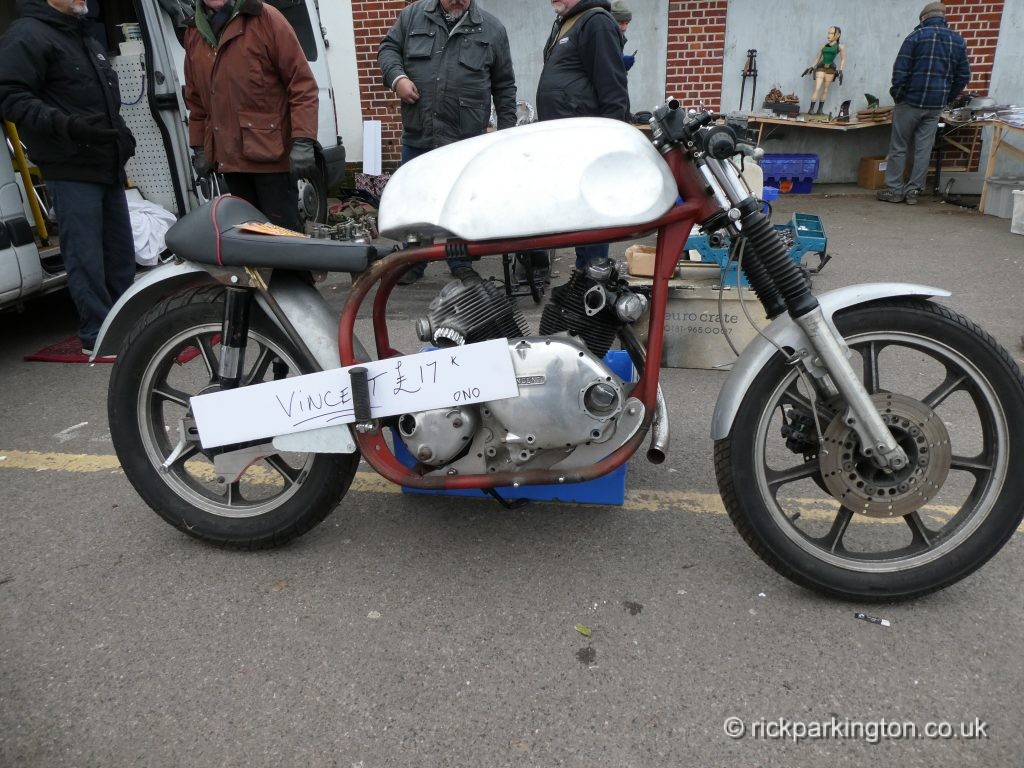 There was more bits in the box behind but if £17,000 sounds like a lot to ask then I guess it kinda reveals how much the allure and mystique that surrounds Norvins has grown since I bought mine.
Because I certainly bought mine at the right time. Within a few months I was talking to someone else who had had to pay £15,000 for a similar bike to mine and after all; what is any old bike worth? It’s all a simple division of desirability/availability. Brough culture has taught us that paying a (not very) small fortune doesn’t necessarily get you the bike of your dreams, just the chance to create it. Maybe Norvins have become hyped up in a similar way – they certainly seem to be regarded as the ‘ultimate cafe racer’ these days.
Which bring me back to the question I started with; is the Norvin a good cafe racer?
Personally I don’t think so. Compared to contemporary BSAs and Triumphs, the Featherbed frame is light and low and while there’s nothing wrong with Norton engines, the chassis seems particularly suited to a potent and revvy motor like a Gold Star or Bonneville; it produces a light, low, little whippet of a bike – which to me is epitome of a cafe racer. Vincent engines are very heavy and much of that steeplechaser feel is lost.
Besides, the Vincent-Norton has other advantages. The forks are good for the period as are the brakes and the Wideline seat is broad and comfortable. My favourite characteristic of the Vincent motor is that it is so capable at modern speeds. Sure, any good 650 British twin will sustain 80 on a motorway – but you’ll know you’re doing it; being a big engine in a moderate state of tune, the Vincent just ploughs along in a relaxed manner – and the addition of a passenger makes no difference, so to me the Norvin is actually a great tourer – like the stock Vincent and that’s partly why my bike is in standard Dominator trim.
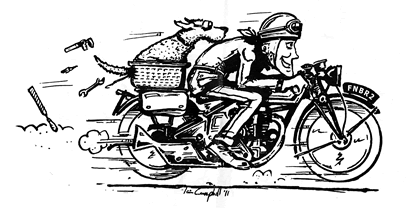
But where did this ‘ultimate cafe racer’ thing come from in this day and age? I mean Vincents were not particularly successful on the track – and how did Ogri, ‘Bike’ magazine’s cartoon hero get away with riding a bike that was pretty obsolete even in the original cafe racer era, let alone the 1970s and eighties heyday of the cartoon strip?
I suspect the answer is while most bikers have heard of Vincent, few have had the chance to ride or even get to know much about them. We’d heard the Black Shadow did 125mph; we knew the iconic photo of Rollie Free flat out in every sense at Bonneville in his speedos and bathing cap, we’d read of George Brown, Brian Chapman and others creating records on drag strips with Vincent power… Added to the fact that you never really saw one on the road – or if you did it was chugging along a motorway loaded up with rally gear – the legend of the invincible Vincent was sustained by my age group.
We live in an age where image has long since overtaken reality, maybe the Norvin doesn’t make a great bike for cafe racing…but that’s not the sum total of a cafe racer – it’s talking with the head not the heart, which never adds up too well with classic bikes. When it comes to it, putting an enormous alloy engine – taken from what was once “The World’s Fastest Production Motorcycle (this is a Fact not a slogan)” as Vincent masterfully advertised – into something that looks like a Manx Norton can’t really fail to make a great cafe racer and although I love the practicality and understated look of my bike, it would be a very dull world if all the ‘Armageddons’ out there got tamed wouldn’t it?
Cheers Rick
Well if only I had taken it off Andy in the incredible outfit swap instead of the BM and Bantam, you wouldn’t be in this mess! Mind you, I think I have had more fun with Andy’s old Bantam than I would have had with the Norvin!
He who hesitates is lost…or is it act in haste and repent at leisure!
R
Hi Rick,
Great article, thank you. I’d rather keep this Norvin as it is, it stands out from others and you can ride with your missus. I’ve seen it in the flesh some years ago in Douglas, I love it.
Mine is in period bitsa trim (I hate that Café Racer nickname, now there are CR everything, even mopeds!), Manx tank and seat, rearsets but swan neck Manx clip-ons so the riding position is not too radical and yes, it makes a great touring bike as long as you like to ride alone!
Cheers.
Eric Gallardo
France
Thanks Eric, I think we spoke at the time, didn’t we?
Yes, I still like cafe racers but for me it was always about recreating the 1960’s, the rigid frame and exhaust wrap look isn’t really my thing but it has its place – the ready-made cafe racer is a bit daft but I guess that’s all part of the modern world and maybe it gets people interested in doing it themselves one day!
Cheers Rick
you’ve just reminded me of all the worrying aspects of Vincent ownership…. thanks for that., hope you’re well, see you soon
cheers Andy
Ah well sorry about that, Andy. Min you the flip side is when I went to do a feature on Vincent specialist Bob Culver, my first question was ‘Right, in your own words, what goes wrong with Vincents?’Bob looked at James his son who is part of the businesss and said , “Well, nothing really is there?” So I’m sure it will be fine.
Mind you I still got enough material for a full article once I’d jogged his memory!
Cheers Rick
yeah I know, I had knowledgeable help with my engine build (I think this is the key) and …. touching wood here….. it’s been absolutely perfect
I still feel guilty that you were on your way to judge the show bikes at Ardingly when you had your prang on the Norvin.
Here you are in happier times, bravely attempting the unofficial Off-road section at the Ardingly Show!
http://www.elkpromotions.co.uk/ArdinglyApril2017RickParkingtonNorvin.jpg
http://www.elkpromotions.co.uk/ArdinglyApril2017RickParkingtonNorvinCrossCountry.jpg
That’s typical; I take a little short cut, ride across the grass and down a teeny weeny bank and the security cameras are right on it! Now you know the real reason I didn’t want it to be a cafe racer, a Norvin makes an excellent trials bike!
Cheers R
Probably the most accurate appraisal of a Vincent that I have ever read.
Got a test ride on one to potentially purchase in the mid sixties. Never once did I regret in the fifty years since then not buying it.
Your love of the Featherbed is mirrored by my own.
Dick Greenway
Thanks Dick, Glad you didn’t regret it!
cheers Rick
Bought the last one in early seventies. I thought they had gone up a bit since the sixties. £320. A rapide c. 160.000 miles on the clock and the engine was still nice and tight but it was not a showroom piece just a nice honest bike. Had to sell it with a lot of my other bikes when I migrated. It was a nice good tourer. Never had anything major go wrong with it. One thing is very important warm it up before giving it stick and I mean properly. Give it 30 miles and you will be right. It takes time for the whole engine to get to temperature and get al clearances right.
Around 1964 a friend who sadly recently passed so I can’t call on him to correct my memory brought a Norvin from the editor of Motorcycle Mechanics who as I was told built it,as it was not road legal we had to take it to a local air field and run it up and down a service road I don’t know what happened to the bike or how long my friend owned it as living in north London and working in south London he needed a different sort of bike to commute on , perhaps someone out there might be able to enhance the story
Hi Bob, there was a guy called Brian Lecomber whose Norvin featured on the cover of Motorcycle Mechanics – as a Vin-Nor – maybe that was the bike? I believe Brian went on to become a stunt pilot and died nearly ten years ago. The bike featured in the December 1964 issue which matches up timewise but it was built as a sprinter so unfortunately it didn’t carry a registration number to help identify it.
Cheers Rick
That bike, Nemesis, still exists and is in its “original” ex Lecomber condition dry stored since last tested at a speed that scared its long time owner on what was to become the northern section of the M25, except that the Gardner carbs have been swapped for Amals.
Well that’s good to know – thanks Fraser!
Rick