
We had a great time at Brooklands 40’s Revival day…
Being the sort to surround ourselves with anything old, not just motorcycles, we clubbed together with some friends and took a stall to shift some of the surplus. Now in its third year, the event is taking on a personality of its own with a dance tent playing appropriate music, stalls selling clothing, period household goods and ephemera, military camps and vehicles and many of the visitors making the effort to turn out in period attire. It’s gratifying to see all ages. Very young faces in uniform reflected the reality of a generation who lost their youth to conflict – hopefully they will remain interested enough in times past to get involved in elderly motorcycles eventually and the choice of Brooklands as a location must be about as good an encouragement as you can get. Ten out of ten to the mature gents who, instead of trying to look young enough to be active servicemen, made up the Home Guard platoon, complete with an Austin 7-based armoured car.
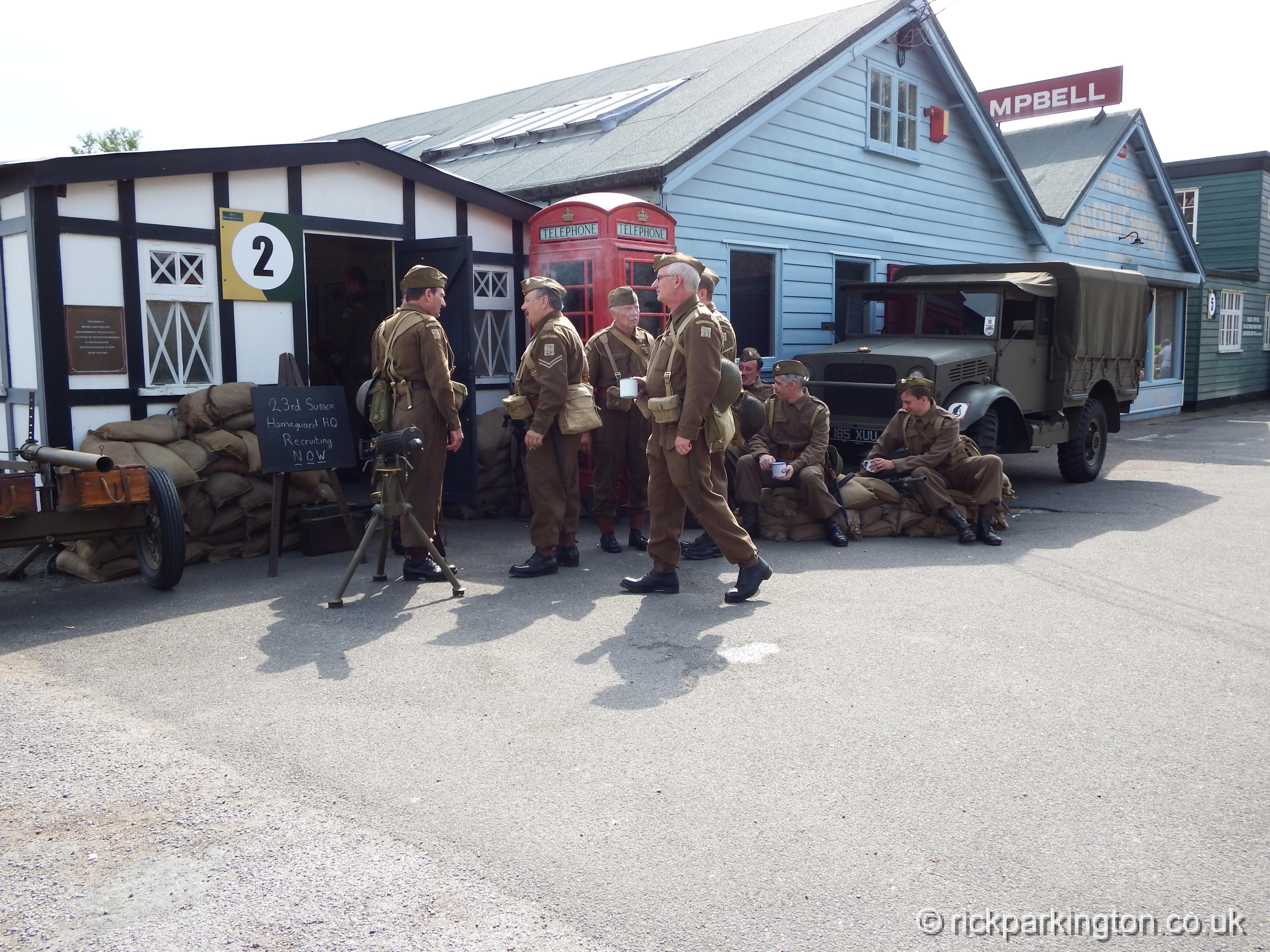
The ‘ome Guard doing their bit for Blighty
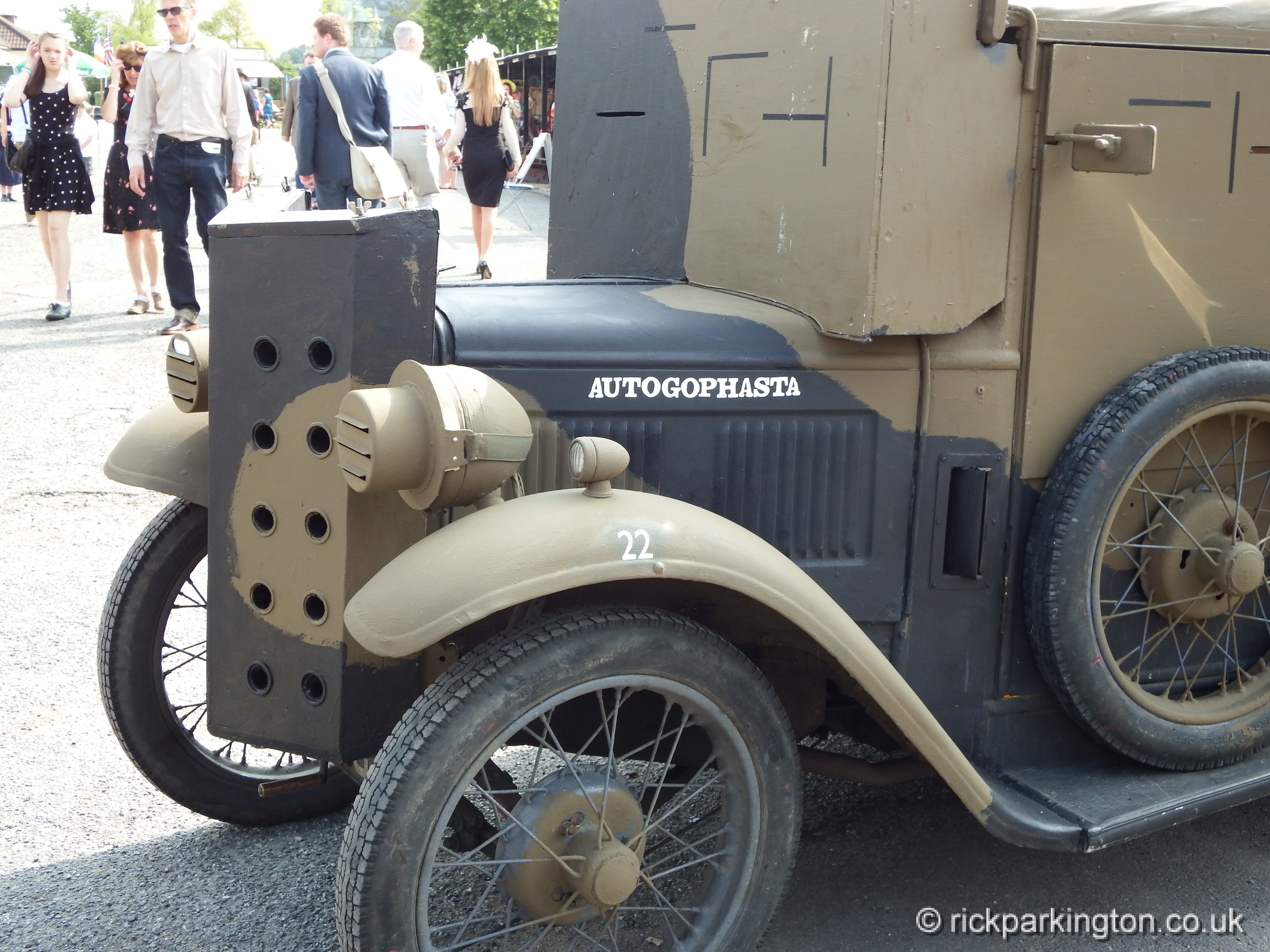
Autogophasta? Think about it…!
Our best customer of the day turned out to be none other than musical performance artiste of repute, Mr Adam Ant, who bought a wide variety of nick nacks, proving himself a man of taste and discernment.
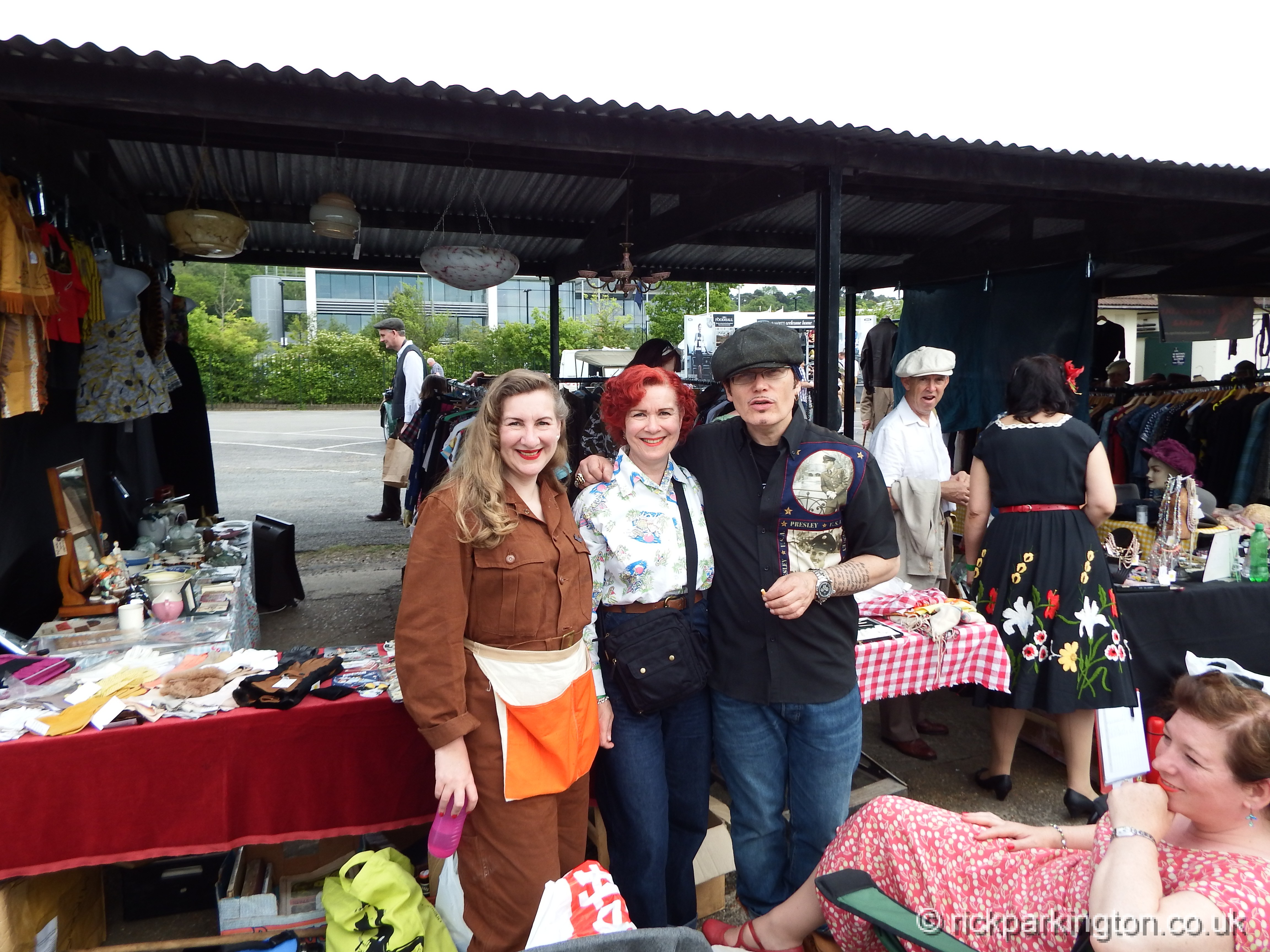
Adam Ant with the girls on the stall
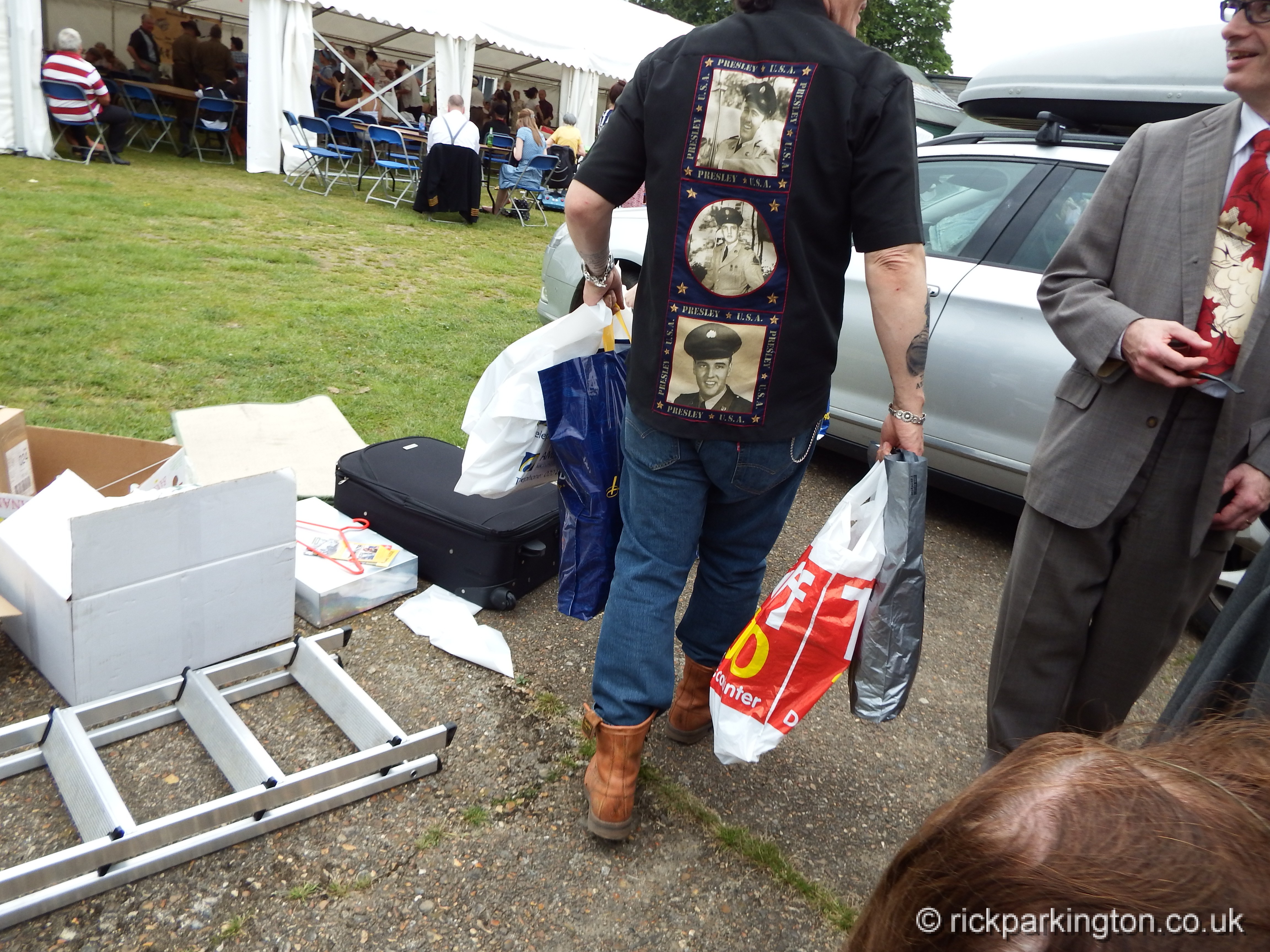
More bags than the January sales…
Brooklands officially closed – never, as it turned out, to reopen – late in 1939. The site was taken over by the government. Barnes Wallis, famous for developing the Dambusters’ Bouncing Bomb was based there for some time, along with the Vickers armaments works. As Brooklands rider and Gold Star holder Denis Loveday told me, when it came to erecting new buildings, the track provided a ready made concrete base. Depressing though such policy may have been to the racers, it made sense to disguise the obvious footprint shape of the circuit from the enemy bombers and covering it with buildings was a help. Even so, Brooklands became a target for the Luftwaffe and the Fork area of the circuit – the bit with the famous ‘Vickers Brooklands’ legend painted in embarassingly huge letters – took a right pasting. Not surprisingly that area is now redeveloped as a housing estate but thanks to the Brooklands Society’s efforts in the late ‘sixties a remarkable amount of the circuit still survives.
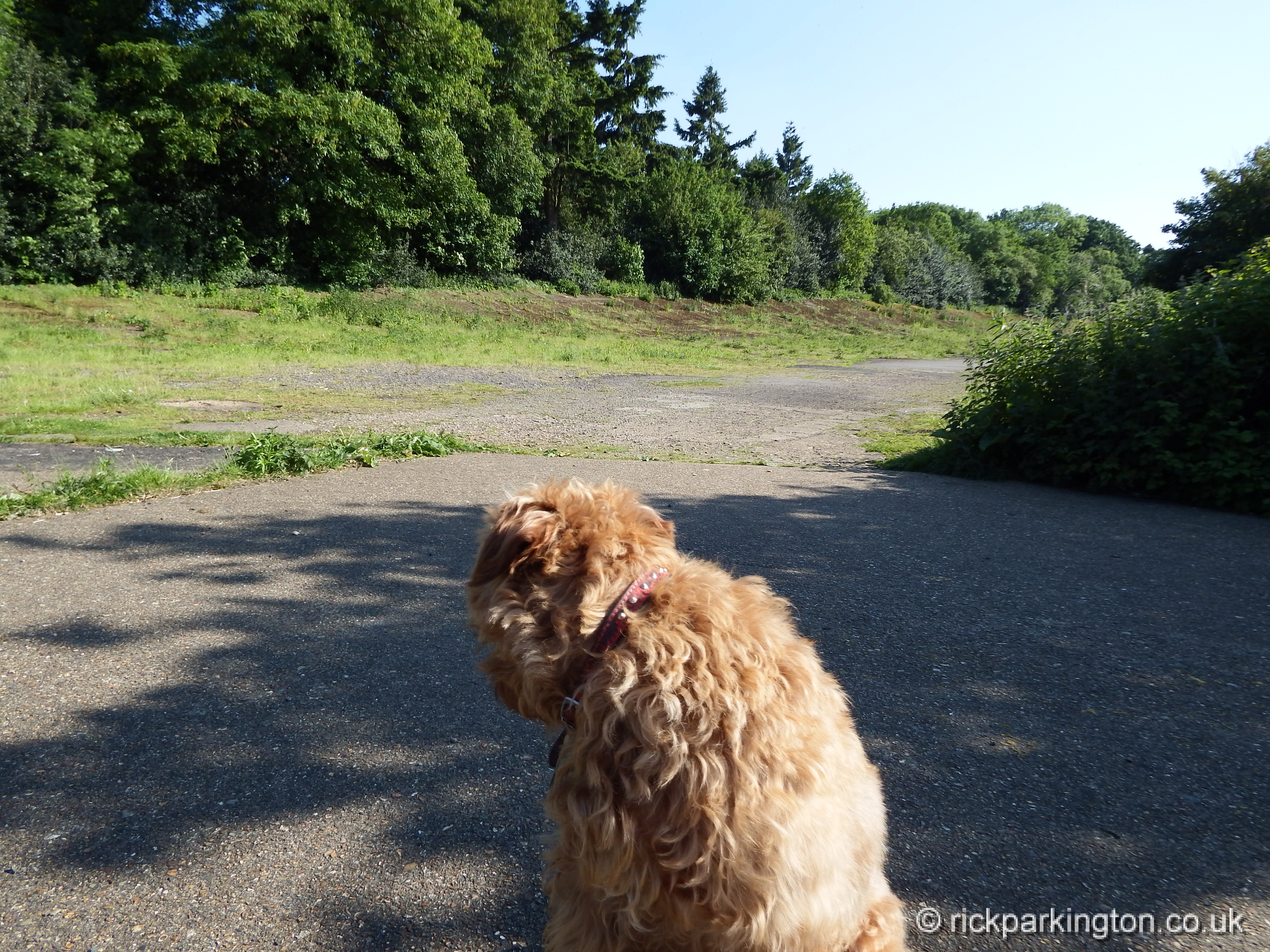
Finbar looks back on the Byfleet banking
Apart from the area contained within the Brooklands Museum site, there’s a big chunk of the Byfleet banking accessible as common ground. If you enter the Industrial Estate you will find the Railway Straight while across the road from Tesco’s supestore there’s a bit more banking.
I took Finbar for a walk along the Byfleet; he’s not allowed within the museum grounds – don’t they know who he is?! .Byfleet was the longer of the banked curves on the track, today it’s intersected by modern roads but there’s enough left that you can find a spot where looking right and left the track still disappears round the curve. It seems madness that we allowed this desecration of such an icon of British history but in fairness not only was there a war on but by 1939 the track was already past its best. When it was built in 1907 concrete construction was in its infancy and before long cracks, literally, started to appear. As speeds increased the condition of the track became more of a problem. Also, at least as far as motorcycle racing is concerned, the circuit was just too huge to be able to provide the close racing that spectators demanded and with its expensive entry charges, Brooklands simply didn’t draw the crowds.
Whether there would have been any future for Brooklands post-war, who knows. Maybe it’s better just having these remaining stretches, preserved more or less as they were in 1939.
I have a connection with Brooklands in 1939: Chris Tait who built my Martinsyde took it round the Outer Circuit in late summer that year, obtaining a certificate for an 82mph lap, so I decided it was time to take the bike back there for the Sunday event, officially a Scott and Rudge display.
My favourite bike on the day was this Ivory Calthorpe. The owner told me somebody had literally given him a 1929 Rudge and then asked if he’d take the Calthorpe as well…
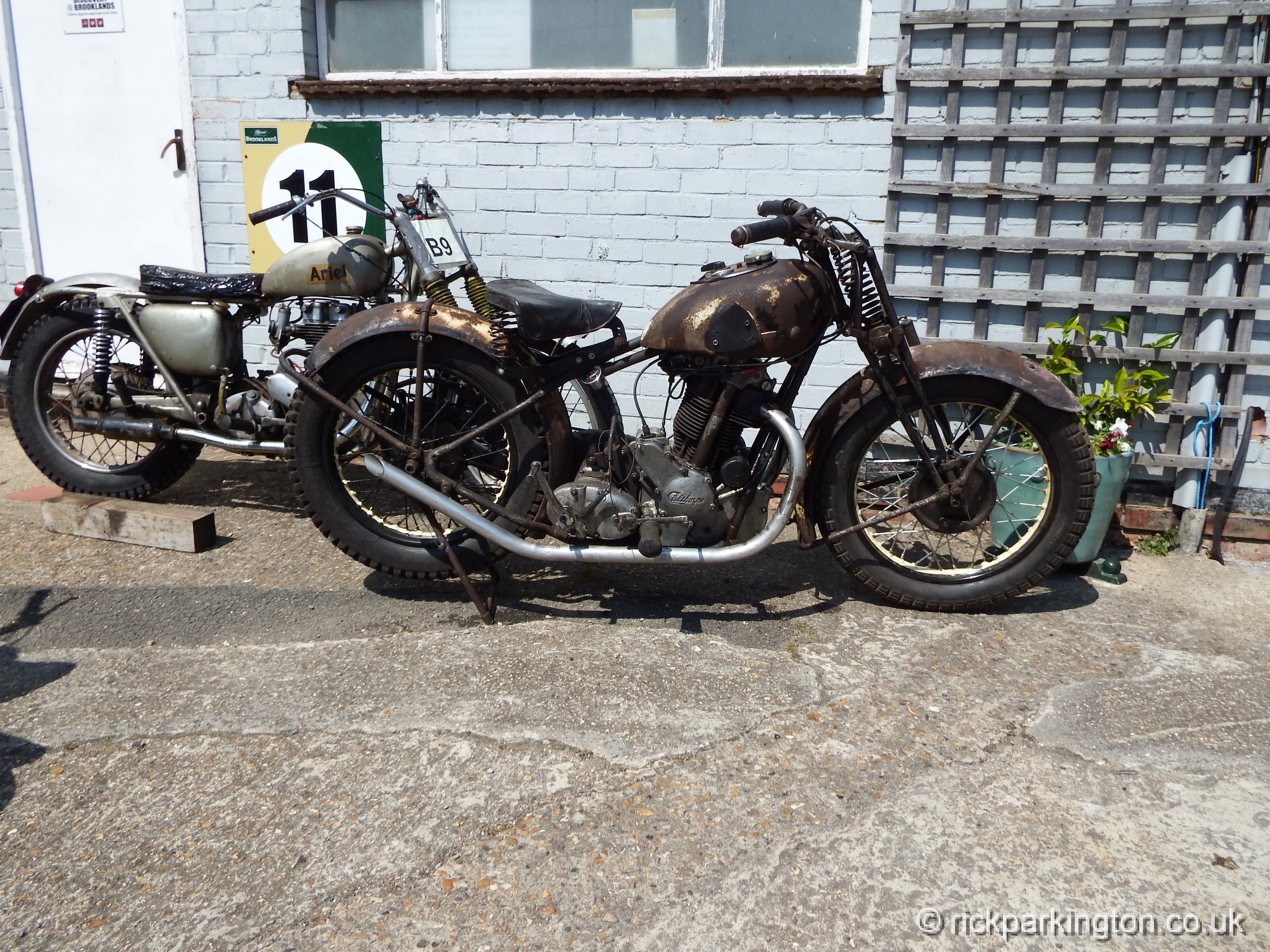
He’s since got it running and is looking for further information…
Meanwhile the ‘tinsyde hung out in the shade of the Clubhouse steps. 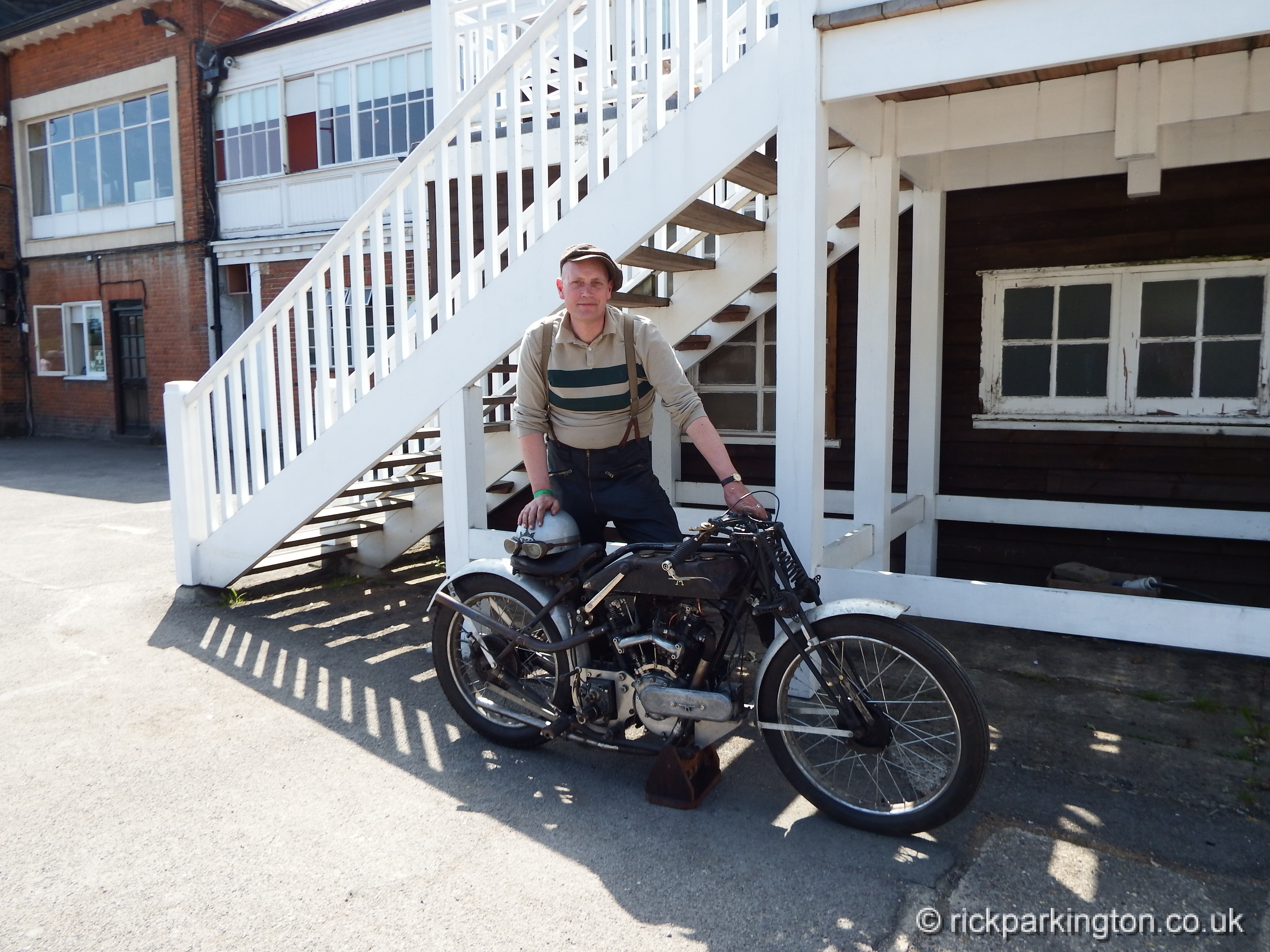
Kinda chuffed to say that riding the bike from the car park to the clubhouse is the first time the old bike has carried me under it’s own power. Pretty perfect place to swing a leg over it for the first time, I reckon…
And finally… very finally
Today we attended the funeral of my very dear friend Alan Abrahams. Alan lost his life to cancer on April 30th. I first met him at an autojumble when I was sixteen. He was 23 and riding this weird little 98cc James Comet. It was a mad bike for somebody so young to be riding but he came over as such a cool fella that it just about made sense and he became a hero in my youthful eyes. We got on well and when a couple of years later I stumbled across a laughably gutless 98cc Excelsior for £30, Alan encouraged me to join the British Two Stroke Club, of which he was a local stalwart. There followed many years of silliness with valueless classics where I learned that when it comes to fun per mile, size isn’t important after all.
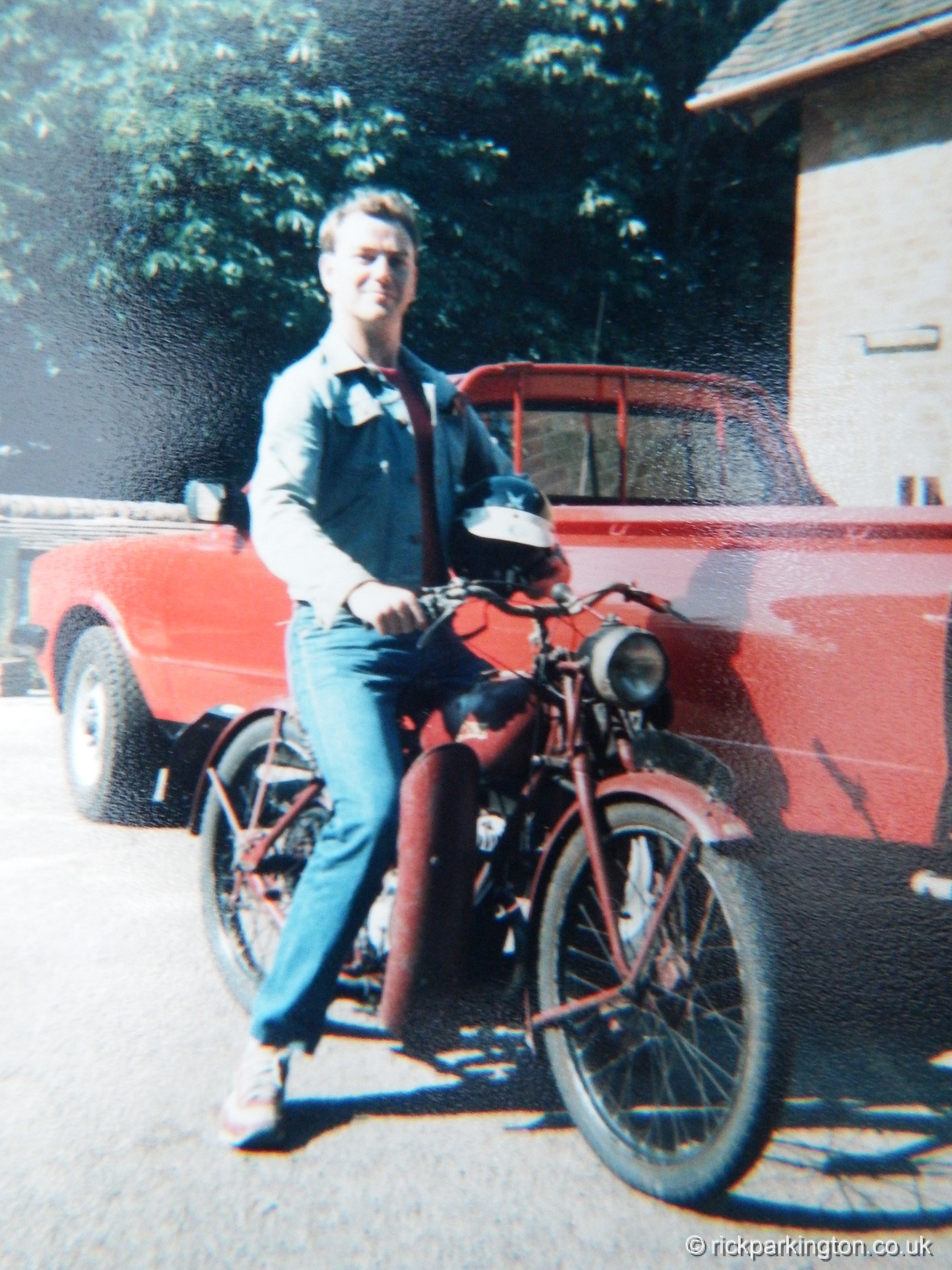
Alan on a 98cc Bown c 1986
Alan was also into older bikes and his 1927 350cc James sidevalve was the first flat tanker I ever rode, lighting a fire in me that has never weakened . Thirty years on, I still remember the excitement of cracking off down the road on a hand-change, ‘twenties bike; to me this was the sharp end of motor cycling. Alan was behind the formation of the famous VMCC International West Kent Run and the ‘Lost In…’ motorcycle holiday tours, the ‘Simply Wizard’ tee-shirts and James-fanciers’ website; but far more than any of his achievements, he was just a smashing bloke who could get your enthusiasm going for any project or wacky idea. Alan’s funeral drew a huge crowd that revealed how many other people he had touched in his 57-year life.
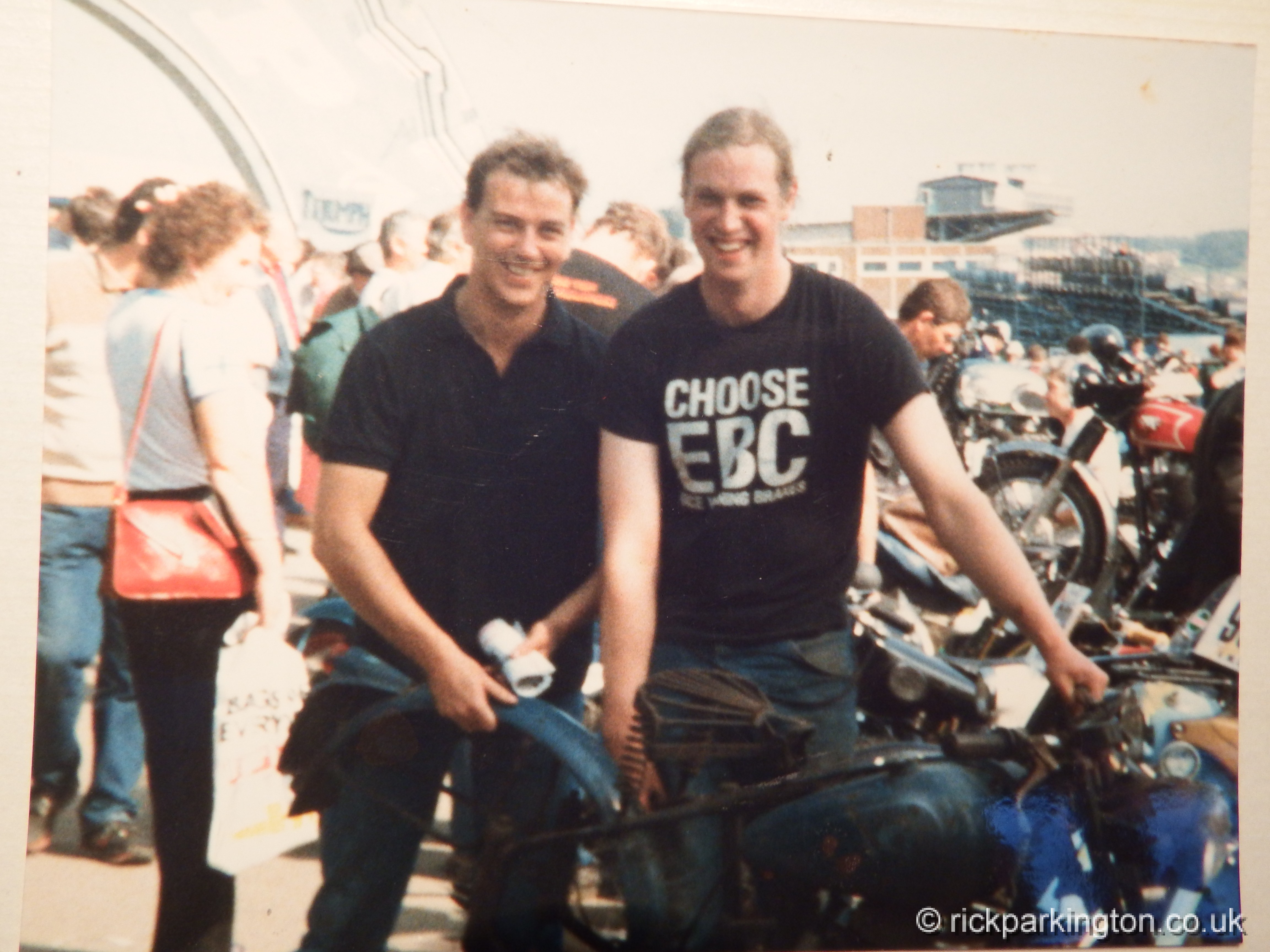
Alan encouraging me to buy another pile of junk, a £30 James Cadet, Brands Hatch Festival of 1000 Bikes 1987
Alan was one of the people who inspired me in my formative years – for better or worse! I and so many others will miss him sorely and all our sympathies go to his wife Alison and son James.
Dear Rick
Just found your site whilst searching the internet for a replacement tank for my 1961 B40, what a horrible bike (owned for 13 years probably ridden 300 miles and spent loads on it, bought it restored from a good friend), no wonder there is no british bike industry.
Anyway on to your site, loved the stories and the bikes can relate to every one of them.
Loved the obituary of Alan Abrahams, what a character, many years ago he lent me a 1929 James to do the Arbuthnot, he having competed on I think the Bown autocycle in a previous year!
The James was so “demanding” it led me to build a rigid Bantam which I used a number of times and still have today, possibly a better bet than the B40.
Back to Alan, your photos depict his “infectious” grin perfectly, every time I think of him I cannot help smiling.
Best wishes
Roger Ashby
Thanks Roger,
When I bought my B40 in 1980 I was delighted by Owen Wright’s peaen pf praise to the model in the ‘Best of British’ book. However in more recent wrtings he has been a little less complimentary! The WD model is a different kettle of fish altogether and mine was great. Lucky choice on my prt I think.
I well remember Alan’s ’29 James which I recall was known as the Hesperus (as in the Wreck of the…). Happy days!
Cheers Rick